Too often we are taught that homes must fall into categories: traditional, modern, minimalist, vintage. But the most interesting homes, the ones you want to linger in, rarely stick to one style. They are layered. Evolving. A little bit lived-in. They mix old and new with confidence, and they trust contrast to do half the work.
I help clients build homes that are considered but never contrived. Below is my approach to mixing eras, materials and finishes, and how to create harmony through difference rather than uniformity.
Make it personal, not perfect
Your home should be your calm place, your grounding space for highs and lows. A layered interior is not about filling every corner. It is about creating a rhythm that feels honest and aligned with the way you actually live.
That does not mean every space must be minimalist or spare. Even the most organised homes need not feel sterile. Pattern, old books, warm finishes, even a slightly dishevelled look can feel calm when it is intentional. The opposite is also true: a stripped-back room can feel anxious if it has been edited out of fear rather than confidence.
Start with what brings you joy. A chair that reminds you of childhood, ceramics you collect on holidays, the way the light hits a particular spot at four o'clock. Layer with purpose, not for the sake of it.
Rules are a good start, but break them thoughtfully
There are no hard rules to mixing old and new, but a few principles I come back to:
-
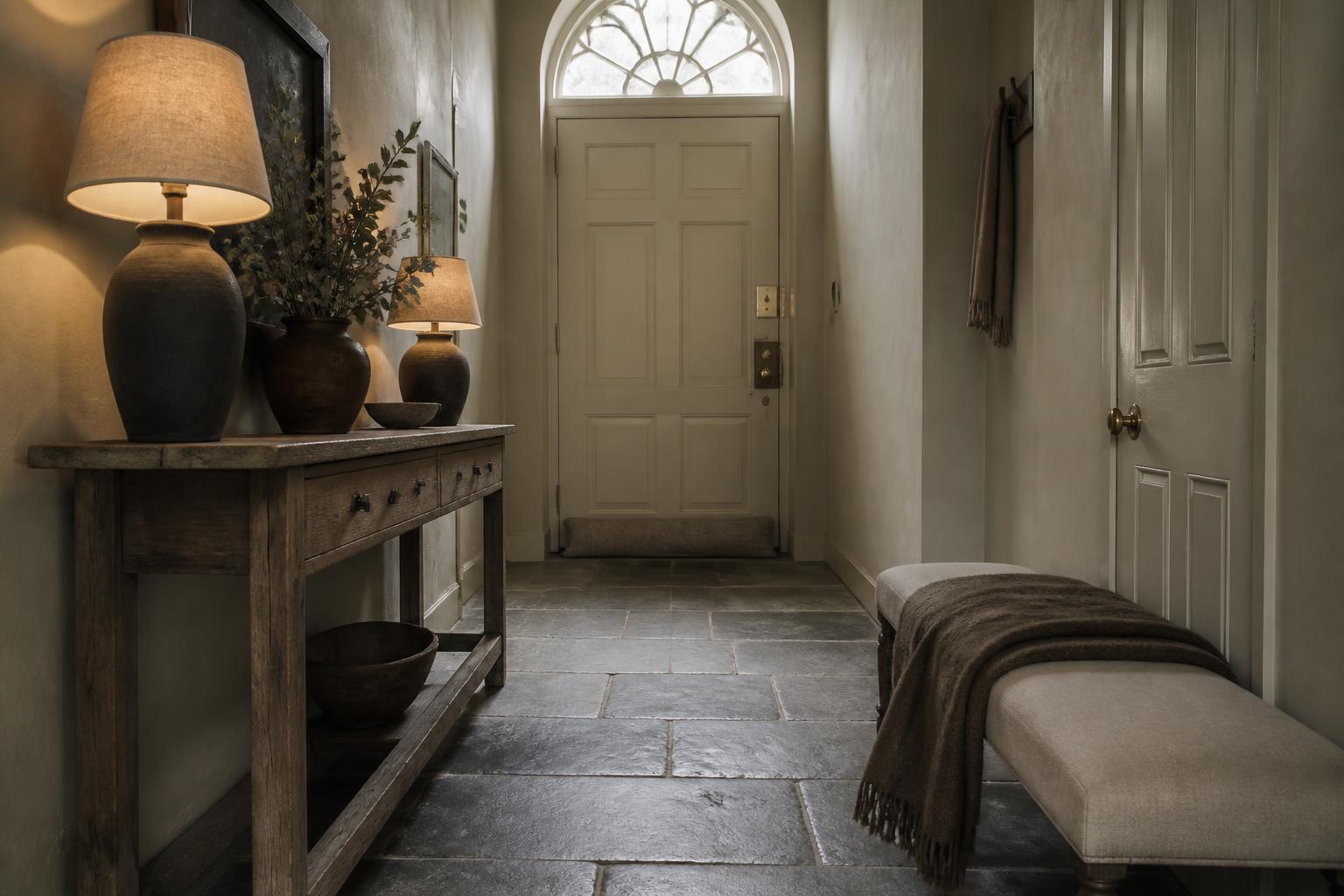
Contrast creates energy. A sleek modern sofa looks more interesting against panelling or historic cornicing. A rustic stool softens a minimal hallway. A piece of contemporary art breathes life into a room of antiques.
-
Scale is your friend. Do not be afraid to play with proportions. Oversized lamps, tall art, a chunky-legged dining table beside a fine-legged chair. Sameness in scale flattens a room faster than sameness in style.
-
Do not be afraid of large furniture. A generous armoire or a statement dining table can anchor a room and give it presence. Too many small pieces make a space feel cluttered rather than curated.
-
Mixing eras makes a space feel collected. Too much from one period, or worse, one shop, flattens the room. Aim for at least three centuries in any room you spend real time in. A 19th-century chest, a mid-century lamp, a contemporary cushion.
-
Keep a through-line. Whether it is a trim colour, a metal finish or a recurring textile, repetition brings balance to variety. Without a through-line, layered becomes chaotic.
-
Use the bones of the house as your anchor. A 17th-century canal house can take patina and age in abundance. A modern build often benefits from sharper contrast: one or two strong vintage pieces against a clean shell.
The thread that ties everything together is honesty. Be real about how you live, and design accordingly.
On materials: finding harmony in the mix
One of the most common concerns clients raise is whether it is acceptable to mix materials or finishes. The answer is yes, almost always, and the mix usually improves the space. The key is understanding what harmonises.
Wood. Different wood tones can absolutely coexist. The trick is to vary them intentionally. A dark oak floor with a lighter ash table, walnut joinery against pale lime-washed beams. What to avoid is two or three woods that are almost-but-not-quite the same tone. Either match them deliberately, or contrast them clearly.
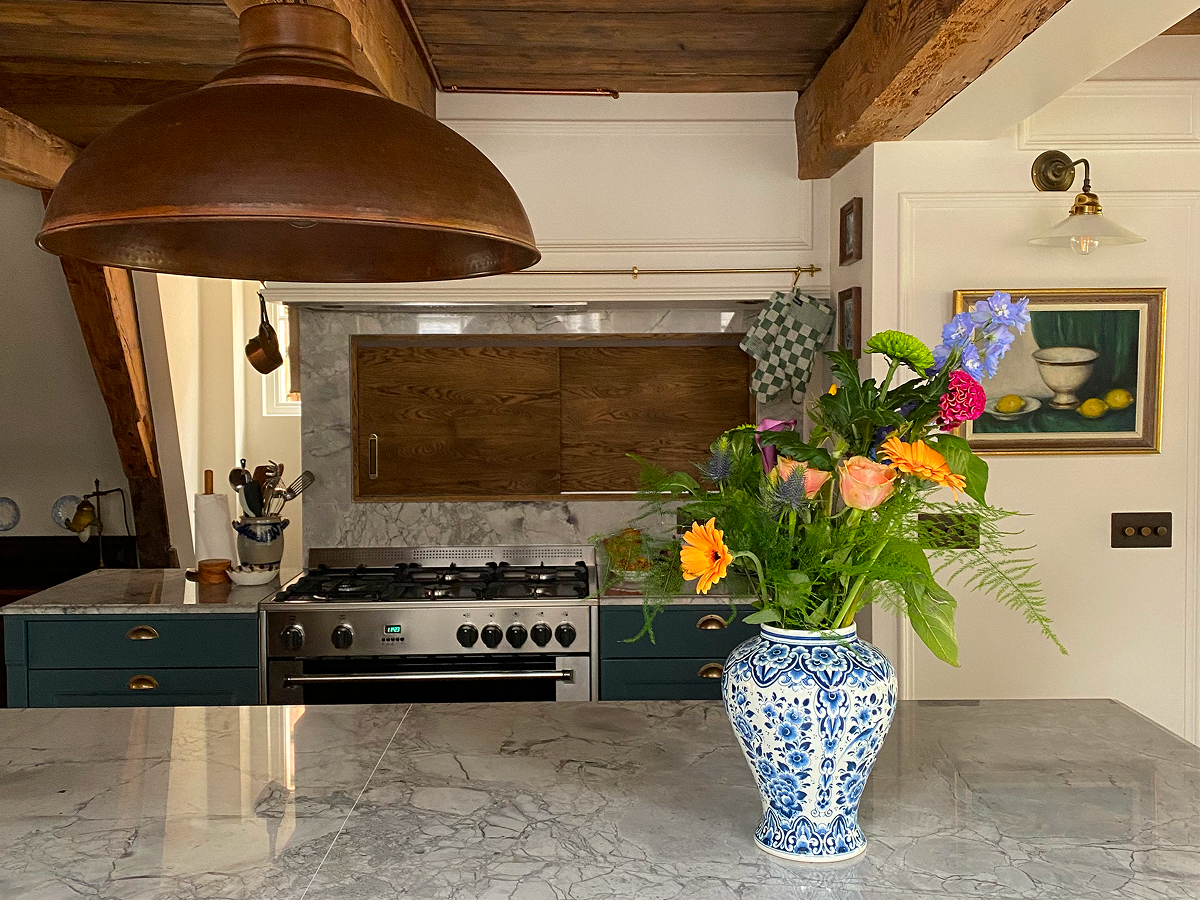
Metal. Mixing chrome, brass, nickel and black finishes adds visual depth, especially in kitchens and bathrooms. It keeps things from feeling flat or showroom-coordinated. Let one metal dominate and use the others as accents. A brass-led kitchen with black ironmongery and a nickel tap reads richer than a kitchen entirely in brass.
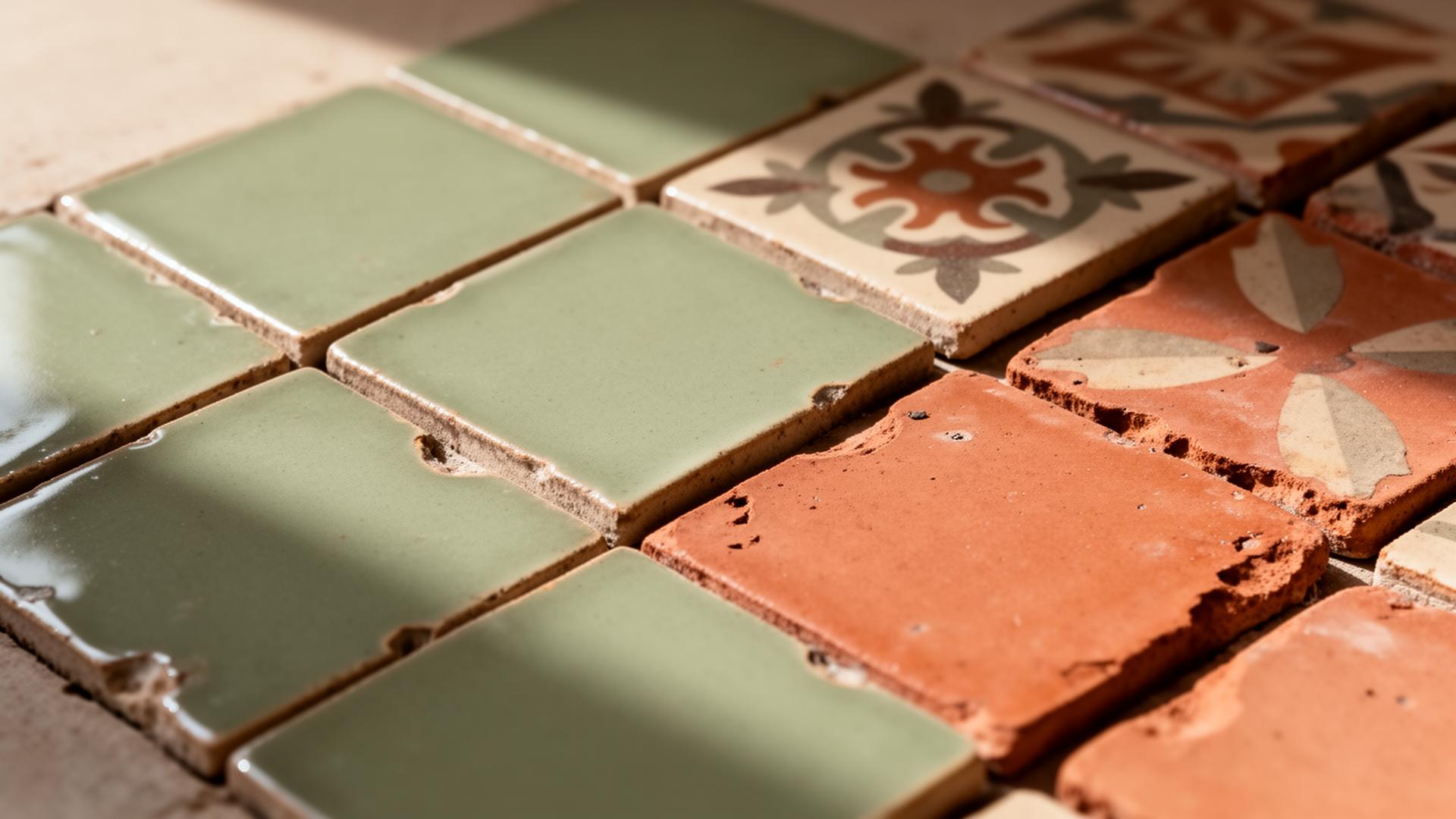
Stone. Marble, granite, quartzite, slate and limestone can all work together if you consider undertone and texture. Cool grey marble pairs beautifully with warm brass fixtures. Busy granite reads best when balanced by simpler surfaces nearby.
Fabric and texture. Linen, velvet, wool, leather, silk: layering different textures brings warmth and depth. A velvet cushion on a linen sofa, a wool throw over a leather chair, a silk lampshade above a wooden table. Contrast in texture is what stops a room from looking like a furniture suite.
Combinations that work beautifully:
-
Aged brass with dark wood and white marble.
-
Black metal with oak and concrete.
-
Warm brass with walnut and travertine.
-
Nickel with painted joinery and slate.
-
Aged copper with lime plaster and natural linen.
The thread tying it all together is colour temperature. Warm with warm, cool with cool, or use one as an intentional accent against the other. Once you start looking at materials this way, the choices become easier rather than harder.
A note on patina
The word that does the most work in a layered home is patina. It means the marks of age and use that you cannot fake: the wear on the arm of a leather chair, the soft glow on an old brass handle, the chips on the rim of a salt-glazed bowl. These are the things that make a room feel grown rather than bought.
Buy at least one piece in every room that has lived a life before it reached you. A vintage rug, an antique mirror, a chest with old hinges. New objects have their place, but a room of only new objects rarely feels like a home.
If you are stuck, start small
A common question I get is: how do I actually start layering vintage or antique pieces into a fairly new home?
The easiest way is to begin with the decorative, where the financial and emotional risk is low:
-
Add a wooden chair, an old side table, or a framed print.
-
Look for ceramic bowls, vases or candlesticks at flea markets or on Marktplaats.
-
Stack vintage books on a shelf or table.
-
Mix in a few older textiles: lace runners, embroidered cushions, heavy linen napkins, a piece of old kilim made into a cushion cover.
-
Replace one mass-produced lampshade with a vintage one.
Swapping out taps, lighting or built-in joinery can be beautiful, but often requires a professional. Focus first on what you can change easily and build confidence over time. The eye trains quickly once you start.
For a deeper dive into where to find vintage and antique pieces, from online marketplaces and antique fairs to salvage yards and kringloops, see my Sourcing Guide.
Editing as you go
Layering is not the same as accumulating. Every six months or so, walk through the rooms you spend most time in and ask which pieces have earned their place. The ones that have not should move on, to another room, to a friend, to a charity shop. A layered home is in constant quiet motion, and that is what keeps it feeling alive rather than staged.
The goal is not to create a showroom. It is to create a space that reflects who you are and how you live. A layered interior does not mean filling a space. It means knowing what to edit, what to keep, and how to build a home that tells a story through every detail.
A layered home is never finished, and that is the point. It keeps growing with you.