Tiles are one of the most tactile and expressive materials in any home. They carry history, reflect light differently depending on the hour, and age in ways that mass-produced alternatives simply cannot. Yet tile selection is often rushed, reduced to a quick scroll through a supplier's website in the final weeks of a project.
I think tiles deserve more consideration than that. They are permanent, or close to it, and they set the character of a space in a way that few other finishes can match.
A Word Before You Commit
Before diving into materials and formats, there is something worth stating plainly: tiles are not paint. You cannot change your mind in a weekend. Removing tiles is destructive. In most cases, the wall or floor behind is damaged in the process, meaning the cost of changing tiles includes not just new tiles and labour, but replastering, re-levelling, and sometimes re-waterproofing.
That playful patterned tile you spotted on Instagram or Pinterest may look wonderful in a curated photograph, but ask yourself honestly whether you will still love it in ten years. Bold, trend-driven designs date faster than quieter choices. If you crave colour and pattern, consider introducing it in a controlled way: a decorative border, a handful of special feature tiles set within a neutral field, or a single accent wall rather than an entire room. These approaches give you personality without painting yourself into a corner.
Alternatively, add playfulness through elements that are far easier to change. Textiles, art, and accessories can bring exactly the same energy as a statement tile, with the advantage that they can be swapped out when your taste evolves, or when you simply fancy a change.
Zellige: The Imperfect Tile
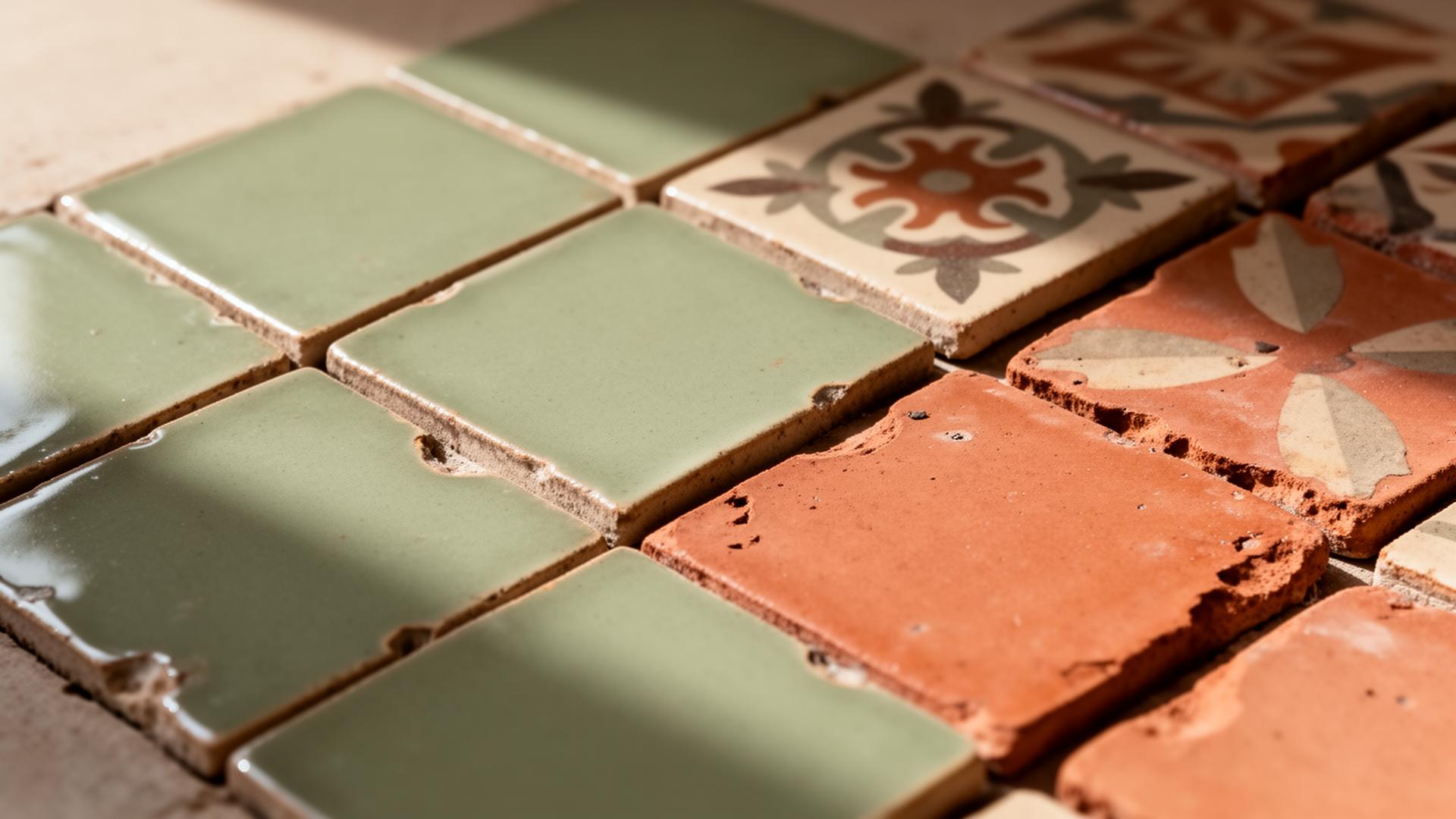
Zellige tiles are handmade in Morocco, individually cut and glazed. No two are exactly alike, and that is the point. The slight variations in colour, surface, and edge are what give zellige its distinctive depth and warmth. In certain light, a wall of zellige tiles appears almost liquid, shifting between tones as the angle changes.
They work beautifully as kitchen splashbacks, bathroom walls, and fireplace surrounds. The format is typically small, around 10x10cm, though larger and rectangular formats are increasingly available. The colour range is extraordinary, from soft whites and sage greens to deep blues and terracotta.
There are a few things to know before committing. Zellige is not perfectly flat, which means grouting requires care and a skilled tiler. The glaze can chip, particularly on edges, though many people consider this part of the charm. And because they are handmade, wastage rates are higher than with machine-made tiles: I always recommend ordering at least 15 per cent more than the measured area requires.
The price sits at the higher end, typically between 80 and 200 euros per square metre depending on the supplier and colour. But for the texture and character they bring, I consider them one of the most worthwhile investments in a renovation.
Encaustic: Pattern with History
Encaustic tiles are made by pressing coloured cement into a mould. The pattern is not painted on the surface but runs through the body of the tile, which is why encaustic floors in Victorian hallways and Parisian apartments still look striking after a century of use.
The patterns available range from geometric to floral, from bold to subtle. I tend to favour simpler geometric designs, particularly in hallways and bathrooms, where the pattern can hold the room without competing with other elements. A single encaustic tile used as a border or threshold can be equally effective, adding a moment of detail without overwhelming the space.
Encaustic tiles require sealing before and after installation to prevent staining. They are porous by nature, and an unsealed encaustic floor in a kitchen will absorb oil and moisture quickly. With proper sealing and maintenance, they age beautifully, developing a soft patina that adds to their warmth.
Modern reproductions are widely available and often more consistent in thickness and finish than reclaimed originals. Both have their merits. Reclaimed tiles carry genuine history but come with the challenges of irregular thickness and limited supply. Reproductions offer reliability and wider pattern choice. I source both, depending on the project and the client's priorities.
Metro and Subway: The Versatile Standard
The metro tile is the most commonly used tile format in the world, and for good reason. It is affordable, widely available, and works in almost any context. The standard 7.5x15cm white metro tile is a safe choice, but it is not the only option.
Format variations make a significant difference. A longer, thinner brick format feels more contemporary. A square format reads differently again. Colour choices beyond white, think sage, blush, navy, or charcoal, can transform a metro tile from functional to characterful. A bevelled edge catches light differently from a flat edge. These details matter more than most people realise.
I often recommend metro tiles for areas where the tile is a supporting player rather than the star: the inside of a shower enclosure, a utility room, or the wall behind a basin. They are cost-effective, easy to replace, and their simplicity allows other materials in the room to take centre stage.
Natural Stone Tiles
Stone tiles, including marble, limestone, travertine, and slate, bring a depth and variation that ceramic cannot replicate. Each piece is unique, cut from the earth, and that geological character is what makes stone so compelling in the right setting.
Marble is the most popular choice, but it is also the most demanding. It stains, it etches, and it scratches. Honed marble is more forgiving than polished, and lighter marbles show less etching than darker ones. If you are considering marble for a kitchen floor, know that it will change over time. If that evolution appeals to you, it is a wonderful choice. If it does not, there are more practical alternatives.
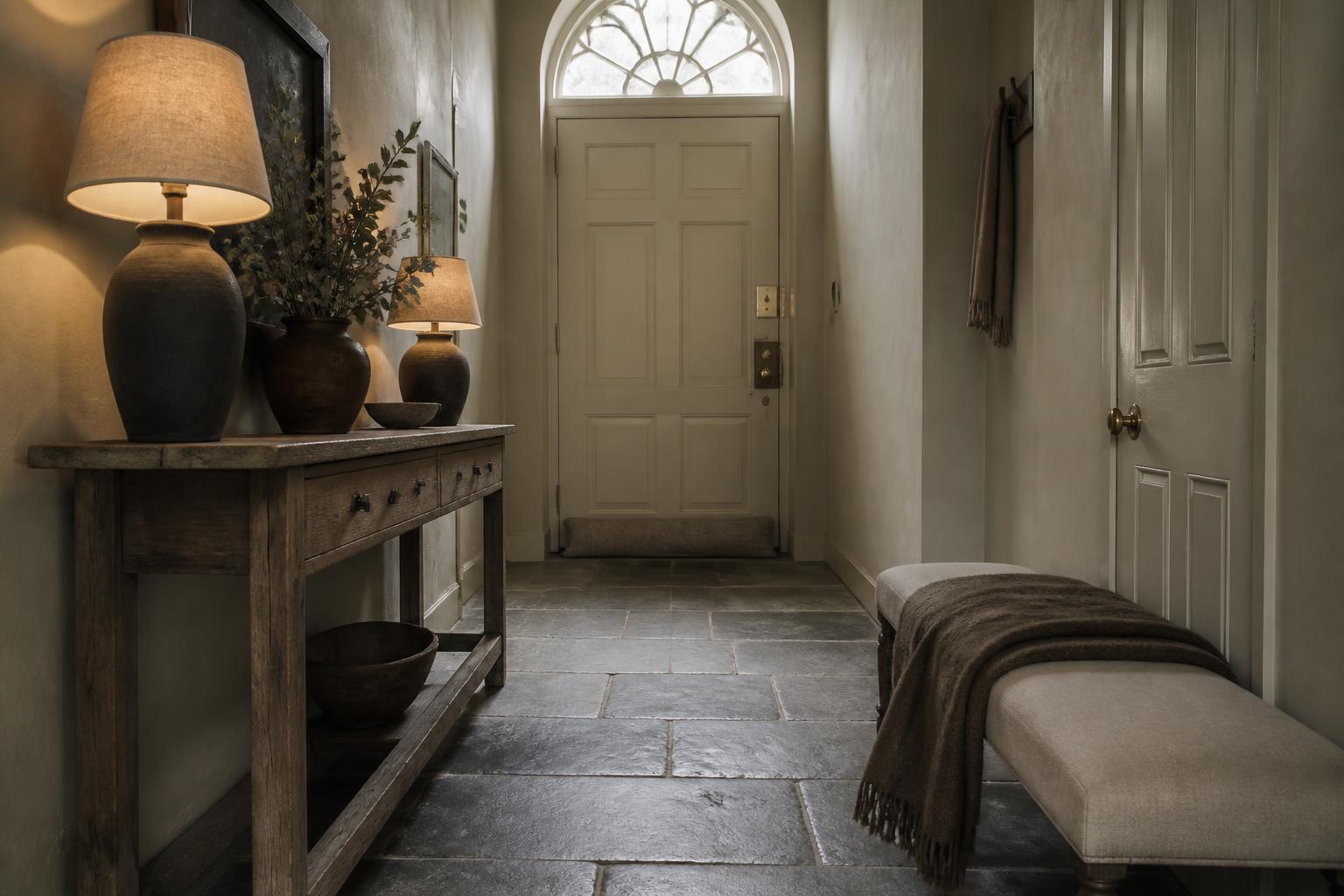
Limestone is the material I recommend most often for floors. It is warm underfoot, available in a range of tones from cool grey to honey, and it weathers gracefully. Tumbled limestone has a softer, more antique feel. Honed limestone is smoother and more refined. Both work well with underfloor heating, which is worth considering if your property allows it.
Travertine has enjoyed a resurgence, particularly in bathrooms. The filled and honed variety is the most practical. Unfilled travertine, with its natural pitting, has enormous character but requires more maintenance and is not ideal for wet areas.
Porcelain: The Practical Choice
Porcelain tiles are engineered for performance. They are non-porous, scratch-resistant, and available in formats and finishes that convincingly replicate natural stone, wood, and concrete. For high-traffic areas, wet rooms, and heated floors, porcelain is often the most sensible choice.
The quality gap in porcelain is wider than in any other tile category. Budget porcelain can look flat and lifeless. Higher-quality porcelain, particularly from Italian and Spanish manufacturers, achieves remarkable realism in both texture and colour variation. The difference is worth seeing in person before committing, as online images rarely do justice to the surface quality.
Porcelain makes particular sense in spaces that need to work hard: entrance hallways that face wet boots and muddy shoes, bathrooms where standing water is a daily reality, and kitchens where dropped pans and spilled wine are inevitable. It is not a compromise. It is a practical decision that, when sourced well, delivers both performance and visual warmth.
Pattern, Colour, and What Is Trending
Pattern in tile is having a moment. After years of large-format, minimal slabs dominating new builds, there is a clear shift back toward expressive surfaces. Geometric patterns, whether encaustic, printed porcelain, or hand-painted ceramic, are appearing in hallways, splashbacks, and powder rooms with increasing confidence.
In colour, the soft greens that have dominated the past few years are giving way to warmer, earthier tones. Terracotta, ochre, and warm sand are becoming the default palette for floor tiles in renovated properties. Deep blue remains popular for feature walls, particularly in bathrooms, and there is a growing appetite for tiles with visible variation and movement rather than flat, uniform colour.
Large-format tiles continue to work well in modern bathrooms where minimal grout lines are desirable, but the resurgence of smaller formats is notable. The 10x10cm square, the narrow finger tile, and the hexagon are all being used to add texture and interest to surfaces that might otherwise feel flat. The choice of format changes the feel of a room as much as the colour does.
Mixing Materials, Scales, and Laying Patterns
One of the most effective ways to add depth to a tiled space is to mix materials or formats within a considered scheme. A zellige splashback paired with a limestone floor creates contrast between the handmade and the geological. A patterned encaustic floor meeting a plain plaster wall lets the tile command attention without competition.
Scale is critical when mixing. A large-format floor tile and a small-format wall tile create a natural visual hierarchy. Two tiles of similar size but different materials can feel restless and unresolved. As a general rule, I vary either the scale or the material, but rarely both at once, unless the space is generous enough to absorb the complexity.
Laying pattern deserves its own consideration. The same tile laid in a brick bond, herringbone, or basket-weave reads entirely differently. Herringbone adds movement and energy. Brick bond is calmer and more horizontal. A straight stack, tiles aligned in a grid, feels contemporary and clean. The grout colour amplifies or softens these effects: a matching grout minimises the pattern, while a contrasting grout makes the format the feature.
I recommend deciding the laying pattern before purchasing tiles, not after. Some patterns generate significantly more waste than others. Herringbone, for example, typically requires 15 to 20 per cent overage, whereas a straight stack may need only 10 per cent.
Practical Considerations: How People Actually Live
Tiles are a permanent finish, and the decision should account for daily life rather than showroom conditions. A few considerations I raise with every client:
Slip resistance. This is non-negotiable for bathroom floors, entrance hallways, and any area that gets wet. Tile slip resistance is measured on the R scale, from R9 (minimal grip) to R13 (high grip). For a bathroom floor, I would not recommend anything below R10. For an outdoor terrace or pool surround, R11 or R12 is safer. A tile can be beautiful and still dangerous. Always check the rating, not just the appearance.
Underfloor heating. Most tiles are compatible with underfloor heating, but the adhesive and substrate matter as much as the tile itself. Flexible adhesive is essential to accommodate thermal movement. Stone tiles conduct heat well and feel warmer underfoot than ceramic. This is a genuine comfort consideration, particularly in northern European properties where bare feet on cold tile is a daily reality from October to April.
Pets and children. Glossy, polished tiles scratch more visibly and are more slippery when wet. Textured or matt finishes are more forgiving and safer. In a home with dogs, I would always steer toward a tumbled or honed finish on the floor. Colour matters too: very light and very dark tiles both show marks, dirt, and pet hair more than mid-toned options.
Wet rooms and shower floors. Smaller format tiles with more grout lines provide better grip underfoot than large slabs. Mosaic tiles on a mesh backing are the most common choice for shower trays because the grout lines create natural traction. The grout should be epoxy-based in wet areas, as it is non-porous and resists mould far better than standard cement grout.
Caring for Your Tiles
Good tiles should last decades, but they do need appropriate care. The regime depends entirely on the material.
Zellige and glazed ceramic. Wipe with a damp cloth and a mild, pH-neutral cleaner. Avoid anything acidic, including vinegar-based solutions, as these can dull the glaze over time. Zellige is more porous than standard ceramic, so spills on unglazed edges should be wiped promptly.
Encaustic and cement tiles. These require sealing on installation and periodic resealing, typically every one to two years depending on traffic. Clean with a pH-neutral detergent and warm water. Avoid bleach, acidic cleaners, and abrasive pads. A well-maintained encaustic floor develops a soft patina that enhances its character.
Natural stone. Seal on installation and reseal annually for high-traffic areas. Stone-specific cleaners are worth the modest cost. Acidic substances, including lemon juice, wine, and tomato, will etch marble and limestone if left to sit. For daily cleaning, warm water and a micro-fibre cloth are sufficient. Deeper cleaning should use a product formulated specifically for the stone type.
Porcelain. This is the lowest-maintenance option. Porcelain is non-porous and does not require sealing. Regular sweeping and mopping with a standard floor cleaner is sufficient. For textured porcelain, a soft brush attachment on a vacuum removes grit from surface grooves more effectively than a flat mop.
Grout. Grout maintenance is often overlooked. Cement grout should be sealed after installation and resealed periodically. Epoxy grout does not require sealing but can discolour if cleaned with harsh chemicals. For refreshing discoloured grout, a grout pen or professional steam clean can restore the original tone without re-grouting.
A note on bleach and limescale removers. These are among the most common causes of preventable tile damage. Bleach can discolour grout, strip sealant from natural stone, and dull the glaze on handmade tiles. Limescale removers are typically acid-based and will etch marble, limestone, and encaustic cement on contact. If limescale build-up is an issue, particularly around taps and shower fittings, use a product specifically formulated for the tile material, or soften deposits with a paste of bicarbonate of soda and water before gently removing. Prevention is easier than repair: a squeegee after each shower and regular wiping around taps will reduce limescale significantly.
Choosing the Right Tile
The most important question is not which tile is trending but which tile suits the space, the use, and the person living with it. A splashback behind a hob needs to be wipeable. A hallway floor needs to withstand foot traffic and wet shoes. A bathroom wall can afford to be more decorative because it faces less wear.
I always recommend seeing tiles in person before ordering. Colours shift between screen and reality. Textures are impossible to judge from a photograph. And scale matters enormously: a tile that looks generous in a showroom can feel entirely different in a small bathroom.
Tile selection is one of the areas where a trained eye makes a measurable difference. The format, the grout colour, the laying pattern, and the relationship between the tile and its neighbouring materials all contribute to the final result. Getting these details right is what separates a tiled surface from a considered one.
If you are choosing tiles for a project and would like a second opinion, or a first one, I am always happy to help.