I believe sourcing is a form of design. The pieces you bring into your home shape how it feels, functions and evolves over time. Whether you are furnishing from scratch or slowly refining, knowing how to source well - where to look, what to check, and when to wait, makes all the difference.
Sourcing is often the part of interior design that feels most overwhelming. It is easy to panic-buy, to follow trends, or to feel unsure whether something is worth the spend. This guide shares lessons learned from sourcing for homes across Amsterdam and beyond, blending a stylist's eye with a buyer's practicality. The hunt is half the joy. There is nothing quite like stumbling upon the perfect piece when you least expect it.
Start With Purpose, Not Panic Buying
Before you open your laptop or visit a showroom, take stock. Ask yourself:
- What is the purpose of this piece?
- Where will it live, and how will it be used?
- Does it suit my lifestyle, my home, and my taste?
I always recommend starting with references, whether it is House & Garden, The World of Interiors, or simply a well-curated Pinterest board. But do not copy someone else's style just because it is polished. Choose pieces that make you feel something.
And do not rush to fill every gap. A beautiful home has breathing room. Buying slowly often results in better decisions.
Furniture: What to Check Before You Commit
Furniture is foundational. It sets the tone for every room. But not all "vintage" or "solid wood" claims are equal.
Before you buy:
- Check if it is solid wood or veneer
- Look for dovetail joints over glue or staples
- Test stability (especially chairs, tables and cabinets)
- Confirm dimensions (do not rely on photos)
- Ask about signs of rot, woodworm or sagging
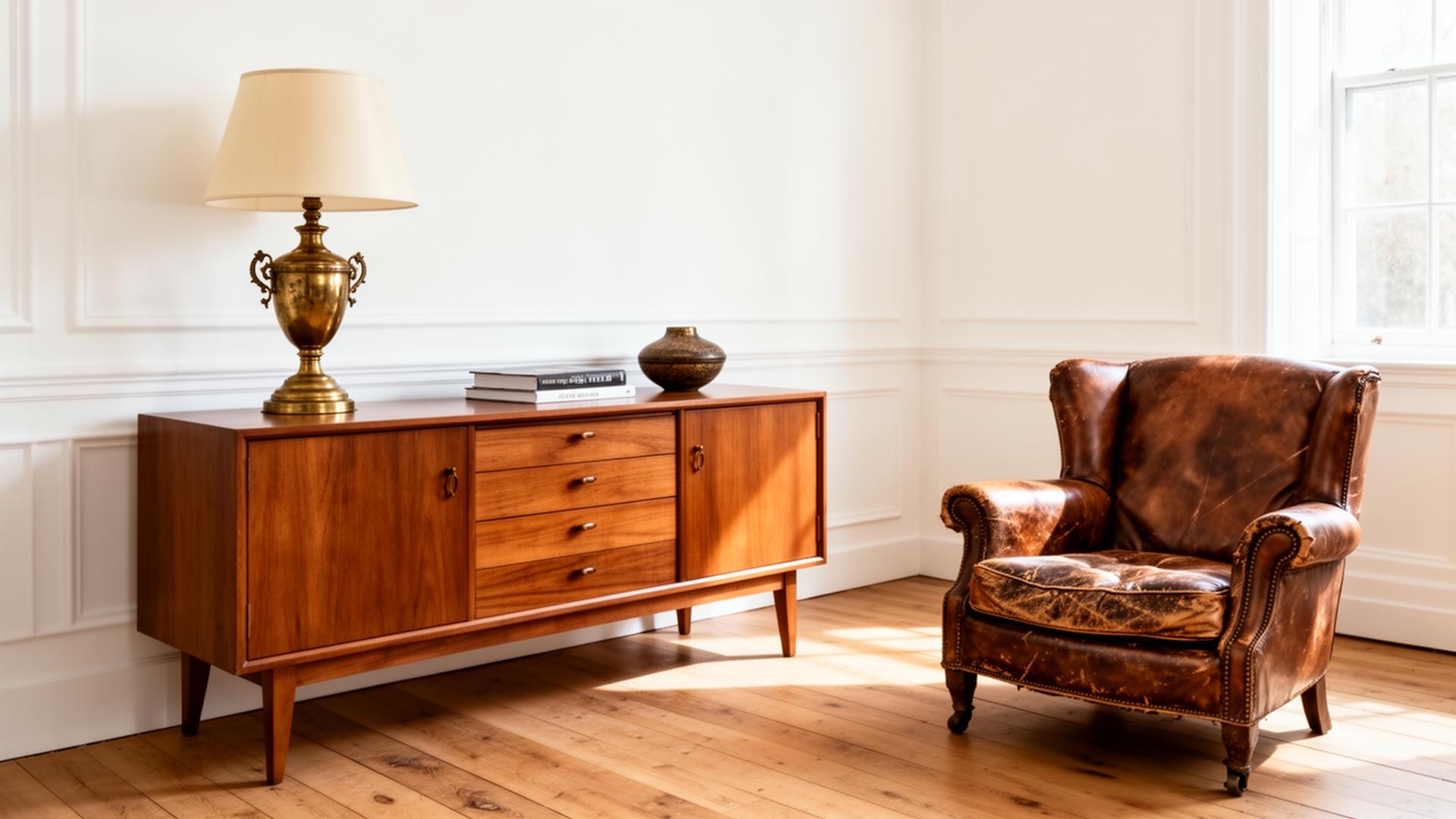
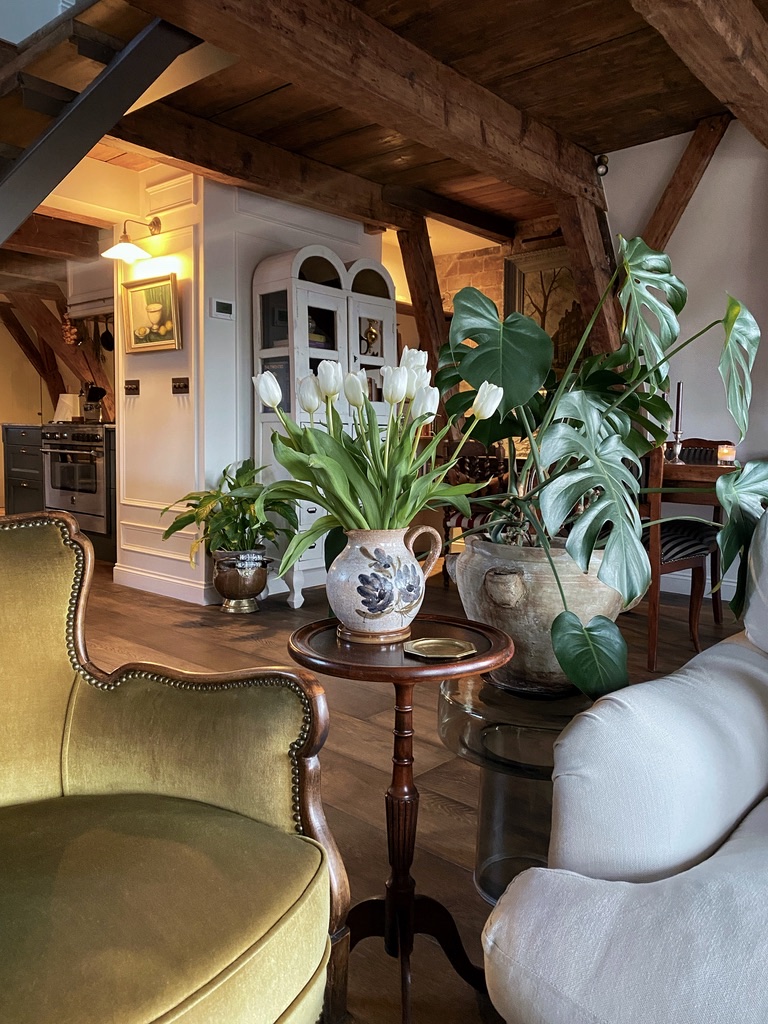
Mixing eras is where the magic happens. A Georgian chest beneath a pared-back contemporary lamp. A mid-century chair beside a carved oak side table. The contrast gives rooms depth and stops them feeling like a showroom.
Large-scale vintage finds can be transformative. A colonial cabinet sourced from a kringloop, hoisted through a canal-side window, can anchor an entire room. These are the pieces worth the effort.
Fixtures & Fittings: Do not Overlook the Details
The smaller details (switches, sockets, taps, handles) might seem like afterthoughts, but they are often what guests comment on most.
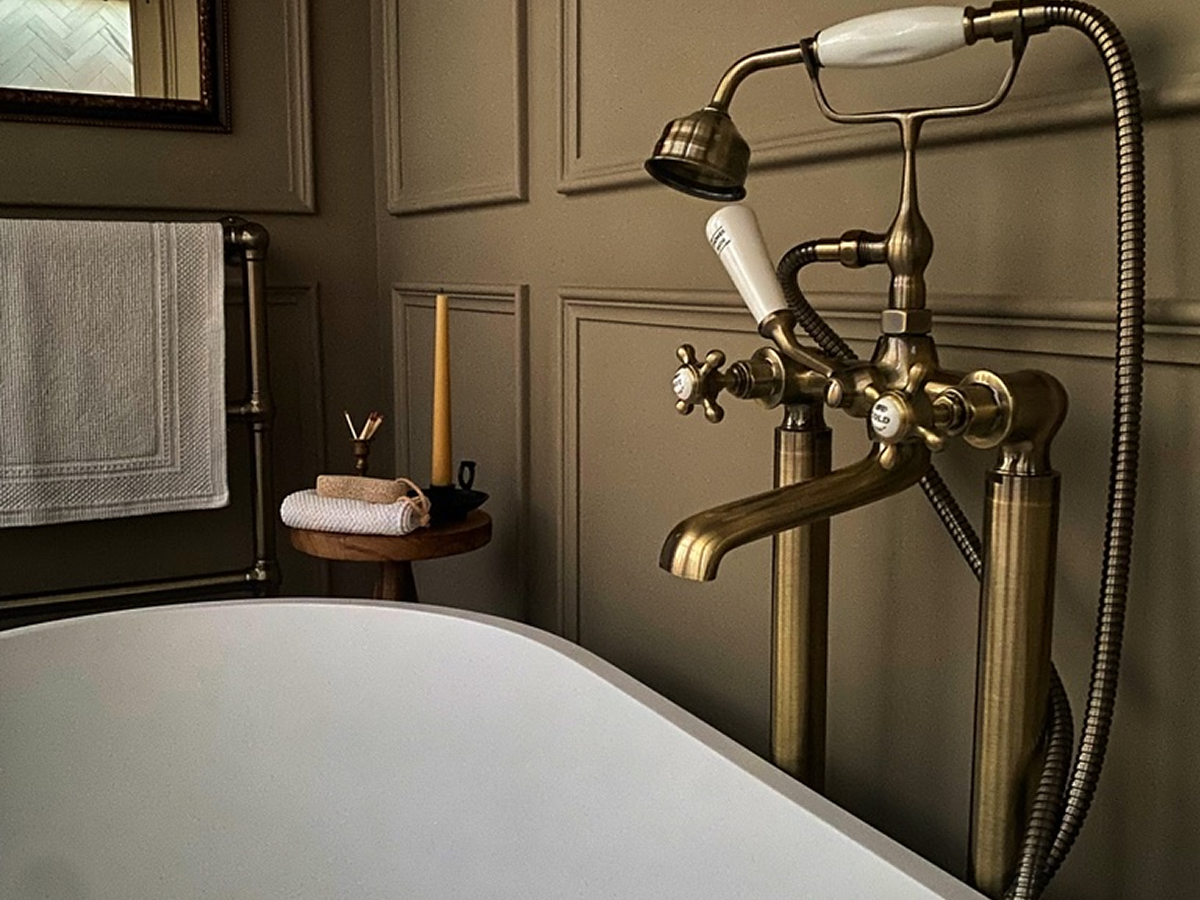
Good hardware adds weight and character to a room. Look for aged finishes (brass, nickel, bronze) and solid materials that will not chip or peel. Soho Lighting (toggle switches) and Corston (electrical plates) in the UK are excellent sources for period-style hardware that can be harder to find at a reasonable price in the Dutch market.
If you are buying vintage:
- Check taps will fit modern plumbing
- Ensure lights have been rewired or can be safely updated
- Ask for fitting specs. Older hardware may not suit EU wall boxes
Mixing metals? Absolutely. Especially in bathrooms, where it keeps things from looking too matchy. Just keep a consistent tone - warm with warm, cool with cool.
Stone & Surfaces: Choose for Beauty and Use
Stone elevates a space, but it has to be chosen carefully. Consider:
- Marble: classic and elegant, but porous. Avoid on kitchen counters or floors unless properly sealed
- Granite: durable and less prone to staining, but often has a busier pattern
- Quartzite: my personal favourite - subtle, hard-wearing, and natural
- Limestone: soft and warm, beautiful for floors but requires sealing and care
- Terrazzo: a wonderful choice for adding subtle pattern. Works beautifully in bathrooms and hallways
- Zellige tiles: handmade Moroccan tiles with natural variation. Perfect for splashbacks or accent walls
- Composite stone: more affordable and uniform, often good for bathrooms or utility zones
White fantasy quartzite is an excellent worktop choice: tonal, cool under hand, and stands up to daily use. Marble chequerboard floors work beautifully in bathrooms, but always choose a finish that will not become slippery when wet.
Before you fall for a look, ask yourself:
- Am I someone who wipes spills immediately?
- How often do I cook?
- Do I want something with patina, or something that stays pristine?
There is no wrong answer. But be honest.
Appliances, Services & Delivery: What People Forget
Let us talk about the boring stuff: white goods and delivery. These are the things that do not make your Pinterest board, but they make your renovation livable.
My tip: Buy refurbished, high-quality brands that offer a warranty. In the Netherlands and UK, there are excellent suppliers who sell ex-display or returned models for less. You get quality without overpaying for a brand-new sticker.
Also factor in delivery early. Especially for online or marketplace finds:
- Ask for dimensions and weight
- Confirm whether it is curbside or in-home delivery
- Check access: narrow doors, spiral stairs, canal lifts... all matter
In the US especially, delivery can cost more than the piece itself. A "free sofa" on Craigslist is less appealing if it takes $400 to get it up the stairs.
Know When to Splurge (and When Not To)
I love helping clients get the most from their budget. Here is how I usually advise dividing it:
Worth Investing In:
- Built-in joinery
- Daily-use appliances
- Sofas (make sure they suit your lifestyle)
- Lighting (especially one great statement piece)
- Stone countertops
- Quality paint (especially in period homes where breathability matters)
- Brassware and tapware
- Door handles and hardware
Where to Save:
- Rugs (especially in high-traffic areas)
- Vintage storage and dressers
- Kitchen ceramics and old books
- Decorative accessories and art
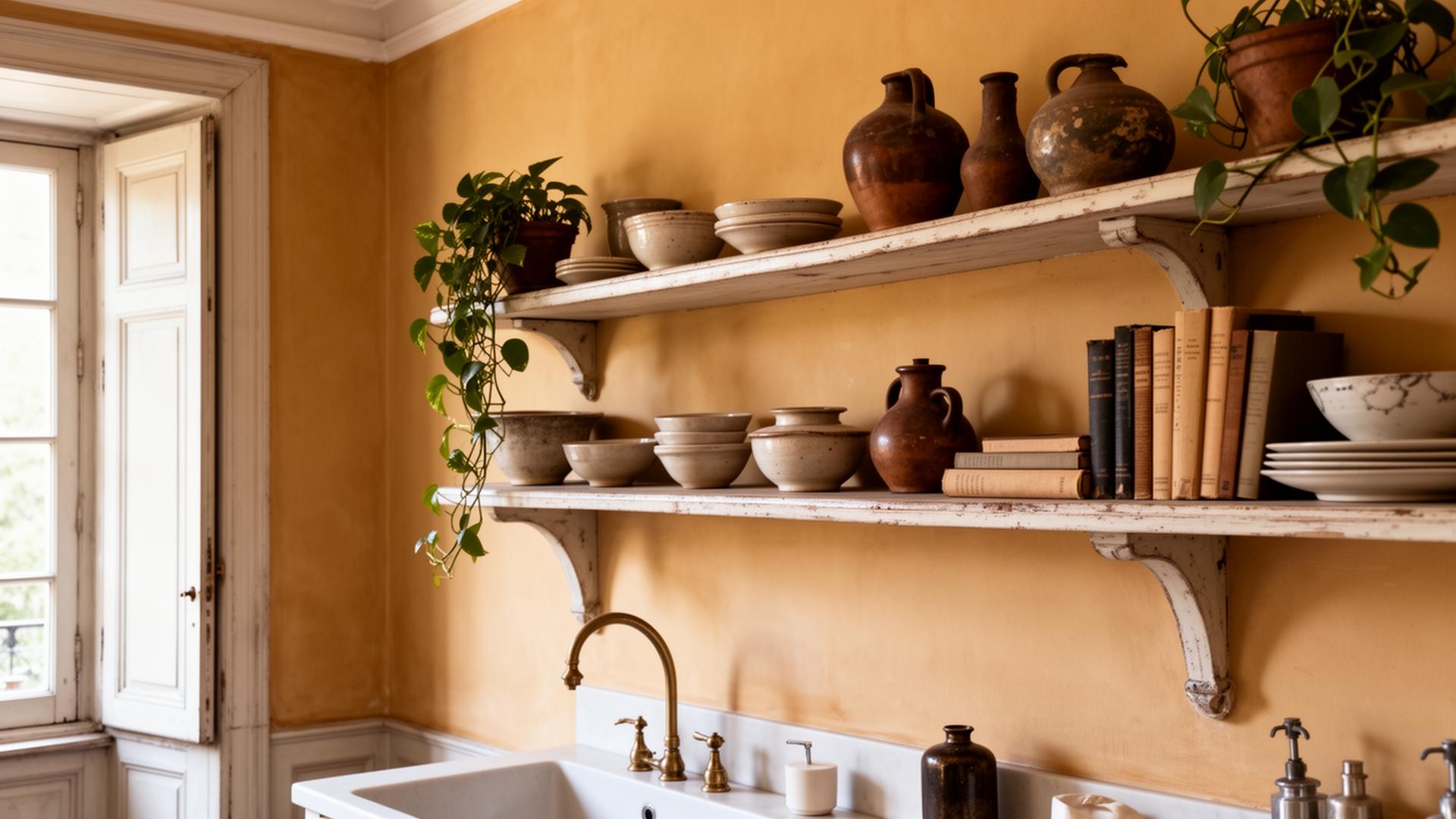
- Items you can find second-hand with a bit of digging
Living brass taps develop a beautiful patina over time, but if that green tinge is not for you, choose something with a sealed finish. Know your habits before committing.
Also: stop and think about whether you are paying for a brand name. Many premium and high-street items are made in the same factories. Always check what you are really paying for: material, design, finish, or just the logo.
Where to Look
One of the most common questions clients ask is: where do you actually find these pieces? Here are the go-to sources:
Online Marketplaces: Vinterior, eBay, Selency, Reliving, 1stDibs, and Marktplaats (in the Netherlands). Set alerts for specific terms and check regularly.
Antique Fairs and Markets: In the UK, Newark International Antiques Fair is one of the largest in Europe. Kempton, Ardingly, and Sunbury are also excellent. In Amsterdam, the IJ-Hallen flea market is legendary, and Noordermarkt hosts a weekly antique market on Mondays. The shops along Spiegelgracht and Nieuwe Spiegelstraat are worth browsing too.
Salvage Yards: For architectural pieces (reclaimed doors, flooring, radiators, fireplaces), try Lassco in London, Jan Van Ijken and Achterhuis in the Netherlands, or BCA Matériaux Anciens in Belgium.
Auction Houses: Do not overlook smaller regional houses. Online auctions through Catawiki or Drouot can yield treasures at a fraction of gallery prices.
Charity Shops, Kringloops and Vintage Stores: For smaller items (ceramics, glassware, picture frames, textiles. In the Netherlands, kringloopwinkels are particularly well-curated.
The trick is keeping a sourcing list: notes on sizes, styles, and price ranges so you are ready when the right piece appears.
Do Your Due Diligence
- Read the reviews. Five minutes could save you hours of frustration.
- Check return policies, especially from small suppliers or auctions.
- Ask questions. If the seller is vague, that is a red flag.
- Trust your instincts. If something feels off or overpriced, walk away.
Final Questions to Ask Before Buying Anything
- Is it well made?
- How old is it?
- Can I live with how it will age?
- Will I actually use it?
- Does it feel right?
- Do I have a place for it?
- Does it tell a story?
Takeaways for Smarter Sourcing
- Start with clarity, not panic
- Let your lifestyle lead the decision
- Know your materials and their maintenance needs
- Do not overlook delivery or installation
- Splurge wisely and save where it counts
- Mix new and old confidently
- Value good service. It is part of the experience
Sourcing with intention is a skill. It takes time, research, and sometimes, a little patience. But it is also one of the most rewarding parts of building a home.