Art on the walls is one of the things that makes a house feel like a home. Yet hanging art is something people consistently overthink, avoid, or get slightly wrong, too high, too small, too symmetrical, or just left leaning against the wall for months because the commitment of putting a nail in felt too final.
It does not need to be complicated. A few simple principles will help you hang art with confidence, whether you are placing a single piece or building a full gallery wall.
The Single Piece
When hanging a single artwork, the most important thing is height. The standard gallery rule, centre the piece at eye level, approximately 145–150cm from the floor to the centre of the frame, exists for a reason. It works in most situations because it places the art where the eye naturally rests.
Over furniture, the rules shift slightly. Art above a sofa, console, or sideboard should sit roughly 15–20cm above the top of the furniture, creating a visual connection between the two. Too much space and the art floats disconnected; too little and it looks cramped.
Scale matters as much as placement. A small print on a large wall looks lost. A large painting above a narrow console looks top-heavy. The artwork should feel proportionate to both the wall and the furniture below it. A good rule of thumb: the art should be roughly two-thirds to three-quarters the width of the furniture it hangs above.
Scale is about context, not size alone. A single generous artwork can anchor a room beautifully, but a carefully placed small painting can be equally powerful when it has the right setting around it.
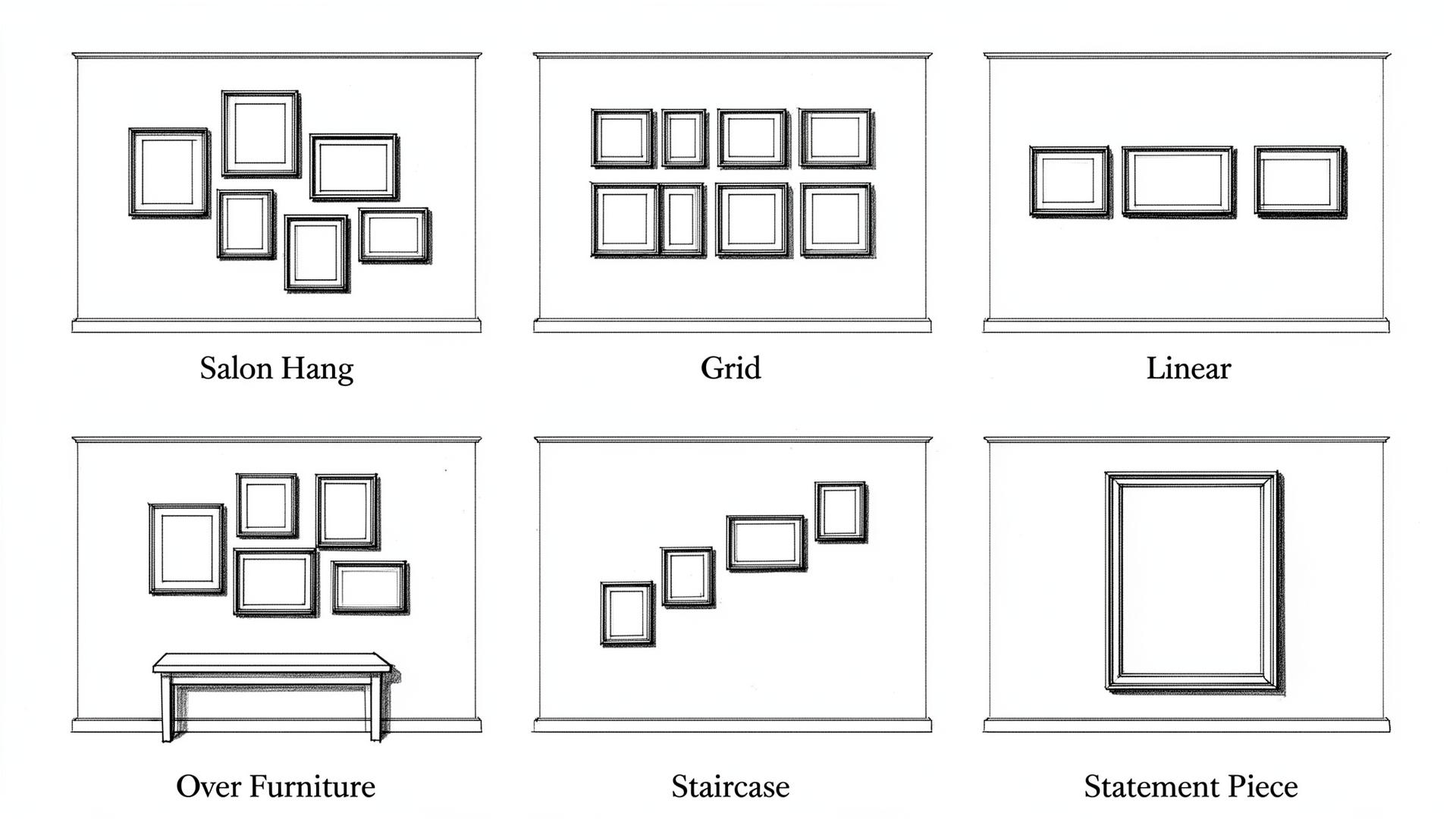
The Gallery Wall
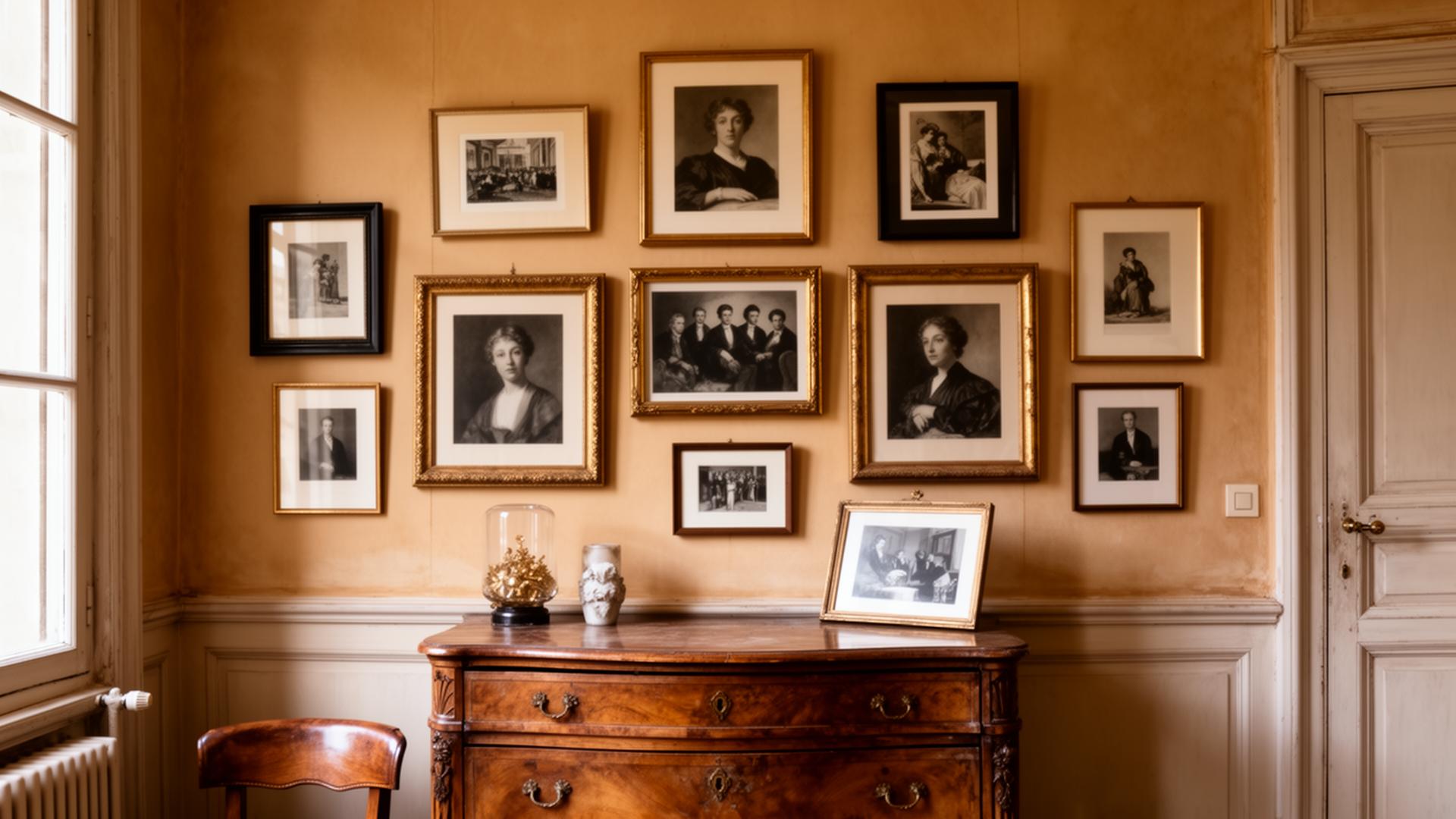
A gallery wall is a collection of framed pieces arranged together to create a cohesive composition. Done well, it is one of the most characterful features you can add to a room. Done poorly, it looks like a jumble sale.
The Salon Hang: The most classic approach, frames of varying sizes arranged organically to fill a wall. This is the style you see in grand European homes and traditional galleries. The key is to maintain consistent spacing between frames (5–7cm works well) and to align either the centre line or the outer edges to create a sense of order within the variety.
The Grid: Identical frames, identical spacing, arranged in neat rows and columns. This works best with a series of related images, botanical prints, black-and-white photographs, architectural drawings. The uniformity is the point. Precision matters here: use a level, measure twice, and keep spacing absolutely consistent (typically 5–8cm).
The Linear Hang: A single row of frames, either aligned along their centre line or their bottom edge, running horizontally along a wall or up a staircase. This works well in hallways, above a long sideboard, or in narrow spaces where a full gallery wall would be too much.
Planning Before You Drill
The most common mistake people make with gallery walls is going straight to the wall with a hammer. Instead:
Lay it out on the floor first. Arrange your frames on the floor in front of the wall, adjusting until the composition feels right. This is far easier than trying to visualise it in the air.
Make paper templates. Cut paper to the size of each frame, tape them to the wall with painter's tape, and live with the arrangement for a day or two before committing. You can adjust, swap, and rearrange without putting a single hole in the wall.
Start from the centre and work outward. Whether it is a salon hang or a grid, begin with the largest or most important piece and build around it. This creates a natural focal point and makes the rest of the arrangement fall into place more easily.
Framing
The frame is part of the artwork. It shapes how the piece is perceived and how it relates to the room around it.
For a cohesive gallery wall, using frames in the same material, all black, all natural oak, all brass, creates unity even when the art itself varies in style and subject. Mixing frame styles can work, but it requires a good eye and usually benefits from a shared colour palette.
For a single statement piece, the frame should complement both the artwork and the room. A heavy gilt frame suits an oil painting in a traditional setting. A slim black frame suits a contemporary photograph. A floating frame, where the artwork is mounted with visible edges, works well with prints and works on paper.
Mount width matters more than people realise. A generous mount (8–10cm) gives the artwork room to breathe and elevates even a modest print. A narrow mount or no mount at all can make a piece feel cramped.
Small Paintings and Miniatures
There is a particular charm to small-scale art that deserves its own consideration. A tiny oil painting on a deep windowsill, a miniature portrait propped on a stack of books, a postcard-sized watercolour in an oversized mount, these pieces invite you to come closer, to slow down and really look.
Small works thrive in intimate settings: above a bedside table, on a narrow hallway shelf, inside a glass-fronted cabinet, or clustered together on a single shelf in a bookcase. They also work beautifully in unexpected places, a small framed drawing hung inside a wardrobe door, a miniature landscape on a bathroom shelf, a tiny still life on a kitchen ledge.
The key is intention. A small painting lost on a vast wall looks like an afterthought. The same painting given its own considered moment, with good light and a little breathing room, becomes something you notice and return to every day. Miniatures and small works reward close attention, and that intimacy is part of their appeal.
What to Hang
You do not need expensive original art to create a beautiful wall. Some of the most interesting collections I have curated for clients include:
Vintage prints and engravings: Botanical illustrations, architectural drawings, antique maps. These can be found affordably at markets, antique shops, and online platforms.
Photography: Your own photographs, printed well and framed consistently, can be more meaningful than anything you could buy. Black-and-white photographs are particularly versatile, they work with almost any interior.
Found objects: Pages from old books, fabric swatches, handwritten letters, children's drawings. Framed thoughtfully, these personal items add layers of meaning that purchased art cannot.
Original art: If you can invest in original art, do. It does not need to be expensive. Emerging artists, local markets, and online galleries offer original works at accessible prices. An original piece has a presence and energy that a reproduction never quite achieves.
Hanging in Period Homes
If you live in a period property with picture rails, use them. Picture rail hooks and chains are designed for this purpose, and they allow you to hang and rearrange without putting holes in potentially historic plasterwork.
For walls with dado rails or panelling, hang art within the panels or above the dado line, never bridging the two. The architecture of the wall should guide the placement.
In rooms with very high ceilings, you have the luxury of hanging art higher than the standard 150cm. A salon-style hang that extends toward the ceiling can be dramatic and suits the proportions of the room. Just make sure the lowest pieces are still at a comfortable viewing height.
Hanging art is not permanent. Walls can be patched, holes can be filled, and arrangements can be changed. The worst thing you can do is leave art unhung because you are afraid of making a mistake. Start with one piece, hung at the right height, and build from there. The wall will tell you what it needs.