If you live in a period property in Amsterdam, or almost anywhere in Europe, chances are your bathroom is not generous. Many of these homes have bathrooms that were carved out of larger rooms during twentieth-century conversions, squeezed into awkward footprints, or tucked beneath staircases. The space is what it is.
But a small bathroom does not have to feel small. With considered choices in layout, materials, colour, and fixtures, you can create a room that feels calm, functional, and far more spacious than its square metres suggest.
Layout: Work with What You Have
In a small bathroom, every centimetre counts. The temptation is to fit in as much as possible, a full bath, a separate shower, double basins, but this usually creates a room that feels cramped and difficult to use.
Start by being honest about what you actually need. If you rarely take baths, a walk-in shower will free up significant floor space and make the room feel instantly more open. If a bath is non-negotiable, consider a shorter length (150cm or 160cm rather than the standard 170cm) or a Japanese-style deep soaking tub, which takes up less floor area.
The single most effective thing you can do in a small bathroom is create uninterrupted floor space. The more floor you can see, the larger the room feels.
Wall-mounted fixtures, a floating vanity, a wall-hung toilet, lift everything off the floor and create a visual lightness that pedestal or floor-standing pieces cannot achieve. The practical benefit is real too: cleaning beneath wall-mounted fixtures is far easier.
Tile: Keep It Simple, Keep It Continuous
Tile choices have an enormous impact on how spacious a bathroom feels. The general principle is simple: fewer visual interruptions make a room feel larger.
Large-format tiles with minimal grout lines create a sense of continuity that small tiles or busy patterns cannot. Running the same tile from floor to wall, or at least using tiles from the same family, eliminates the visual break that makes a small room feel chopped up.
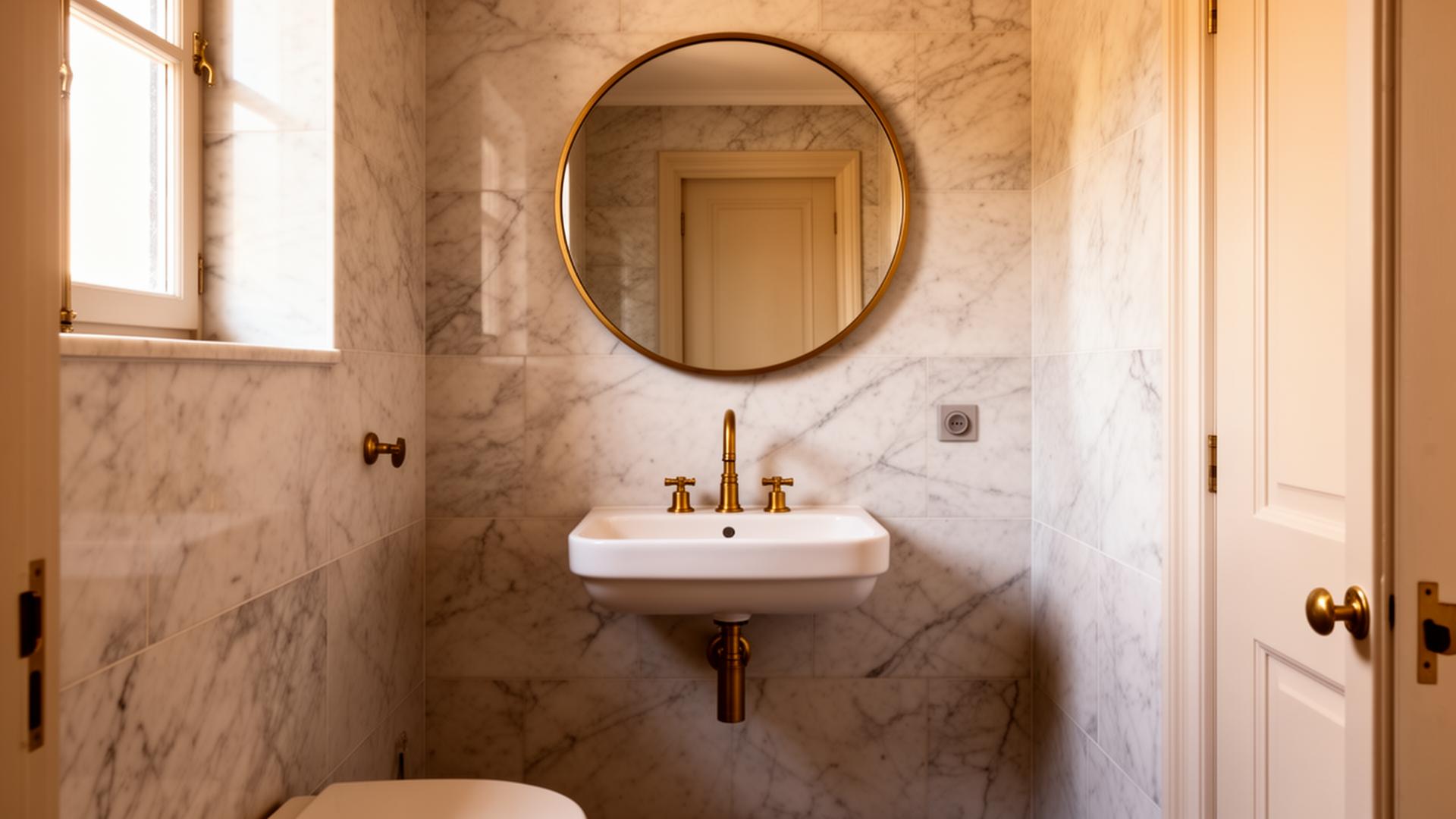
Light colours reflect more light and make walls feel further away. This does not mean everything must be white, warm stones, pale greens, soft greys, and creamy marbles all work beautifully while keeping the room feeling open.
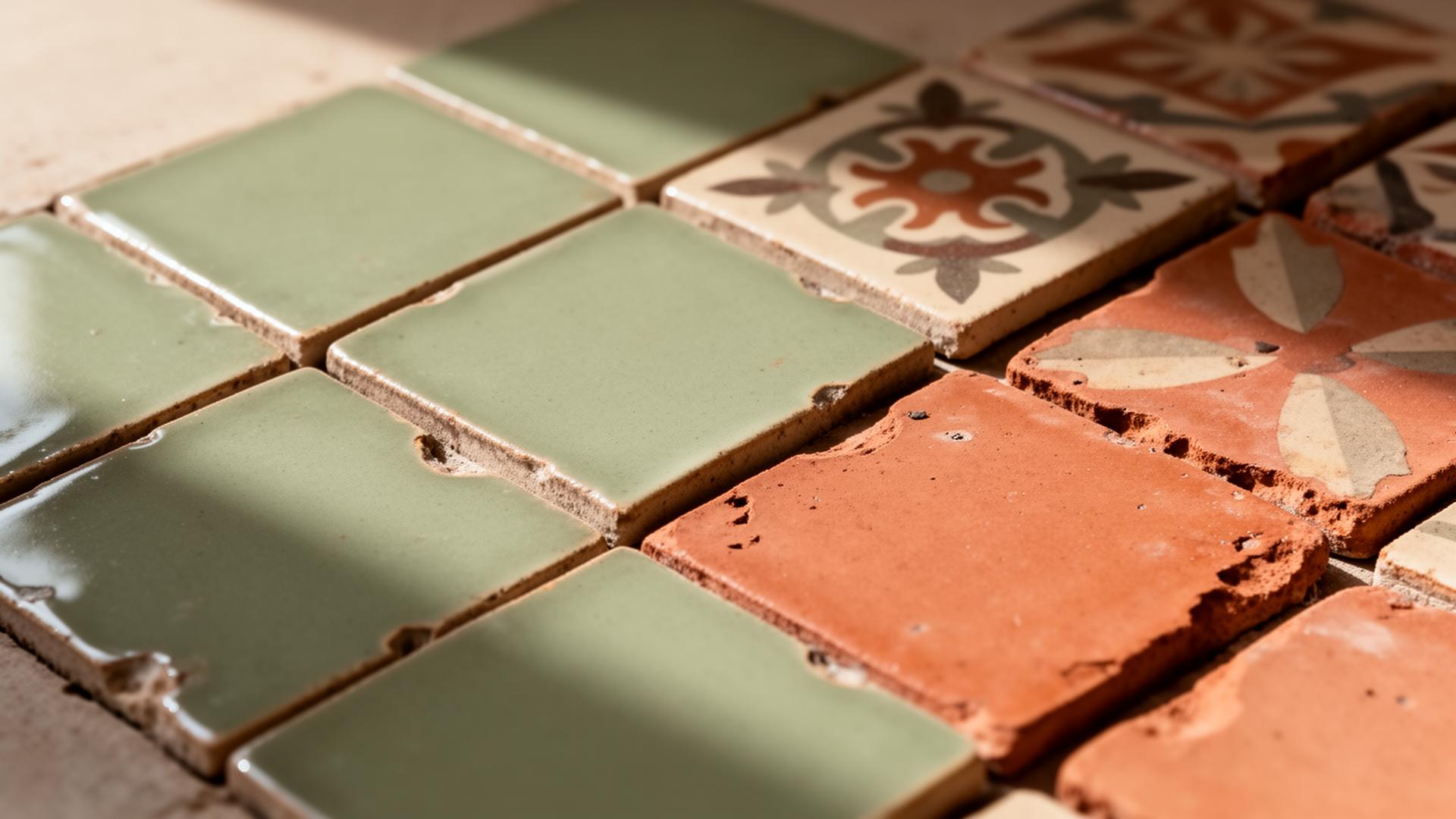
If you want pattern, use it sparingly and with intention. A patterned floor with plain walls can work well. A feature wall behind the vanity can add character without overwhelming the space. But pattern on every surface in a small room quickly becomes claustrophobic.
Grout colour matters too. Matching grout to your tile colour minimises the grid effect and lets the eye travel across surfaces without interruption.
Mirrors and Glass
A well-placed mirror is the oldest trick in the book, but it works because the physics is real: a mirror doubles the perceived depth of a wall.
In a small bathroom, go as large as you can. A full-width mirror above the vanity, edge to edge, with no frame, makes the most impact. If the ceiling is low, a tall mirror draws the eye upward and adds vertical space.
For showers, frameless glass enclosures allow light to pass through and let you see the full extent of the room from any position. A walk-in shower with a single glass panel feels almost invisible in the space.
Avoid frosted or textured glass in small bathrooms. Clear glass maintains the visual openness that makes the room feel larger.
Shower Curtains: An Argument for Softness
I know the conventional advice says glass screens are always better in a small bathroom, and often they are. But I am genuinely a fan of a beautiful shower curtain in the right setting. A floor-length linen or heavy cotton curtain in a muted tone, perhaps a fine stripe or a washed texture, adds a softness that glass simply cannot.
In period bathrooms especially, where you might have a freestanding or alcove bath with a shower over, a generous curtain on a slim brass or iron rod feels more sympathetic to the architecture than a glass screen bolted to original tilework. The fabric moves, it catches light differently through the day, and it introduces a warmth that hard surfaces alone can miss.
The key is quality. A thin, plasticky curtain will cheapen any bathroom. But a properly weighted fabric curtain, hung from a good rod and pooling just slightly on the floor, can feel genuinely elegant.
Colour and Light
Light colours open a space up. Dark colours can work beautifully in small bathrooms too, a deep green or warm charcoal creates intimacy rather than claustrophobia, but they require careful handling. If you go dark, keep the palette consistent and use good lighting to prevent the room from feeling like a cave.
Natural light is the single greatest asset in any small bathroom. If you have a window, keep treatments minimal. Frosted film on the lower portion provides privacy while allowing light to flood in from above.
For artificial lighting, avoid a single overhead light. It creates harsh shadows and makes the room feel flat. Layer your lighting instead: a pair of wall sconces flanking the mirror, recessed ceiling spots, and perhaps a small accent light. Warm-toned lighting (2700K to 3000K) makes a bathroom feel inviting rather than clinical.
Strip lighting in showers is something I always recommend. A recessed LED strip along the shower niche or at the junction of wall and ceiling creates a beautiful, even wash of light exactly where you need it. It eliminates the shadows that overhead spots can cast in an enclosed shower space, and on a dimmer, it turns an evening shower into something genuinely luxurious. Waterproof LED strips rated IP65 or above are straightforward to install and make an enormous difference for very little cost.
Living Brass and Finish Choices
This is very close to my heart. Living brass, the unlacquered kind that patinates and changes over time, is one of my favourite finishes for bathroom hardware. Taps, towel rails, shower fittings, cabinet pulls, all in a brass that starts bright and golden and gradually develops a softer, warmer tone with use.
There is something beautiful about a finish that responds to the life of the room. Each water mark, each touch, builds a patina that is entirely unique to your home. It connects to the tradition of period hardware, where brass was always left to age naturally, and it brings a richness and warmth that lacquered or plated finishes cannot replicate.
The practical reality is that living brass requires a degree of acceptance. It will not stay uniformly polished. It will darken around areas of heavy use and stay brighter where it is less touched. If that unevenness bothers you, lacquered brass or brushed brass gives a similar warmth with more consistency. But if you can embrace the imperfection, living brass ages more beautifully than almost any other bathroom finish.
Whichever metal you choose, carry it consistently through the room. One finish for taps, towel rails, shower fittings, and hardware creates cohesion, and in a small space, that cohesion is everything.
Storage: Hide the Clutter
Nothing makes a small bathroom feel smaller than clutter on every surface. The most effective storage is concealed: a mirrored cabinet above the basin, drawers within the vanity, a recessed niche in the shower wall.
Recessed niches are particularly effective. Cut into the wall between studs, they provide shelf space without projecting into the room. Tile them in the same material as the surrounding wall and they become almost invisible.
If open storage is unavoidable, keep it tightly curated. A single shelf with a few considered objects, a beautiful soap, a small plant, a stack of linen towels, reads as intentional. A shelf crammed with bottles and products reads as chaos.
Slanted Walls and Awkward Ceilings
If your bathroom is tucked under the eaves or beneath a staircase, you already know the challenge: headroom that disappears just where you need it most.
The trick is to work with the slope rather than fight it. Place the bath or a low-profile shower tray under the lowest point of the ceiling, where you are lying down or bending anyway. Keep the toilet and vanity where you have full standing height. A shower under a slanted ceiling can actually feel surprisingly cocooning if handled well, almost like a grotto.
Tiling into the slope, carrying the same tile seamlessly from the vertical wall up across the angled ceiling, makes the awkward geometry feel intentional rather than apologetic. Avoid stopping tile at the point where the slope begins, as that horizontal line draws attention to the odd angle.
For storage under slopes, custom-built shelving or a narrow cabinet that follows the angle of the ceiling is far more effective than freestanding furniture that leaves dead space above. And if the ceiling is very low in places, a well-placed mirror on the opposite wall will counteract the sense of compression.
Period Bathroom Solutions
Working with a period property means working with the building rather than against it. Original features, whether encaustic floor tiles, dado rails, or deep-set window reveals, are worth preserving and celebrating, not ripping out in pursuit of a modern wet room.
A high-level cistern with a pull chain, a console basin on elegant legs, traditional crosshead taps, these fittings feel right in an older building in a way that ultra-contemporary fixtures never quite manage. Many specialist manufacturers now produce period-style fixtures with modern internals, so you get the aesthetic without compromising on water efficiency or reliability.
Panelling is another beautiful solution for period bathrooms. Tongue-and-groove or shaker-style panelling to dado height, painted in a colour sympathetic to the age of the house, protects walls from moisture while adding character and texture. Above the panelling, a limewash or traditional paint finish keeps things feeling authentic.
In my own home in Amsterdam, I have done three bathrooms, each quite different in character but all rooted in the period of the building. The constraints of old walls, uneven floors, and non-standard dimensions always push you toward more creative solutions, and the results have a warmth and personality that a straightforward new-build bathroom rarely achieves.
Art in the Bathroom
I am a firm believer in hanging art in bathrooms. There is no reason this room should be exempt from the things that make every other room in your home feel personal and considered.
The key is choosing work that can tolerate humidity. Original prints and works on paper are best avoided unless the bathroom is very well ventilated. But framed photographs, small oil paintings, or works behind proper glass all hold up well. In my own bathrooms, I have line drawings, simple monochrome pen-and-ink pieces that sit beautifully against tile and painted walls. They have been there for years with no issues.
A single piece of art above the bath, a small painting propped on a shelf, a pair of prints flanking the mirror, these small gestures transform a bathroom from purely functional into a room you actually enjoy spending time in. Keep frames simple, keep the scale appropriate, and let the art do the work.
Rugs and Bathmats
Here is one that surprises people: you can now find bathmats that look and feel like proper rugs. Woven cotton, Turkish-style flatweaves, even small kilims, all designed to be washable and moisture-resistant but with the texture and beauty of something you would happily put in a living room.
A beautiful bathmat or small rug on the floor immediately softens a bathroom and makes it feel more like a room and less like a wet area. In a small bathroom especially, where tile dominates every surface, that single textile element underfoot makes an enormous difference to how the space feels.
Choose something with a low pile or a flatweave that dries quickly, and opt for natural fibres where possible. A simple linen or cotton rug in a neutral tone works beautifully. And if you are nervous about moisture, a rug that can go in the washing machine takes the worry out of it entirely.
A small bathroom is not a limitation, it is a brief. The constraints force you to be more deliberate, more considered, and more creative with every choice. Some of the most beautiful bathrooms I have seen are also the smallest, precisely because nothing in them is accidental.