A sofa is likely the single most-used piece of furniture in your home, and one of the most expensive. It anchors your living room, sets the tone for the space, and, if chosen well, should last you a decade or more. Yet it is also one of the easiest things to get wrong.
Too many people buy a sofa based on how it looks in a showroom or on a screen, without considering the room it is going into, the life it needs to support, or the proportions that will actually work. The result is something that looks fine in isolation but feels off in context: too deep, too long, too stiff, too soft, or simply not right.
Here is how I think about choosing a sofa, whether you are buying new, investing in covers for a frame you already own, or reupholstering something with good bones.
Start with the Room, Not the Sofa
Before you look at a single sofa, measure your room. Not just the floor space, but the ceiling height, the distance between walls, the position of doors and windows, and the circulation paths people use to move through the space.
A sofa that looks proportionate in a large showroom can overwhelm a compact living room. Equally, a small two-seater can look lost in a generous space with high ceilings. The sofa needs to feel in conversation with the architecture around it.
The most common mistake I see is choosing a sofa that is too large for the room. When in doubt, go slightly smaller. A well-proportioned sofa with breathing room around it will always feel more elegant than one that dominates.
I always recommend making a paper template of the sofa footprint and laying it on the floor before committing. It sounds old-fashioned, but it works. You will immediately see whether the proportions are right and whether you can still move comfortably around the piece.
Understanding Sofa Shapes
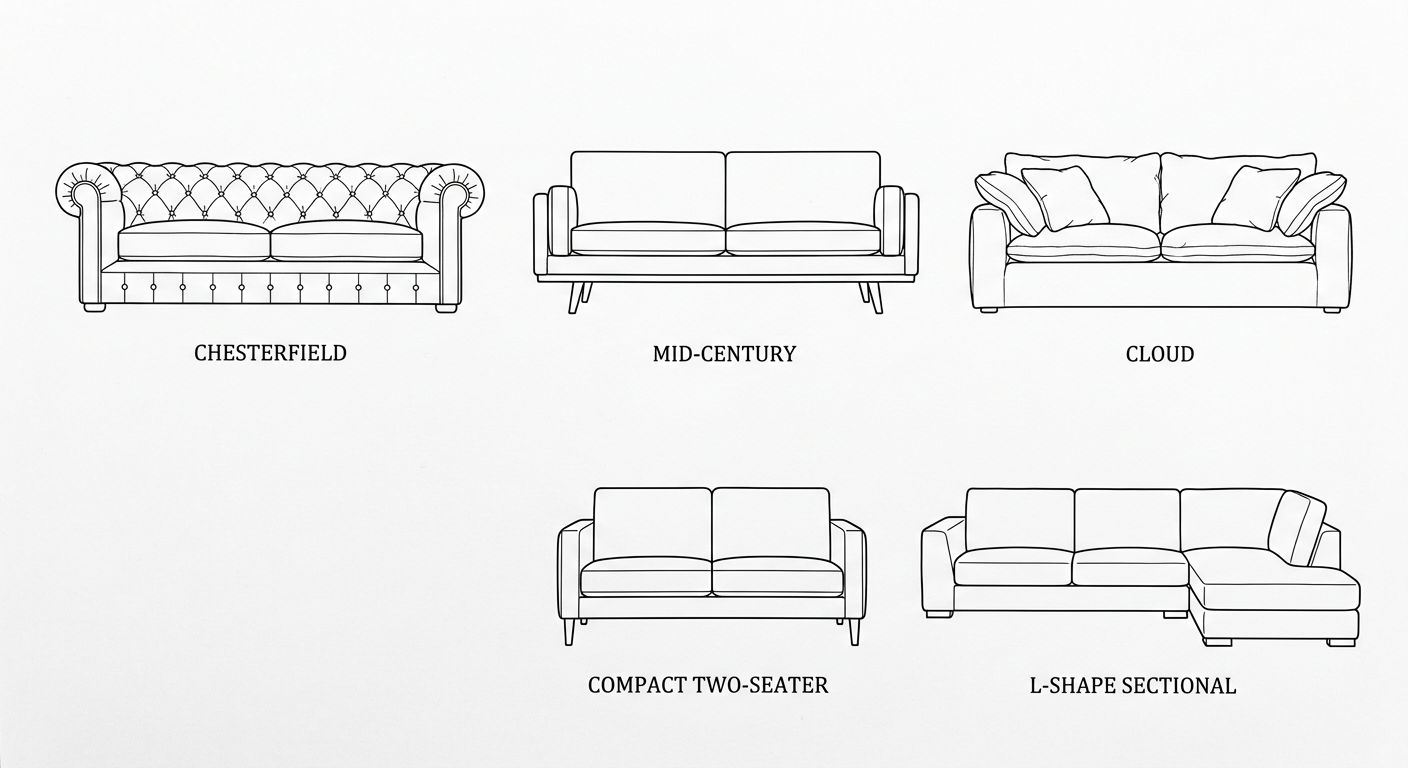
Every sofa shape carries a different character, and the right one depends on your room, your lifestyle, and the visual language of your home. Here are the five most common archetypes:
The Chesterfield: Deep-buttoned, rolled arms, a strong silhouette. It works beautifully in period homes with high ceilings and traditional proportions. In leather, it develops a wonderful patina over time. In velvet or linen, it softens into something more relaxed. It is not the most practical sofa for lounging, but as a statement piece in a study or formal living room, it is hard to beat.
The Mid-Century: Clean lines, tapered legs, a lighter visual footprint. This shape works well in smaller rooms because the raised legs allow light and sightlines to pass beneath, making the space feel less crowded. It pairs naturally with Scandinavian and modernist interiors, but can also bring a welcome crispness to more traditional rooms.
The Cloud: Deep, generous, enveloping. The cloud sofa, or any deep-seated, down-filled design, is about pure comfort. It invites you to sink in and stay. These work best in family rooms and spaces where relaxation is the priority. Be aware that very deep seats can be difficult to get out of, and down cushions require regular plumping.
The Compact Two-Seater: Ideal for smaller apartments, reading nooks, or as a secondary seat in a larger room. A well-chosen two-seater can anchor a space that a full sofa would overwhelm. Look for designs with slim arms to maximise the seating area relative to the footprint.
The L-Shape or Sectional: Practical for open-plan living, where the sofa needs to define zones within a larger space. The corner configuration provides generous seating without requiring additional chairs. Choose modular designs where possible, they offer flexibility if your layout changes over time.
Proportion and Scale
Beyond the overall shape, pay attention to three critical dimensions:
Seat depth: Standard is around 55cm. Anything deeper than 60cm starts to feel like a lounger, lovely for relaxing, but potentially uncomfortable for sitting upright to eat, read, or work. If you are tall, deeper seats work well. If you are shorter, a shallower seat with good back support will feel more comfortable.
Seat height: This affects how easy the sofa is to get in and out of. Lower sofas (around 40cm) create a relaxed, informal feel but can be difficult for older guests. Standard height is around 45cm. Higher seats feel more formal and upright.
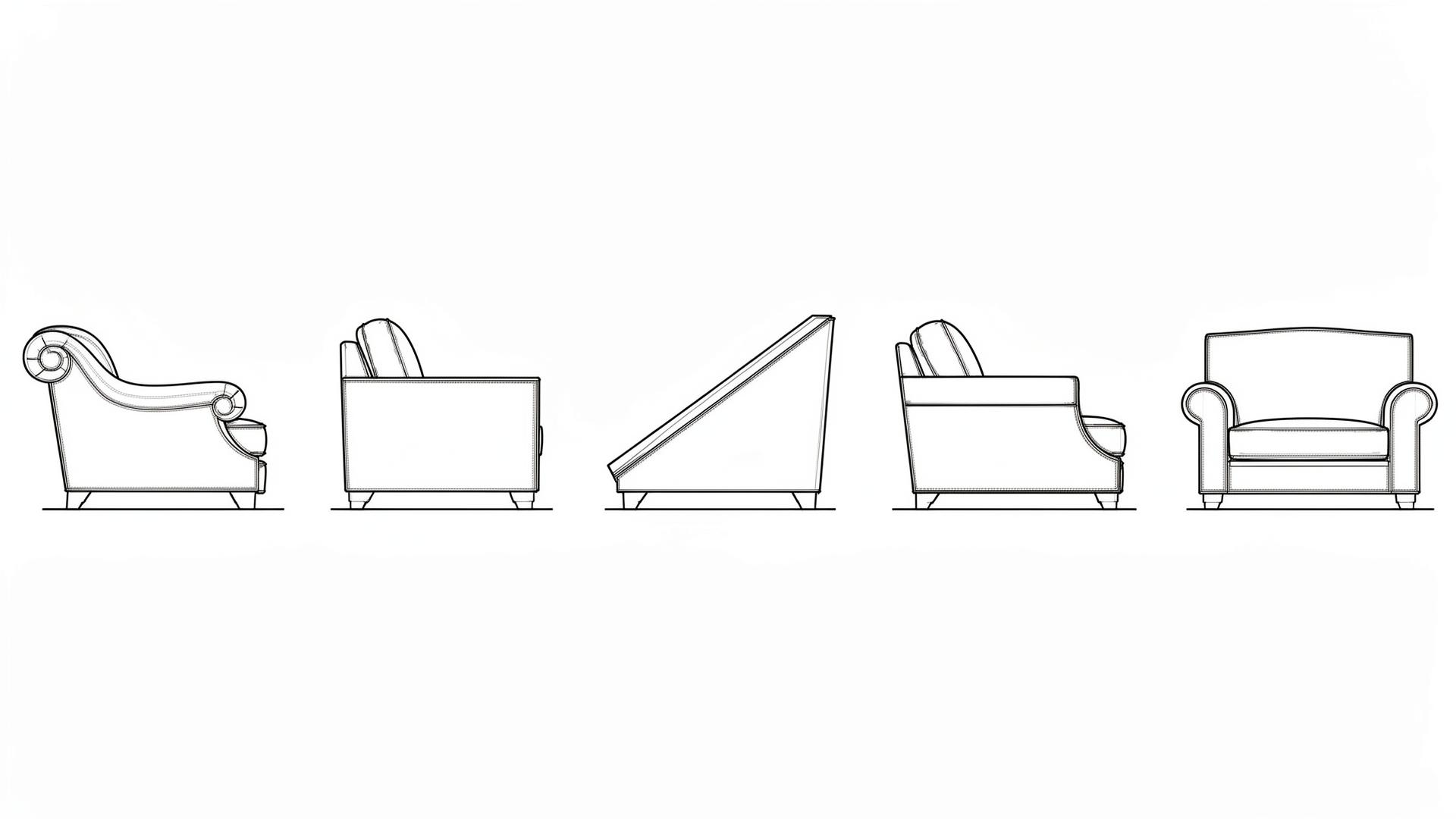
Arm height and width: Wide arms can double as surfaces for drinks or books. Slim arms maximise seating width. High arms create a sense of enclosure; low arms keep things open and relaxed. These details matter more than most people realise.
The Skirt
One detail that is often overlooked but makes an enormous difference to a sofa's character is the skirt. A skirted sofa, where the upholstery extends to the floor in a tailored panel or gentle gather, has a softness and formality that legs alone cannot provide. It grounds the piece, hides the base frame entirely, and gives the sofa a more furnished, considered look.
A tailored kick-pleat skirt in the same fabric as the body reads as classic and elegant. A bullion fringe skirt adds a decorative, traditional note. Even a simple straight skirt with a clean hem can transform the feel of a piece.
On the other hand, exposed legs, whether turned wood, tapered brass, or simple castors, give a sofa a lighter, more contemporary presence and make the floor beneath visible, which helps smaller rooms feel more open.
Neither is better. It depends entirely on the mood you want. But it is worth thinking about consciously rather than defaulting to whatever the manufacturer offers. Many upholsterers will add or remove a skirt when recovering a sofa, so it is an easy way to shift the entire character of a piece.
Back Styles: How Shape Sets the Tone
The back of a sofa defines its character as much as anything else. Here are four classic back profiles and what they bring to a room:
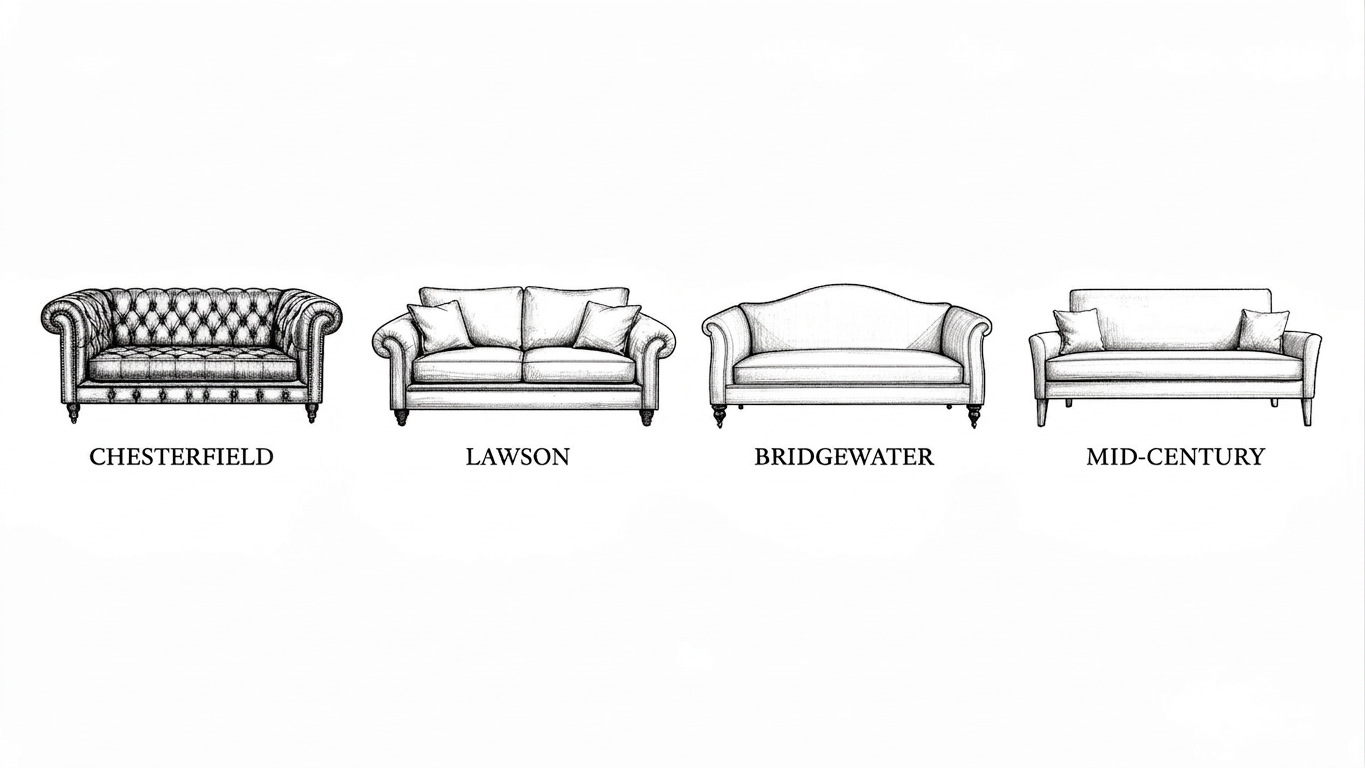
- Chesterfield: Deep button-tufted back, formal and sculptural. The tufting holds the upholstery taut and creates a distinctive diamond pattern that catches light beautifully
- Lawson: Loose cushion back with separate, removable back cushions. Relaxed and comfortable, easy to restuff or replace over time
- Bridgewater: A soft, rounded camelback profile that flows in a gentle curve. Traditional and elegant without being stiff
- Mid-Century: Low, angled, tight back with clean lines. The back is typically fixed rather than cushioned, giving a streamlined, architectural feel
Back Cushions: The Honest Truth
Let me be straightforward about back cushions, because this is one of those areas where what looks beautiful in a photograph and what works in daily life can be very different things.
A sofa piled with many back cushions, three or four deep in varying sizes, looks wonderful in styled images. It suggests comfort, luxury, abundance. But in reality, most people find themselves removing half of them every time they sit down, stacking them on the floor, then replacing them when company comes. It becomes a twice-daily ritual that wears thin quickly.
My honest advice: two generous back cushions, well-filled and properly sized for the sofa, are almost always better than four or five. They support you properly, they stay in place, and they look considered rather than cluttered. If you want decorative cushions in front, keep it to one or two, not a barricade.
Fixed back cushions, stitched or buttoned into the frame, solve the problem entirely. They always look neat, never need arranging, and offer consistent support. The trade-off is that you lose the ability to adjust firmness by swapping or restuffing. For many people, that trade-off is well worth it.
Fabric and Upholstery
The fabric you choose will determine how the sofa ages, how it feels to sit on, and how much maintenance it requires.
Linen: Beautiful, breathable, and develops a lovely softness over time. It creases naturally, which is part of its charm. Pre-washed linen has a more relaxed look from day one. It is not the most stain-resistant option, but removable, washable covers make it manageable for family life.
Velvet: Rich, tactile, and surprisingly durable, especially cotton velvet. It adds warmth and depth to a room. Darker velvets hide wear well. Lighter shades show marks more easily but can be professionally cleaned. Velvet works beautifully in both modern and traditional settings.
Wool: Hard-wearing, naturally stain-resistant, and available in a wonderful range of textures from flat weaves to bouclé. Wool sofas age gracefully and suit homes where durability matters without sacrificing texture.
Leather: The classic choice for longevity. Full-grain leather develops a rich patina over years of use. Aniline leather is the softest and most natural-looking but marks easily. Semi-aniline and pigmented leathers are more forgiving.
Performance fabrics: Worth considering if you have children or pets. Modern performance fabrics have come a long way, many are now virtually indistinguishable from natural textiles but offer stain resistance and easy cleaning. They lack the character of natural fabrics but offer peace of mind.
Colour: Getting It Right
Sofa colour is one of those decisions that feels paralysing because you are committing to it for years. Here is how I think about it.
Neutrals are safe but not boring: A well-chosen neutral, warm stone, soft mushroom, oatmeal, charcoal, works with almost everything and lets you change the mood of a room through cushions, throws, and surrounding pieces. If you are someone who likes to refresh a room seasonally, a neutral sofa gives you that flexibility.
Bold colour works when you commit: A deep green velvet, a warm terracotta linen, a rich navy, these can be magnificent. But they anchor the room's palette decisively, so everything else needs to work around them. If you love colour and are confident in your choices, go for it. A coloured sofa in the right fabric has a presence that neutrals simply cannot match.
Avoid trend colours: Whatever the colour of the moment is, it will date. If you are drawn to a very specific shade that feels very current, consider using it in cushions or a throw rather than committing to it across three metres of upholstery.
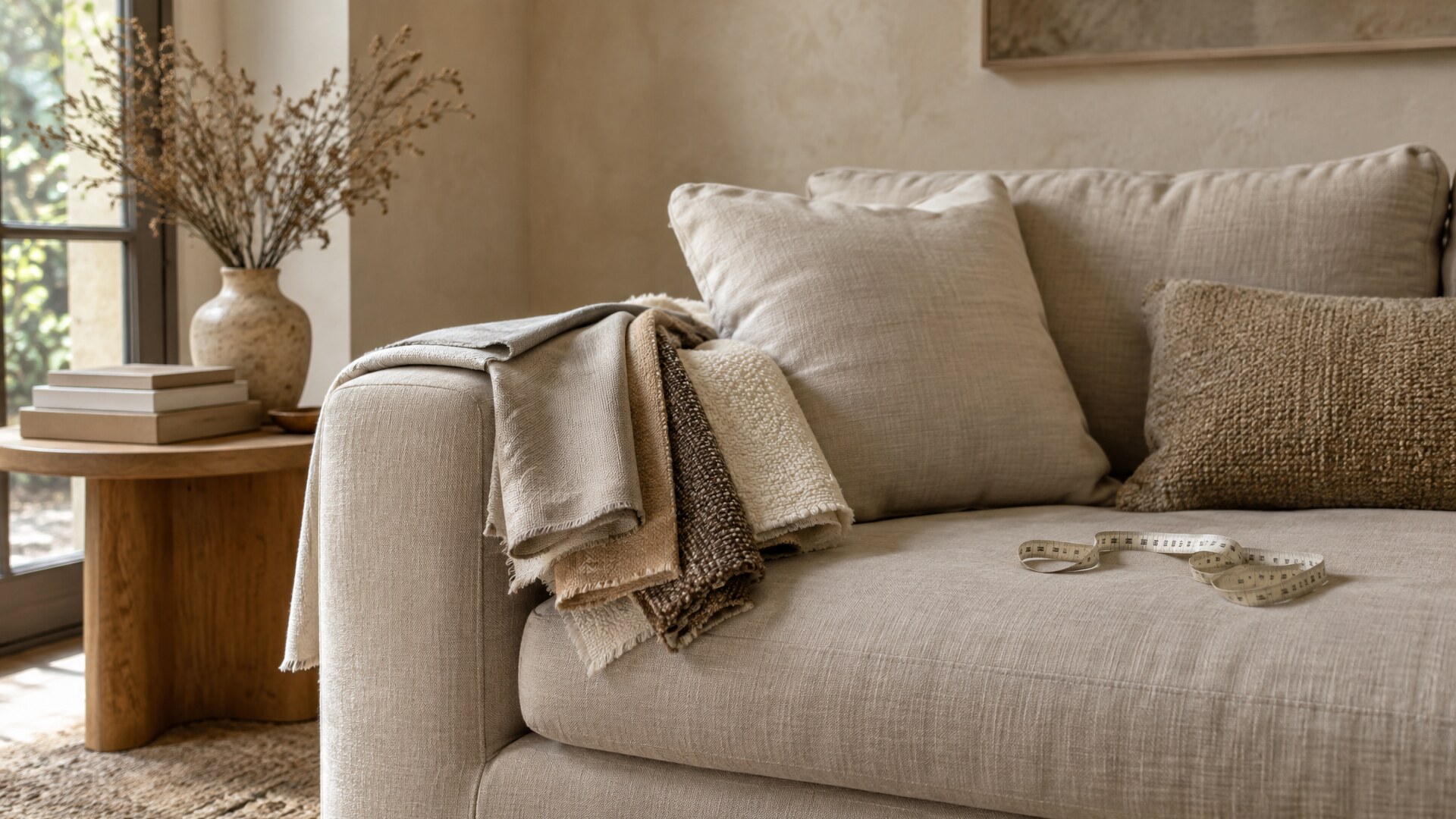
Consider your light: The same fabric will look completely different in a north-facing room with cool, grey light versus a south-facing room flooded with warm sun. Always get fabric samples and live with them in your actual room for a few days before deciding. View them in daylight and artificial light, morning and evening.
Living with Pets
If you share your home with a dog or cat, being realistic about your sofa is not a compromise, it is good design.
Fabric choice matters most: Tightly woven fabrics resist claws better than loose weaves. Bouclé, as beautiful as it is, will snag with cats. Leather shows scratches but can develop them into part of its patina. Performance fabrics and outdoor-grade textiles are genuinely excellent options now, many look and feel indistinguishable from natural cloth.
Colour and pattern: A solid pale fabric will show every hair and mark. A mid-tone, something with a little texture or a subtle pattern, is far more forgiving day to day. Darker fabrics hide hair from dark-coated pets but show light-coloured hair just as readily. Match your fabric tone to your pet, frankly, and save yourself the lint roller.
Washable covers: Removable, machine-washable covers are arguably the single best feature for a pet-friendly household. Being able to strip the sofa and wash everything seasonally, or after a muddy walk, is genuinely liberating.
Structure: A sofa with a higher seat and firm cushions will withstand a dog jumping on and off better than a low, soft cloud sofa. And a skirted sofa hides the inevitable collection of toys and bones that accumulate underneath.
Covers and Slipcovers: A Different Approach
Not every sofa decision requires buying an entirely new piece. If you have a sofa with a sound frame that you have fallen out of love with visually, a set of well-made slipcovers can transform it completely.
Bemz is worth knowing about here. They produce beautifully made covers specifically designed to fit IKEA sofa frames, in a range of fabrics, from heavy linens to velvets, that are a significant step up from the standard IKEA options. If you already own an IKEA Karlstad, Söderhamn, or similar, a set of Bemz covers in a considered fabric can make it look and feel like a completely different sofa for a fraction of the cost of buying new.
Beyond Bemz, many independent upholsterers will make custom slipcovers for any sofa. This is particularly worthwhile if you have a well-made older piece whose fabric has worn out but whose frame and cushions are still in good condition. A new set of covers in a quality linen or cotton, tailored to fit properly with neat closures, extends the life of a good sofa by years.
The slipcover approach also gives you flexibility. You can have a summer set in a lighter linen and a winter set in a heavier wool or velvet. It sounds extravagant, but two sets of covers is still far cheaper than two sofas.
Frame and Construction
This is where cheap sofas reveal themselves. A well-made sofa has a kiln-dried hardwood frame, typically beech or oak, joined with dowels and corner blocks, not staples or glue. The frame should feel solid when you lift a corner. If it flexes or creaks, it will not last.
Suspension matters too. Serpentine springs are standard in most modern sofas and perfectly adequate. Eight-way hand-tied springs are the gold standard, more labour-intensive to produce, more expensive, but they distribute weight more evenly and last longer.
Cushion fill is a matter of preference. Foam cores wrapped in down or feather offer the best balance of support and softness. Pure down is luxuriously comfortable but requires daily plumping. High-density foam is the most low-maintenance option but can feel firmer and less characterful.
If you are considering a vintage or second-hand sofa, the frame is the thing that matters most. Upholstery can always be replaced; a damaged frame rarely can.
Brands Worth Knowing
A few brands I return to and recommend, loosely grouped by market and price point:
British
Rowen & Wren: A lovely British brand with a carefully considered range of sofas, armchairs, and furniture. Their pieces have a classic, unfussy quality with good proportions, and they offer a range of fabrics including linens and velvets. Well-made without being prohibitively expensive.
Arlo & Jacob: Handmade sofas and upholstered furniture with a strong emphasis on traditional craftsmanship. They offer a good range of classic shapes and an excellent fabric library. Their showrooms are worth visiting if you want to sit on things properly before committing.
George Smith: For deep-buttoned, traditionally upholstered English furniture, George Smith is the benchmark. Handmade in England, their Chesterfields and club chairs are extraordinary pieces that last generations. A significant investment, but the quality is exceptional.
Loaf: A more accessible mid-market option with a relaxed, liveable aesthetic. Their sofas are durable and well-proportioned, and the range is broad enough to find something for most rooms. Not the most refined brand on this list, but honest and practical.
The House Upstairs: A smaller Derbyshire workshop producing handmade, made-to-order upholstered furniture. Worth exploring if you want something bespoke without the lead times or pricing of the bigger names.
European
Bolia: A Danish brand with a strong contemporary Scandinavian identity. Their modular sofas are particularly good, clean lines, thoughtful construction, and a genuinely useful configurator on their website. Available across Europe.
Muuto: Another Danish brand, rooted in the Nordic design tradition but with a slightly warmer, more textured sensibility. Their sofas are beautifully proportioned and work well in modern interiors that need softening.
La Redoute Intérieurs: The French homewares arm of La Redoute has a surprisingly editorial aesthetic, clean lines, considered colourways, and good quality at accessible price points. Useful for filling gaps in a project or for a secondary seating piece that does not need to be a lifetime investment.
Studio HENK: An Amsterdam-based B-Corp certified brand producing custom sofas, beds, and storage. Sustainable credentials and a clean Dutch design language. Worth considering for projects in the Netherlands and across Europe.
North American
Article: A Canadian direct-to-consumer brand with a clean, Scandinavian-inspired range. The pricing is competitive and the quality is solid for the mid-market. A good option for clients in the US and Canada who want a considered look without a premium price tag.
Sixpenny: US-based, producing customisable, sustainably sourced upholstered sofas and chairs. Their emphasis on natural materials and relaxed silhouettes aligns well with a more organic, lived-in aesthetic.
CB2: The design-forward sibling of Crate and Barrel, with a more urban, architect-influenced sensibility. Stronger on statement furniture and modular sofas than its parent brand. A useful source for US projects.
Covers and Aftermarket
Bemz: As mentioned above, their covers for IKEA frames are an excellent way to elevate an existing piece. The fabric quality and tailoring are genuinely impressive.
For sourcing vintage pieces, Reliving, Vinterior, Selency, Catawiki, and Tijdperk (a Dutch vintage dealer with a large warehouse and in-house reupholstery) are all platforms I keep an eye on regularly. Patience is key, the right piece at the right price does appear, but it rarely appears on your schedule. For upholstery fabrics, Dedar, Designers Guild, Romo, and Classic Cloth all produce beautiful cloths that are worth exploring.
Sourcing: New, Vintage, or Custom
New: The advantage of buying new is choice, you can specify dimensions, fabric, and configuration. The disadvantage is price, lead times, and the fact that many mid-range sofas are not as well-made as they appear. Invest in the best construction you can afford and choose a timeless shape over a trend-led design.
Vintage: I have not yet sourced a vintage sofa for a client project, but it is something I am drawn to. A well-made sofa from the 1960s or 1970s, reupholstered in a contemporary fabric, offers character, quality, and sustainability in one package. The key things to check are the frame (look for solid hardwood, check for woodworm or structural damage) and the springs. Budget for professional reupholstery, which can run from a few hundred to well over a thousand depending on fabric and complexity.
Custom and bespoke: If your space has unusual dimensions or you have very specific requirements, a bespoke sofa can be surprisingly cost-effective compared to high-end retail. Several excellent upholsterers in the Netherlands and the UK will build to your exact specifications.
A Note on Buying Secondhand
The secondhand market for sofas is strong, particularly for well-known designs. Platforms like Reliving, Marktplaats, and specialist vintage dealers regularly have excellent pieces at a fraction of the original price. The key is patience and knowing what to look for: sound frame, no structural damage, and upholstery that is either in good condition or ready for replacement.
Reupholstering a vintage sofa is one of the most sustainable and characterful choices you can make. You end up with something that has history, quality construction, and a fabric that is entirely your own.
A sofa is not a quick decision, and it should not be. Sit on it, measure twice, think about how it will age, and choose something that works for the life you actually live, not the one in the showroom photograph. The best sofas are the ones you stop noticing because they just feel right.