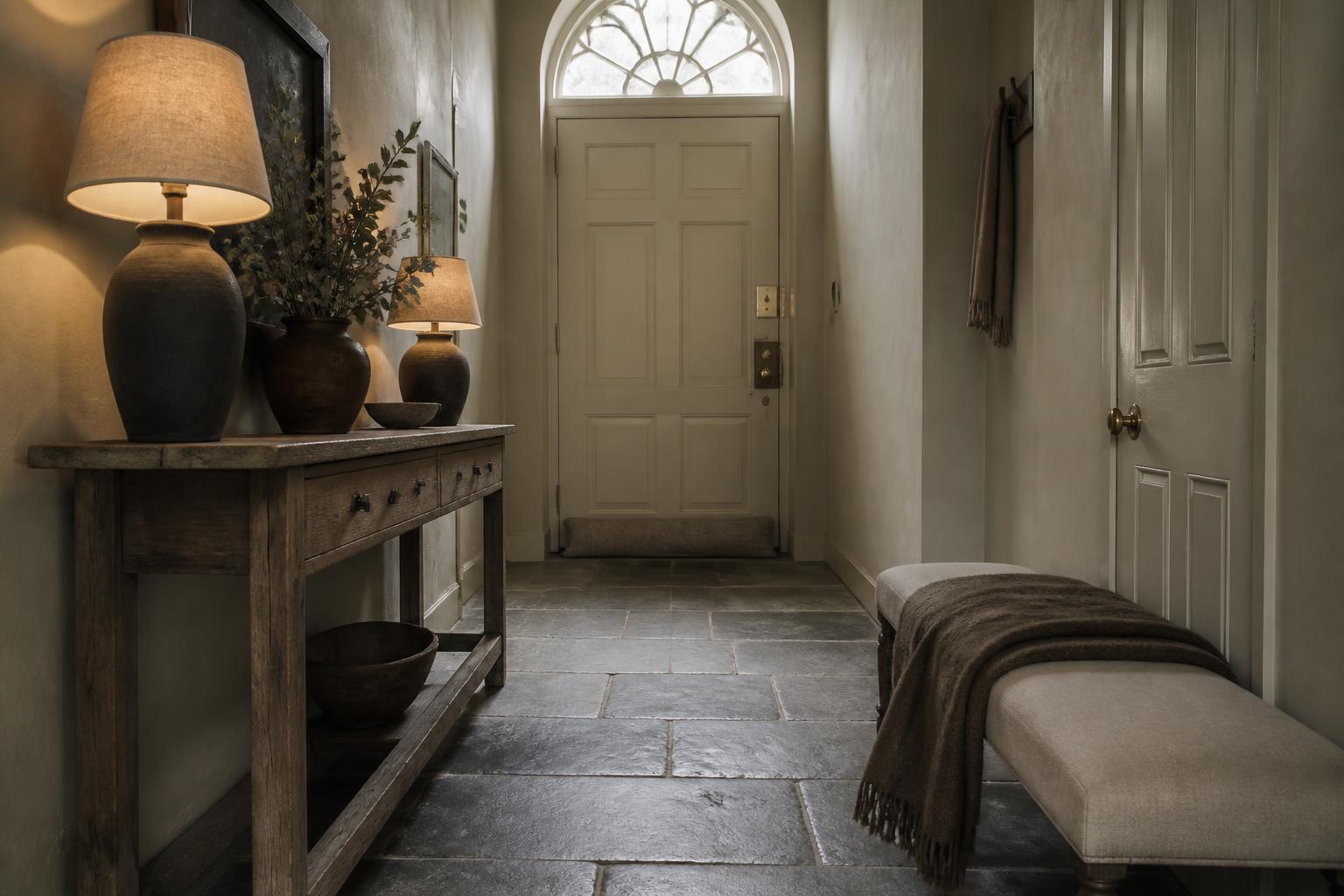
Hard surfaces (stone, wood, plaster, tile) give a home its bones. But fabric gives it warmth. Without textiles, even the most beautifully designed room can feel cold, echoey, and uninviting.
Fabric is also one of the most accessible ways to transform a space. You do not need to renovate to change the feeling of a room. New curtains, a different throw, reupholstered dining chairs: these are the moves that shift a space from functional to personal.
This guide covers curtains, blinds, upholstery, and the smaller textile details that complete a room.
Curtains: The Single Biggest Impact
Well-chosen curtains can transform a room more dramatically than almost any other single change. They soften acoustics, control light, add height and drama, and bring colour and texture in generous quantities.
Fabric choices:
- Linen: The default for good reason. It drapes beautifully, filters light softly, and suits almost every style of home. Linen curtains in a warm neutral or soft white are one of the most universally flattering choices
- Cotton: Crisper than linen, with a cleaner drape. Works well for patterned or printed curtains
- Velvet: Rich, heavy, and excellent for insulation and light-blocking. Best in living rooms, bedrooms, or anywhere you want a sense of luxury
- Silk: Beautiful but delicate. Best for formal rooms or bedrooms where they will not take heavy wear. Sun damage is a real concern with silk
- Wool: Underused but wonderful. Wool curtains add texture and warmth without heaviness
Practical considerations:
- Length: Curtains should almost always be floor-length, even in casual rooms. Short curtains that stop at the windowsill rarely look intentional
- Fullness: Curtains need enough fabric to look generous when drawn. A general rule is 2-2.5 times the width of the window for a proper gather
The heading, how the fabric gathers at the top where it meets the pole or track, is one of the most important decisions. Each style creates a completely different character:
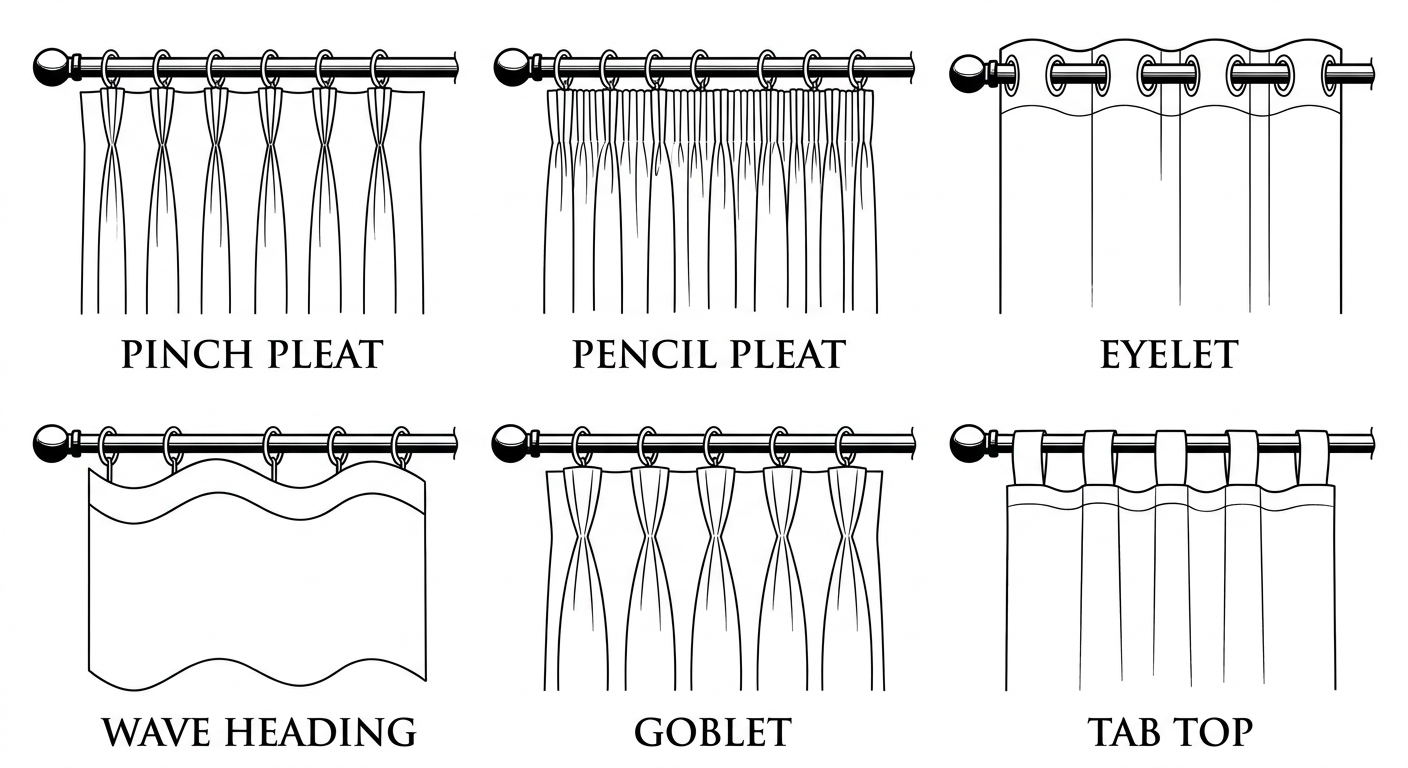
- Heading styles: Pinch pleat for tailored elegance. Wave heading for a contemporary, soft fall. Pencil pleat as a versatile middle ground. Tab top for a casual, relaxed look
- Lining: Lined curtains hang better, last longer, and offer better light control and insulation. Blackout lining for bedrooms; interlining for a luxurious weight
- Hanging height: Mount the pole or track as close to the ceiling as possible. This draws the eye upward and makes windows (and rooms) feel taller
Café Curtains: The Overlooked Classic
Café curtains, hung from a simple rod at the midpoint of a window, are enjoying a well-deserved revival. They cover the lower half of the glass, offering privacy without sacrificing light. The upper portion of the window remains open, letting daylight flood in.
They work particularly well in:
- Kitchens: Where full-length curtains are impractical but bare windows feel stark
- Bathrooms: A softer alternative to frosted glass, especially in period homes
- Street-facing ground-floor rooms: Privacy where you need it, openness where you do not
- Dutch and European townhouses: Where tall, narrow windows suit the proportions beautifully
Fabric and styling:
- Lightweight linen or cotton in a natural tone keeps things understated
- Gingham, ticking stripe, or a simple check adds character without fuss
- Sheer fabrics filter light beautifully while still obscuring the view from outside
- A slim brass or iron rod with simple rings is all that is needed
Café curtains bring a warmth and domesticity that blinds rarely achieve. They feel unhurried, slightly nostalgic, and quietly charming. In the right setting, they can be the single detail that makes a room feel like home.
Blinds: When Curtains Are Not the Answer
Some windows call for blinds rather than curtains - or a combination of both.
When to choose blinds:
- In kitchens, where fabric near cooking surfaces is impractical
- In bathrooms, where moisture makes many fabrics unsuitable
- On small windows where curtains would overwhelm the wall
- Where a clean, architectural look is preferred
- Behind curtains, for light control in bedrooms
Types:
- Roman blinds: The most decorative option. They fold into neat horizontal pleats when raised. Available in every fabric, making them versatile for any room
- Roller blinds: Simple, functional, and discreet. Best in plain fabrics or behind curtains. Motorised versions are excellent for hard-to-reach windows
- Venetian blinds: Timber or aluminium slats that tilt to control light precisely. Wooden Venetians suit period properties; aluminium suits contemporary ones
- Shutters: Not strictly blinds, but worth mentioning. Plantation shutters offer excellent light control and insulation. They suit Georgian, Victorian, and colonial-style architecture particularly well
- Cellular (honeycomb) blinds: Excellent thermal insulation. Worth considering for energy efficiency, particularly in older homes with single-glazed windows
Upholstery: Choosing Fabric for Furniture
Upholstery fabric determines how a piece of furniture feels, wears, and ages. The right choice balances beauty with practicality.
Key fabrics:
- Linen: Beautiful texture, softens with use, but wrinkles and can stain. Best for adults-only living rooms or bedrooms. Performance linens (with stain-resistant treatment) offer a middle ground
- Cotton: Durable, washable (in loose covers), and available in every colour and pattern. A practical all-rounder
- Velvet: Luxurious and surprisingly durable. Modern velvets are often stain-resistant and family-friendly. Excellent for sofas and armchairs
- Wool: Hard-wearing, naturally stain-resistant, and ages beautifully. Often used in boucle or herringbone weaves
- Leather: Ages magnificently. Aniline leather develops the richest patina but shows marks; semi-aniline or pigmented leather is more resilient for family use
- Performance fabrics: Brands like Crypton and Revolution offer fabrics specifically engineered for stain resistance and durability. Worth investigating for high-use pieces
Questions to ask before choosing:
- Who uses this furniture? Children, pets, guests?
- How often will it be cleaned?
- Is the cover removable and washable?
- How does the fabric age? Does it pill, fade, or stretch?
- Can the piece be reupholstered when the fabric wears out?
Choosing and Using Pattern
Pattern is one of the most powerful tools in interior design, but it is also one of the most nerve-wracking. The fear of getting it wrong leads many people to avoid it altogether, defaulting to plains and solids. That is a shame, because pattern brings energy, movement, and personality to a room in a way that plain fabric simply cannot.
The key is understanding scale, rhythm, and restraint.
Scale and mixing:
- Start with one dominant pattern, something with presence: a large-scale floral, a bold stripe, a geometric. This sets the character of the room
- Add a secondary pattern at a smaller scale, perhaps a ditsy print, a fine check, or a subtle texture. This supports the main pattern without competing
- A third pattern, if used, should be almost textural: a tiny dot, a woven herringbone, a tonal damask. It reads as a solid from a distance but adds depth up close
- The rule of three, mixing a large, medium, and small-scale pattern, is a reliable formula. Beyond three, you need a confident eye or risk visual chaos
Colour as the unifier:
- Patterns do not need to match, but they do need a shared colour thread. Pull two or three colours from your dominant pattern and ensure they appear across the others
- Warm palettes (terracotta, ochre, sage, cream) mix naturally. Cool palettes (blue, grey, soft green, white) do the same. Mixing warm and cool requires more care
- When in doubt, keep the background colour consistent across patterns, all on cream, all on white, or all on a deep base
Where to use pattern:
- Curtains are an excellent vehicle for pattern, especially in a room where the sofa and walls are plain. A printed linen curtain can be the single element that gives a room its character
- Cushions allow you to experiment without commitment. Mix a stripe, a floral, and a plain velvet on the same sofa
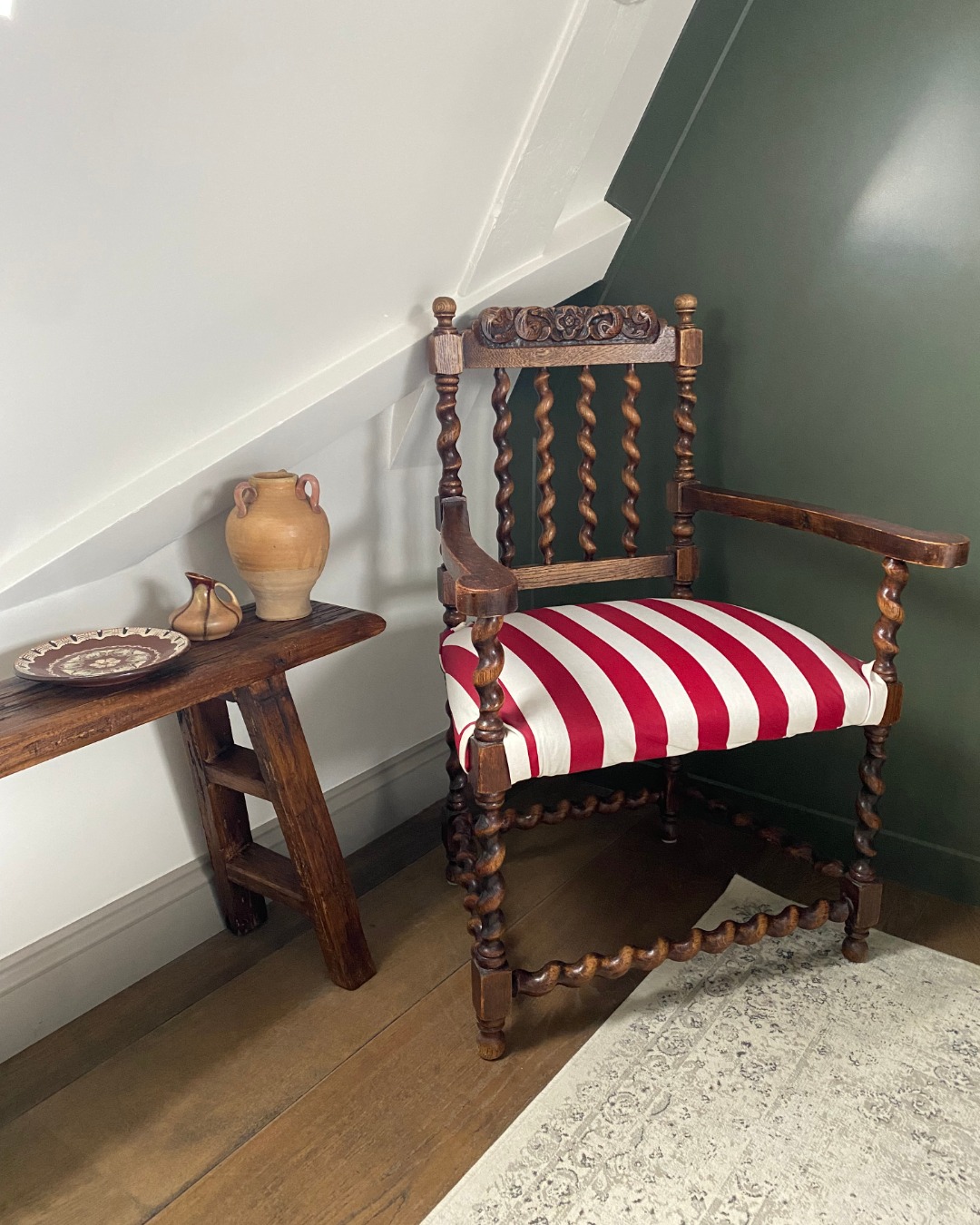
- Upholstery on accent chairs or footstools is a confident move. A patterned armchair in an otherwise neutral room becomes a focal point
- Roman blinds in a kitchen or bathroom are a natural home for pattern, adding interest to a small window
- Rugs bring pattern underfoot, anchoring a room with geometry or organic motifs
Pattern and period homes:
- Georgian and Regency interiors suit classical patterns: damasks, chinoiserie, elegant stripes
- Victorian homes can handle richer, denser patterns: William Morris prints, paisleys, deep florals
- Mid-century spaces respond well to graphic geometrics and abstract prints
- Contemporary homes can absorb almost anything, but tend to look best with one bold pattern rather than many layered ones
A note on confidence:
Pattern is not about perfection. The most characterful rooms are those where someone has committed to a fabric they love and built around it. A floral curtain that makes you smile every morning is worth more than a safe, inoffensive plain that you never notice.
If you are nervous, start small. A single patterned cushion. A printed lampshade. Once you see how pattern lifts a space, you will wonder why you waited so long.
Cushions and Throws
These are the easiest textiles to change and the quickest way to refresh a room.
Cushions:
- Mix sizes (45cm and 50cm square work well together on a sofa)
- Vary textures within a cohesive colour palette: linen, velvet, wool, embroidered
- Odd numbers tend to look more natural than even
- Consider the insert: feather-filled cushions sit better and last longer than polyester. They need plumping, but the look is worth it
- Colour can be introduced through cushions when the sofa itself is neutral
Throws:
- Draped over the arm or back of a sofa, a throw adds instant warmth
- Wool, cashmere, or heavy linen for cooler months
- Lighter cotton or muslin for summer
- A throw at the foot of the bed is one of the simplest styling gestures
Layered Bedding
The bed is the largest textile surface in any home, and how it is dressed sets the tone for the entire bedroom. A well-layered bed is not about decoration for its own sake. It is about comfort, texture, and creating something that feels as good as it looks.
Building the layers:
- Sheets: Start with the best you can afford. Linen sheets soften beautifully with every wash and regulate temperature year-round. Cotton percale is crisp and cool; cotton sateen has a subtle sheen and a softer hand. White or natural tones are the most versatile, but a muted colour (soft blue, warm grey, blush) can anchor the whole scheme
- The top layer: A flat sheet, a lightweight quilt, or a duvet, depending on the season and your preference. In warmer months, a linen flat sheet alone can be enough. In winter, layer a quilt beneath a duvet for adjustable warmth
- Throws and blankets: A folded throw at the foot of the bed adds visual weight and gives you something to reach for on cooler nights. Wool, cashmere, or a heavier linen work well here. Choose a texture that contrasts with your sheets
- Cushions: Keep it restrained. Two or three cushions in varying sizes and textures are enough. A pair of European squares behind sleeping pillows creates depth without fuss
- The bedspread: Worth considering if you prefer a made, tailored look during the day. A matelassé or stonewashed cotton bedspread gives structure and can replace the decorative cushion arrangement entirely
Seasonal rotation:
One of the pleasures of bedding is changing it with the seasons. Heavier linens, wool blankets, and richer colours in autumn and winter. Lighter layers, pale tones, and breathable fabrics in spring and summer. This keeps the bedroom feeling considered rather than static.
Towels as a Design Element
Towels are rarely discussed in design terms, but in a bathroom they are one of the most visible textiles. Choosing and displaying them with intention can elevate a bathroom from functional to considered.
Choosing well:
- Weight matters: Look for towels in the 500-700 GSM range. Below 500 feels thin and insubstantial; above 700 can feel heavy and slow to dry. Turkish cotton and Egyptian cotton are the benchmarks for quality
- Linen towels: Lighter, faster-drying, and increasingly popular. They lack the plushness of cotton but have a beautiful texture and improve with age. Particularly good for hand towels and guest bathrooms
- Colour: White is classic and easy to bleach clean, but it is not the only option. Warm neutrals (sand, stone, putty) feel softer in tone. Deep colours (charcoal, navy, forest green) can anchor a bathroom scheme. The key is consistency: a bathroom with mismatched towel colours always looks untidy
- Texture: Waffle weave towels are an excellent alternative to terry. They are lighter, dry faster, and have a clean, modern look that suits contemporary and minimal bathrooms
Display and storage:
- Rolled towels on open shelving or in a basket feel generous and spa-like
- Folded towels stacked neatly on a shelf or ladder rack keep things tidy without hiding them away
- A single hand towel on a good ring or rail can be a quiet design moment, especially in a guest bathroom
- Avoid overcrowding towel rails. One or two towels per rail looks intentional; five looks like a laundry pile
Replacing regularly:
Towels work hard and wear out. Even good ones lose their absorbency and softness after a few years. Replacing them periodically is one of those small investments that makes daily life feel noticeably better.
Rugs
Rugs are textile architecture. They define zones, add warmth underfoot, absorb sound, and bring pattern and colour into a room.
Sizing guidance:
- Living rooms: Large enough for at least the front legs of all seating to sit on the rug. A rug that is too small for the furniture grouping looks like an afterthought
- Dining rooms: Large enough for chairs to remain on the rug when pulled out. Typically at least 60cm larger than the table on all sides
- Bedrooms: Either a large rug under the bed extending 60-90cm on each side, or two runners flanking the bed
- Hallways: A runner adds softness and direction. Layer over hard flooring for texture
Materials:
- Wool: Durable, naturally stain-resistant, good colour retention
- Jute and sisal: Natural texture, good for layering, less soft underfoot
- Cotton: Washable, affordable, good for children's rooms and kitchens
- Silk and viscose: Beautiful sheen but delicate. Best in low-traffic areas
Acoustic Benefits
In homes with hard floors, high ceilings, or open-plan layouts, sound can be a real issue. Textiles are the most effective way to improve acoustics:
- Heavy curtains absorb sound reflections from windows
- Upholstered furniture dampens echo
- Rugs soften footfall and reduce reverberation
- Cushions and throws add absorptive mass
This is particularly relevant in older European apartments with wooden floors and plaster walls, where sound travels easily between rooms and floors.
Care and Longevity
Good textiles deserve good care:
- Rotate cushions regularly to distribute wear
- Vacuum upholstery weekly to prevent dust embedding in fibres
- Protect from direct sunlight: UV degrades most fabrics over time. Lining curtains helps protect both the curtain and the room
- Treat stains immediately: blot, do not rub
- Professional cleaning for larger pieces (sofas, rugs, curtains) every 1-2 years
- Store seasonal textiles clean and dry, ideally in breathable cotton bags rather than plastic
Where to Source
Quality textiles are worth seeking out:
- For curtain fabric: Designers Guild, Colefax and Fowler, de Le Cuona, Merchant & Mills (for making your own), Volga Linen (exceptional quality plain linens). In the Netherlands, Kendix and Kobe offer excellent collections
- For upholstery fabric: Romo, Kirkby Design, Pierre Frey, Holland & Sherry, Dedar (Italian, beautifully textured), Chelsea Textiles (handwoven and embroidered, worth the investment for statement pieces)
- For ready-made curtains and blinds: Gotain, The Linen Works, Loom & Last, Loaf
- For cushions and throws: OKA, Tekla, Hay, Muuto, Teixidors, local artisan makers
- For rugs: Nordic Knots, Gotain, Pelican House, The Rug Company, Beni Rugs, Souk & Co, Armadillo, local antique dealers and markets
Fabric is the layer that makes a house feel inhabited. It softens edges, absorbs sound, invites touch, and changes with the seasons. A room without textiles is a room without warmth, no matter how beautiful the architecture.
Choose fabrics that suit your life, not just your aesthetic. Invest in quality for the pieces you use every day. And do not underestimate the power of a simple change (new curtains, a different rug, a set of linen cushions) to transform how a room feels.