"How much will it cost?" is almost always the first question, and almost always the hardest to answer. Not because the numbers are unknowable, but because every project is different: the condition of the property, the scope of work, the quality of materials, the location, and the trades involved all shape the final figure.
What follows is not a quote. It is a framework, a way of thinking about renovation costs that helps you plan realistically, avoid common surprises, and make informed decisions about where to invest and where to hold back.
The Cost Layers
A renovation budget is not one number. It is several, layered on top of each other.
1. Professional Fees
Before any physical work begins, there are often professional costs:
- Architect or designer fees (typically 8-15 percent of the build cost, or hourly)
- Structural engineer reports
- Planning application fees
- Building control or permit fees
- Party wall surveyor (where applicable)
These fees are easy to overlook but essential to budget for early. Skipping professional input to save money often leads to more expensive mistakes later.
2. Labour
Labour is typically the largest single cost in any renovation. Rates vary significantly by trade, region and demand. In the Netherlands, expect hourly rates broadly in the range of EUR 45-75 for most trades, though specialists (electricians, plumbers, heritage joiners) can be higher.
Key trades to budget for:
- Demolition and removal
- Structural work (steelwork, underpinning, load-bearing alterations)
- Plastering and rendering
- Electrical first and second fix
- Plumbing first and second fix
- Joinery and carpentry
- Tiling and flooring
- Painting and decorating
3. Materials
Materials can range from modest to extravagant. The gap between a basic kitchen and a bespoke one, or between standard tiles and handmade zellige, is significant.
Some practical benchmarks for the Netherlands:
- Kitchens: EUR 8,000-15,000 for a good mid-range kitchen (supply only); EUR 25,000+ for bespoke or high-end
- Bathrooms: EUR 5,000-12,000 per bathroom (fixtures, tiles, labour); more for natural stone or wet rooms
- Flooring: EUR 40-80 per square metre for engineered hardwood; EUR 60-120+ for natural stone
- Paint: EUR 50-80 per litre for heritage paint (Farrow & Ball, Little Greene); standard paint is less but quality differs meaningfully
4. VAT
In the Netherlands, the standard VAT rate (btw) is 21 percent. A reduced 9 percent rate applies to painting and plastering work on homes older than two years - but this reduced rate does not extend to most other renovation labour or materials.
Always confirm whether quotes are inclusive or exclusive of VAT. A EUR 30,000 quote exclusive of VAT becomes EUR 36,300 with standard VAT applied. This catches people out regularly.
5. Contingency
Every renovation needs a contingency fund. The industry standard recommendation is 10-15 percent of the total budget for straightforward projects, and 15-20 percent for older properties or projects involving structural work.
This is not pessimism. It is realism. Older homes reveal surprises: damp behind plaster, wiring that needs replacing, structural issues hidden by decades of cosmetic updates. A contingency fund means these discoveries do not derail the project.
The Costs Nobody Warns You About
Beyond the headline figures, several costs regularly surprise homeowners:
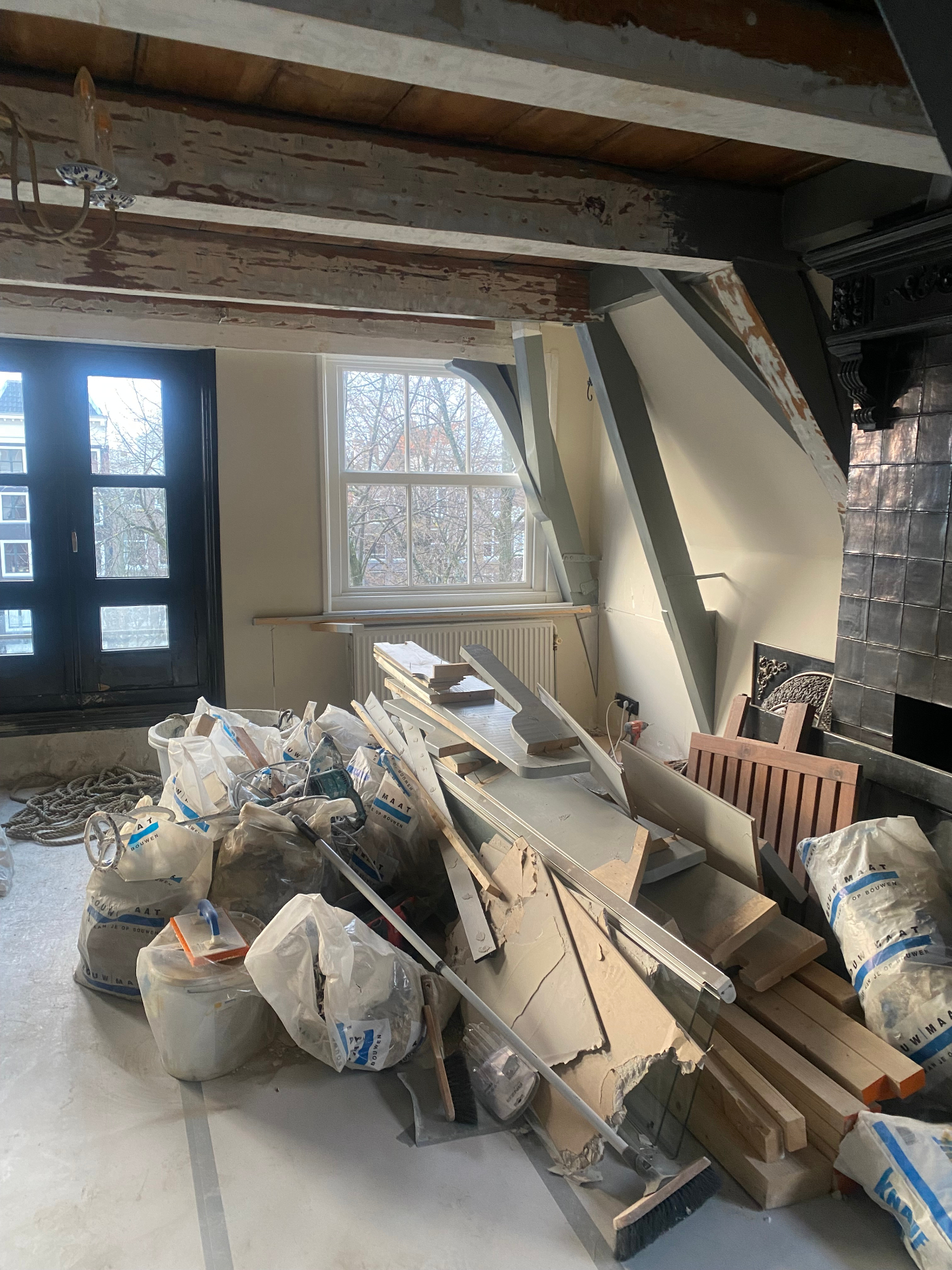
- Skip hire and waste removal: Renovation generates significant waste. Budget EUR 300-600 per skip, and expect to need several
- Road and parking permits: In dense city centres (particularly Amsterdam), permits for skips, scaffolding, hoisting and contractor parking add up
- Temporary accommodation: If the renovation is extensive, you may need to move out. Factor in rental costs for the duration
- Storage: Furniture and belongings often need temporary storage during works
- Delivery and access: Narrow staircases, canal-side hoisting, or restricted access can add meaningful cost to material deliveries
- Cleaning: Post-renovation deep cleaning is often needed, particularly after plastering, sanding, or demolition work
- Furnishing: A newly renovated space often makes existing furniture look tired. Budget for at least some new pieces
How to Think About Budget Allocation
A useful rule of thumb for a full renovation:
- 40-50 percent on labour and trades
- 25-35 percent on materials and finishes
- 10-15 percent on professional fees
- 10-15 percent contingency
These proportions shift depending on the project. A cosmetic refresh will weight more heavily toward materials. A structural renovation will weight toward labour and professional fees.
Where to Invest and Where to Save
Not every element of a renovation deserves equal spend. Strategic allocation makes the difference between a project that feels considered and one that feels unfinished.
Worth investing in:
- Kitchens and bathrooms (highest return on investment, used every day)
- Electrical and plumbing infrastructure (invisible but foundational)
- Quality joinery and built-in storage
- Good lighting design
- Heritage or breathable paint on older properties
- Quality hardware (door handles, taps, switches)
Where thoughtful savings work:
- Decorative accessories and soft furnishings (easy to change over time)
- Vintage and second-hand furniture
- Standard rather than bespoke where it will not be noticed
- Phasing non-essential work into a later stage
Getting Quotes Right
The quoting process itself shapes outcomes. Some practical guidance:
- Get three comparable quotes for major work. Ensure each contractor is quoting the same scope
- Itemised quotes are always preferable to lump sums. They help you understand what you are paying for and make variations easier to manage
- Clarify what is included: Does the quote cover materials, waste removal, making good? Or just labour?
- Agree payment stages tied to milestones, not dates
- Confirm the variation process: How are additional costs agreed and documented during the project?
A Note on Timing
Renovation costs are not static. Material prices fluctuate, trades are in higher demand during spring and summer, and supply chain disruptions can affect lead times and pricing. Planning well ahead, particularly for bespoke joinery, stone, and imported fittings, can protect both budget and timeline.
A renovation is one of the largest financial commitments most people make outside of buying the property itself. Understanding the true cost, not just the headline figure but the layers beneath it, is the foundation of a project that feels calm, controlled and ultimately worthwhile.
The goal is not to spend as little as possible. It is to spend wisely: on the things that matter, with clarity about what everything costs, and with enough contingency to handle the unexpected.