Lighting is one of the most overlooked elements in interior design. We agonise over paint colours and furniture placement, then screw in a single pendant and hope for the best.
But lighting shapes everything: how a room feels, how it functions, how it looks at different hours. Getting it right matters in every home.
The Three Layers
A well-lit room combines three types of light:
Ambient lighting provides overall illumination, the base layer. Overhead pendants, flush mounts, or recessed lighting typically fill this role. A central pendant might be all you have to work with, but it should not be doing all the heavy lifting.
Task lighting serves a specific function: reading, cooking, working. Table lamps, desk lamps, under-cabinet lighting, and adjustable wall lights fall into this category.
Accent lighting adds drama and focus. Picture lights, uplighters, candlelight, and spotlights draw the eye and create depth.
The goal is balance. Relying too heavily on one layer leaves a room feeling flat (all ambient) or patchy (all accent). The best rooms let you dial each layer up or down depending on the mood.
Plan Room by Room
Living spaces benefit from multiple sources at different heights. A central pendant, a floor lamp by the reading chair, table lamps on consoles or side tables, and perhaps a picture light above artwork. Think about how you use the room: watching films, reading, entertaining. Each activity might need different light.
Kitchens need strong task lighting over work surfaces (under-cabinet LEDs are a game-changer) and something warmer for dining, a pendant or wall sconces. If your kitchen is the heart of the home, you want it to feel welcoming, not clinical.
Bedrooms should feel calm. Bedside lamps with dimmers, a central pendant or flush mount on a dimmer, and perhaps a floor lamp or wall light for atmosphere. Avoid anything too harsh.
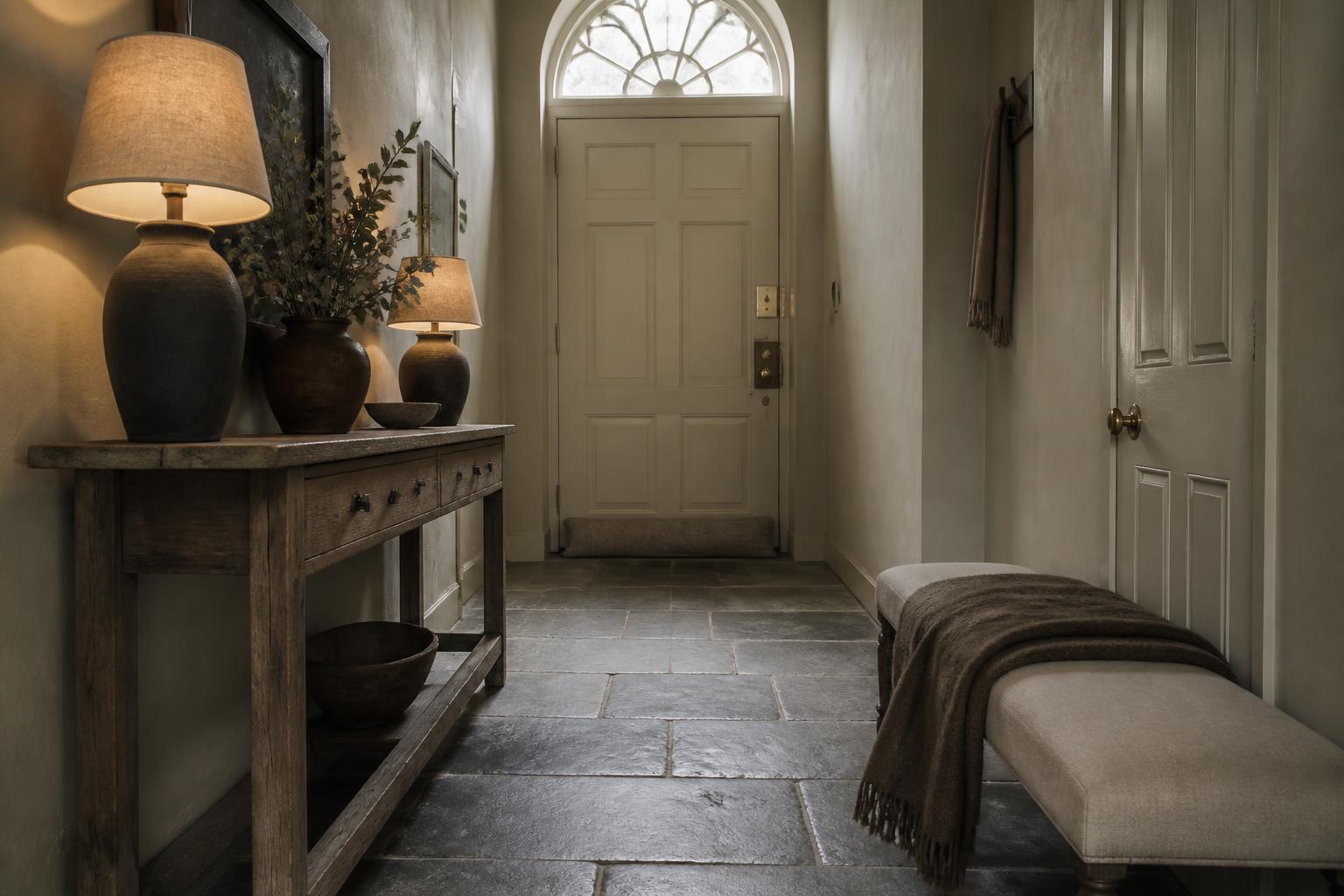
Hallways and stairs set the tone as you move through the house. Wall sconces at regular intervals, a statement pendant in a tall stairwell, or even a discreet table lamp on a console can make these transitional spaces feel considered rather than forgotten.
Bathrooms need task lighting for the mirror (ideally from the sides to avoid shadows on the face) and something ambient for evening baths. Candles work wonders here.
Plan Around Your Furniture and Art
Before finalising your lighting scheme, think carefully about your furniture layout and where artwork will hang. There is nothing worse than installing a beautiful picture light only to realise the painting sits elsewhere, or positioning a floor lamp socket behind where the sofa will go.
Start with a scaled floor plan. Mark where key pieces will sit: sofas, beds, desks, dining tables. Consider where you will read, where you will need task lighting, where art will hang. Then work backwards to position your light sources and, crucially, your sockets.
For artwork, picture lights should sit approximately 15-20cm above the frame. Wall sconces flanking a fireplace or mirror typically work best at eye level, around 150-160cm from the floor to the centre of the fitting.
Choosing Fittings
The style of fitting matters. The key is intentionality, whether you are pairing contemporary fixtures with traditional architecture or keeping everything in one era, commit to the look.
Recommendations:
- Aged brass or antiqued finishes for warmth and character
- Fabric shades for a soft glow (pleated, gathered, or plain)
- Glass shades for a lighter feel, particularly in hallways or kitchens
- Sculptural fixtures as statement pieces in key locations
Whatever you choose, ensure the fitting suits the scale of the room. An undersized pendant in a high-ceilinged space looks lost; an oversized one in a low room feels oppressive.
Industrial and Utility Lighting
There is a strand of lighting design that borrows from factories, workshops, and commercial spaces, and it can work beautifully in the right domestic setting. Industrial lighting is defined by honest materials, visible mechanics, and a functional aesthetic that prioritises directness over decoration.
Key characteristics:
- Metal shades in raw steel, matt black, brushed aluminium, or weathered copper. The finish should look functional, not precious
- Exposed bulbs with visible filaments, though the novelty oversized Edison bulb has had its moment. A simple clear or frosted globe in a utilitarian fitting is more timeless
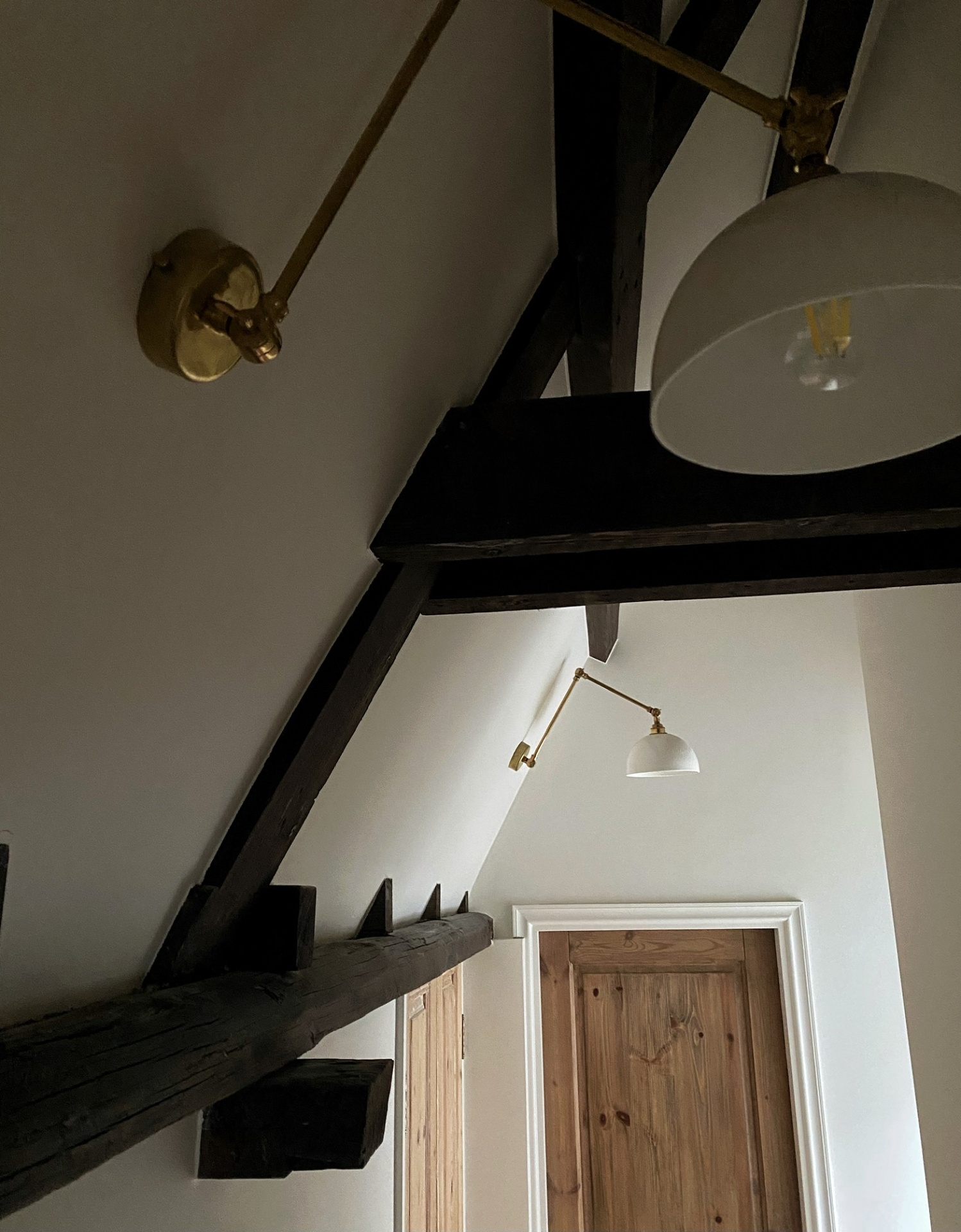
- Adjustable arms and pivots: anglepoise-style lamps, swing-arm wall lights, and articulated pendants. The engineering is part of the beauty
- Enamel shades in deep greens, greys, or whites, originally designed for factory floors, are now widely reproduced and sit well in kitchens and utility spaces
Where it works:
- Kitchens: An oversized enamel pendant above an island or a run of smaller factory-style shades above a worktop feels purposeful and grounded
- Home offices and studios: Task-oriented fittings like desk lamps and clamp lights suit spaces dedicated to work
- Hallways and boot rooms: Utility spaces benefit from lighting that does not pretend to be anything other than functional
- Converted buildings: Warehouses, barns, and former commercial spaces often demand fittings that honour the architecture rather than fighting it
A word of caution: Industrial lighting can feel cold or harsh if overdone. Balance it with warm bulb temperatures (2700K), natural materials (wood, stone, textiles), and softer light sources elsewhere in the room. The contrast between a raw metal pendant and a linen-shaded table lamp can be genuinely lovely.
Worth looking at: Original BTC (their enamel and bone china ranges bridge industrial and domestic beautifully), Jielde, Anglepoise, Skinflint (salvaged and restored originals), and Trainspotters.
Coloured Light and Tinted Glass
Colour in lighting is a subject most people associate with stage design or commercial interiors, but it has a long and legitimate history in domestic spaces. Stained glass, coloured lampshades, and tinted bulbs have been used for centuries to create atmosphere.
Tinted glass shades:
- Amber and honey-toned glass warms everything it touches. Pendants with amber glass shades cast a golden glow that flatters skin, food, and furnishings
- Smoked glass adds sophistication and reduces glare without significantly changing the colour of light. It works well in contemporary and mid-century settings
- Green glass, from pharmacy lamps to Venetian pendants, has a particular quality: calming, slightly institutional, and quietly characterful. A green-shaded desk lamp is a classic for a reason
- Opaline and milk glass diffuse light softly and evenly, casting no hard shadows. Excellent for pendants in bedrooms and bathrooms
Coloured lampshades:
- A deeply coloured fabric shade (burgundy, forest green, navy) transforms the quality of light passing through it. The room does not turn that colour, but the warmth and depth change noticeably
- Warm-coloured shades (reds, oranges, pinks) cast flattering, intimate light. They are excellent for table lamps in living rooms and bedrooms
- A lined shade (gold or champagne interior) bounces warm light upward and downward. This is one of the simplest ways to make a lamp feel expensive
Practical applications:
- Use coloured or tinted glass in accent lighting, not as your primary light source. A single amber glass pendant above a dining table, combined with neutral task and ambient lighting elsewhere, creates warmth without distortion
- In hallways and landings, tinted glass pendants or coloured shades create atmosphere in spaces where you pass through rather than linger
- Candlelight remains the ultimate coloured light: warm, flickering, and flattering. Do not underestimate its power, even in a well-electrified home
Where to source: Rothschild & Bickers (handblown glass in extraordinary colours), Curiousa & Curiousa, Pooky (coloured glass pendants at accessible prices), and antique shops for vintage coloured glass fittings.
The Importance of Dimmers
If you take one thing from this article, let it be this: install dimmers everywhere you can.
Overhead lighting that works well during the day can feel harsh at night. The ability to lower the level transforms a room. It is one of the simplest upgrades you can make, and one of the most effective.
Check LED compatibility, some bulbs and dimmers do not play well together. It is worth investing in quality dimmers that will not buzz or flicker.
Switch Heights and Placement
Getting switch placement right is a small detail that makes daily life smoother. The standard height for light switches is around 120cm from the floor, comfortable for most adults.
Consider two-way switching for rooms with multiple entrances, and for bedrooms, ensure you can control lights from both the door and the bed. Nothing ruins a cosy evening like having to get up to turn off the overhead light.
Smart Technology
Home automation has come a long way. Smart bulbs, wireless dimmers, and app-controlled systems let you adjust lighting from your phone or voice assistant, useful for setting scenes, scheduling lights while you are away, or simply dimming without leaving the sofa.
That said, technology should enhance, not complicate. A beautifully designed room should not require an engineering degree to switch on. Smart systems that integrate with existing switches, Lutron and Philips Hue both offer elegant solutions, mean guests can still use the room without a tutorial.
Warm vs Cool Light
Bulb colour temperature is measured in Kelvin. For home settings, aim for 2700K to 3000K, warm white. Anything cooler (4000K+) can feel sterile.
LED technology has improved dramatically. Look for high-CRI (Colour Rendering Index) bulbs if colour accuracy matters, in kitchens, for artwork, or anywhere you want colours to look true.
Where to Source
- Soho Lighting: Excellent for toggle switches, dimmers, and period-style fittings at reasonable prices. Their aged brass range is particularly good
- Corston: Beautifully made electrical plates and switches. A step up in quality and finish
- Pooky: Affordable, well-designed table lamps, pendants, and shades. Good for layering without overspending
- Visual Comfort & Co.: A broader range of architectural and decorative lighting, particularly strong on wall sconces and statement pendants
For vintage and antique lighting, auction houses and salvage yards remain excellent hunting grounds, but always budget for professional rewiring.
Getting It Right
Good lighting rarely happens by accident. It requires thought during the planning stage, a willingness to invest in quality fittings, and the discipline to layer rather than rely on a single source.
But when it works, it transforms a space. A room that felt cold becomes inviting. A hallway that felt forgotten becomes welcoming. The same furniture, the same paint colour, but an entirely different atmosphere.
Take the time to get it right. Your home will thank you for it.