Stone has long been a hallmark of timeless interiors. It is tactile, grounding, and when chosen well, it can outlive trends by decades. Beyond aesthetics, stone is also deeply functional, from countertops to fireplaces, floors to windowsills. The key is selecting the right material, finish, and placement for how you actually live.
This guide covers everything from origins and care to edge details and slab selection. A practical companion for anyone considering stone in their home.
Common Types of Stone and Where They Work Best
Marble
- Best for: Vanities, splashbacks, bathrooms, occasional kitchen use
- Look: Veined, soft, available in many tones (Carrara, Calacatta, Verde Alpi)
- Care: Porous, etches with acid, stains unless sealed
- Price: €€-€€€
- Type: Metamorphic, formed from limestone under heat and pressure
Travertine
- Best for: Flooring, coffee tables, basins, wall cladding
- Look: Earthy, tonal, with pitted or filled surface
- Care: Softer, rustic, needs sealing
- Price: €-€€
- Type: Sedimentary, a form of limestone deposited by mineral springs
Limestone
- Best for: Floors, walls, fire surrounds, window ledges
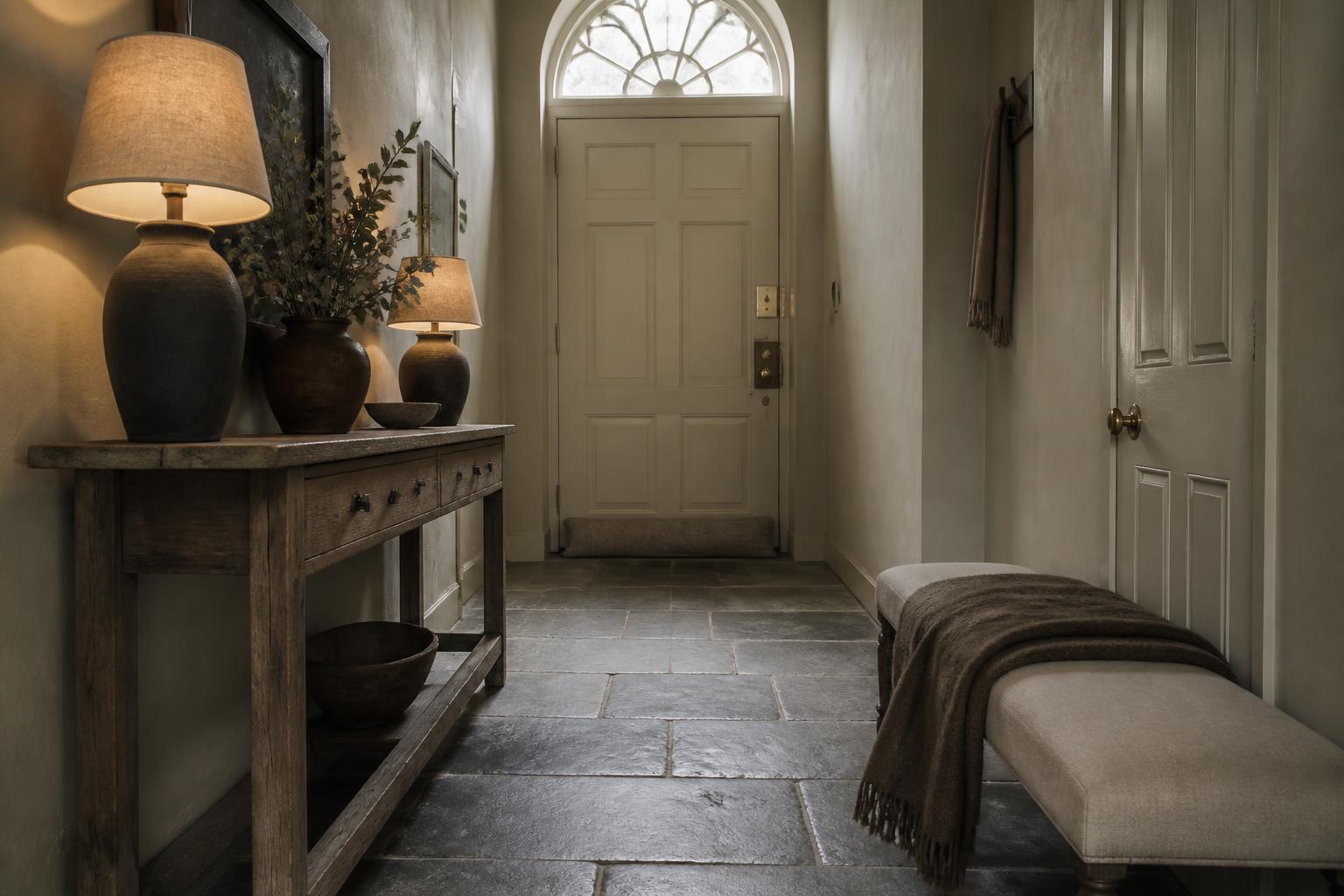
- Look: Beige to grey tones, matt or tumbled finish
- Care: Patinas well, not for heavy-use kitchens
- Price: €-€€
- Type: Sedimentary, made from accumulated calcium carbonate
Granite
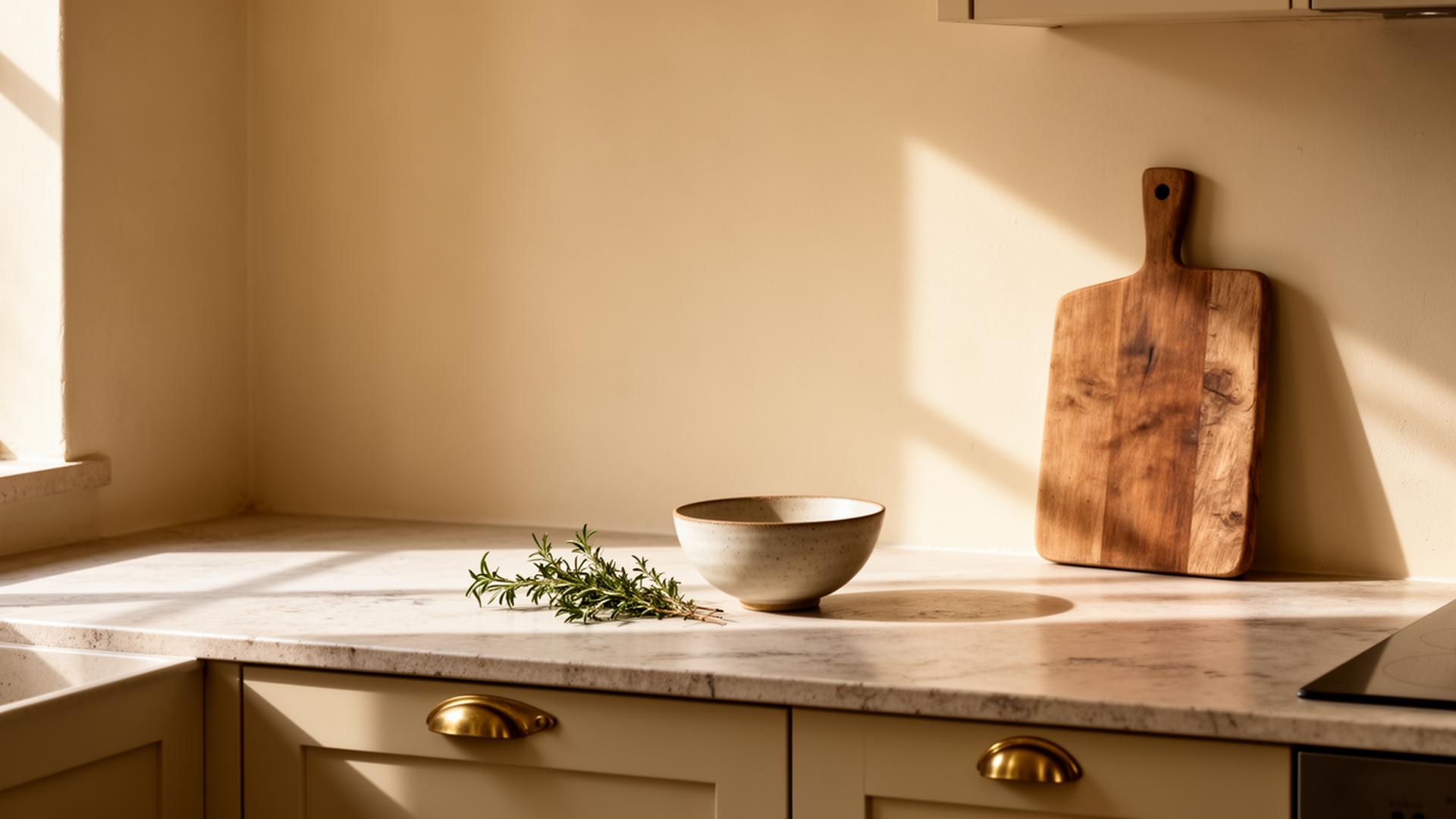
- Best for: Worktops, utility rooms, high-use kitchens
- Look: Dense, speckled, darker tones
- Care: Hardwearing, scratch and heat resistant
- Price: €€
- Type: Igneous, formed from cooled magma underground
Quartzite
- Best for: Kitchen counters, floors
- Look: Often resembles marble (e.g. White Fantasy) but more durable
- Care: Non-porous, heat and stain-resistant
- Price: €€-€€€
- Type: Metamorphic, formed from sandstone
Quartz (engineered)
- Best for: Worktops, bathrooms
- Look: Consistent colouring, sleek and modern
- Care: Non-porous, easy to maintain, not heatproof
- Price: €€
- Type: Man-made, crushed quartz mixed with resin
Belgian Blue Stone (Petit Granit)
- Best for: Floors, stairs, counters, outdoor use
- Look: Deep grey-blue with fossil traces
- Care: Durable, develops elegant patina
- Price: €€-€€€
- Type: Sedimentary, a type of fossiliferous limestone
Terrazzo (composite)
- Best for: Floors, splashbacks, worktops
- Look: Marble chips in resin or cement base, tonal or colourful
- Care: Durable, needs sealing
- Price: €-€€
- Type: Man-made, composite of stone fragments and binders
Finishes: How Surface Texture Impacts Use
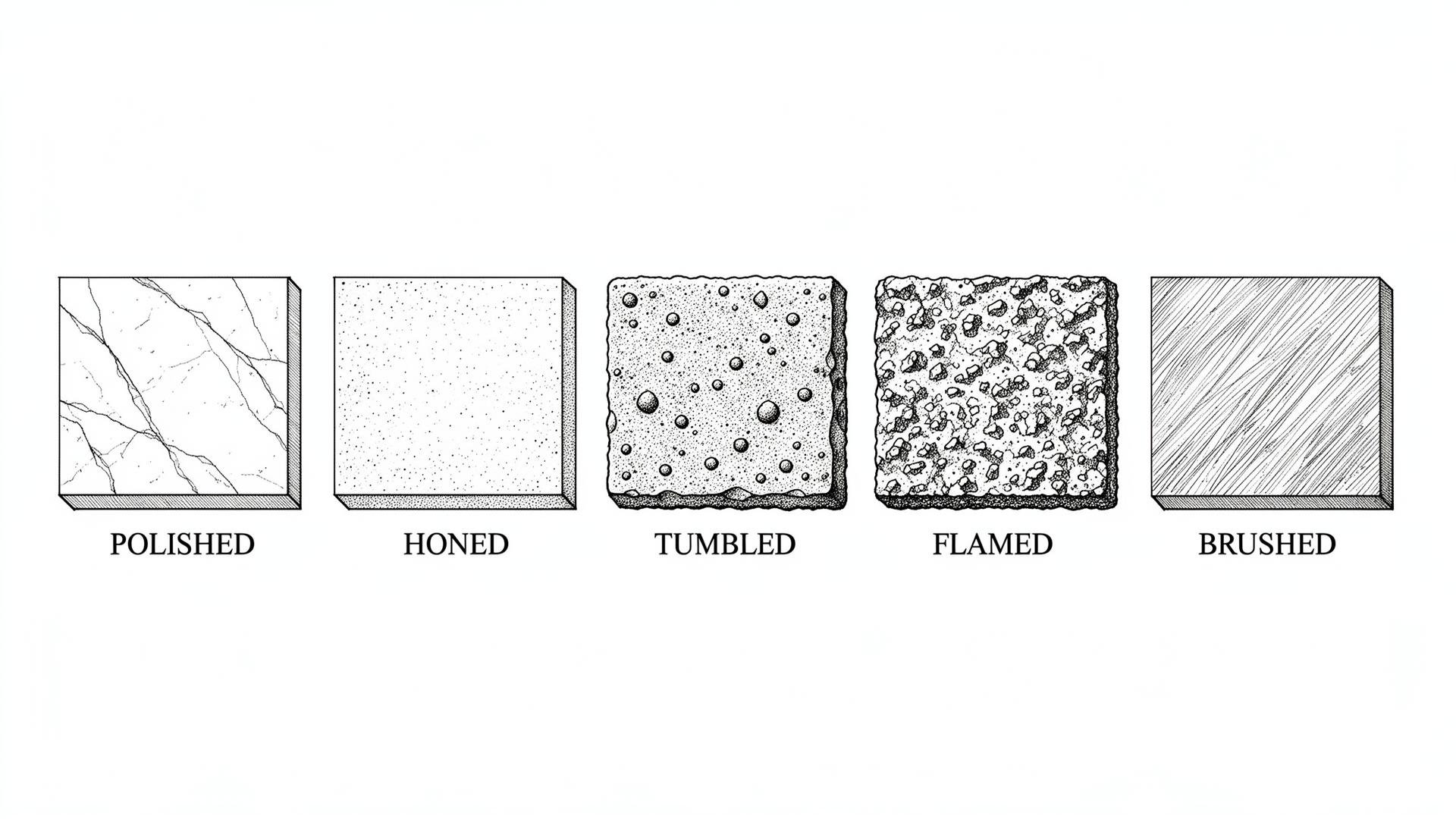
- Honed: Matt, velvety surface. Ideal for kitchens, bathrooms, and floors. Less slippery, easier to live with.
- Polished: Glossy, formal finish. More reflective, shows scratches and smudges.
- Brushed/Tumbled: Worn-in texture, suits older properties.
- Flamed/Sandblasted: Gritty, non-slip finish. Excellent for external steps, pool areas, or wet rooms.
Ask for a non-slip finish where safety matters, such as children's bathrooms or outdoor terraces.
Edge Finishes: Small Detail, Big Impact
The profile of a stone edge shapes the feel of a room. It is a small decision that affects how a surface looks and feels every time you touch it or walk past it.
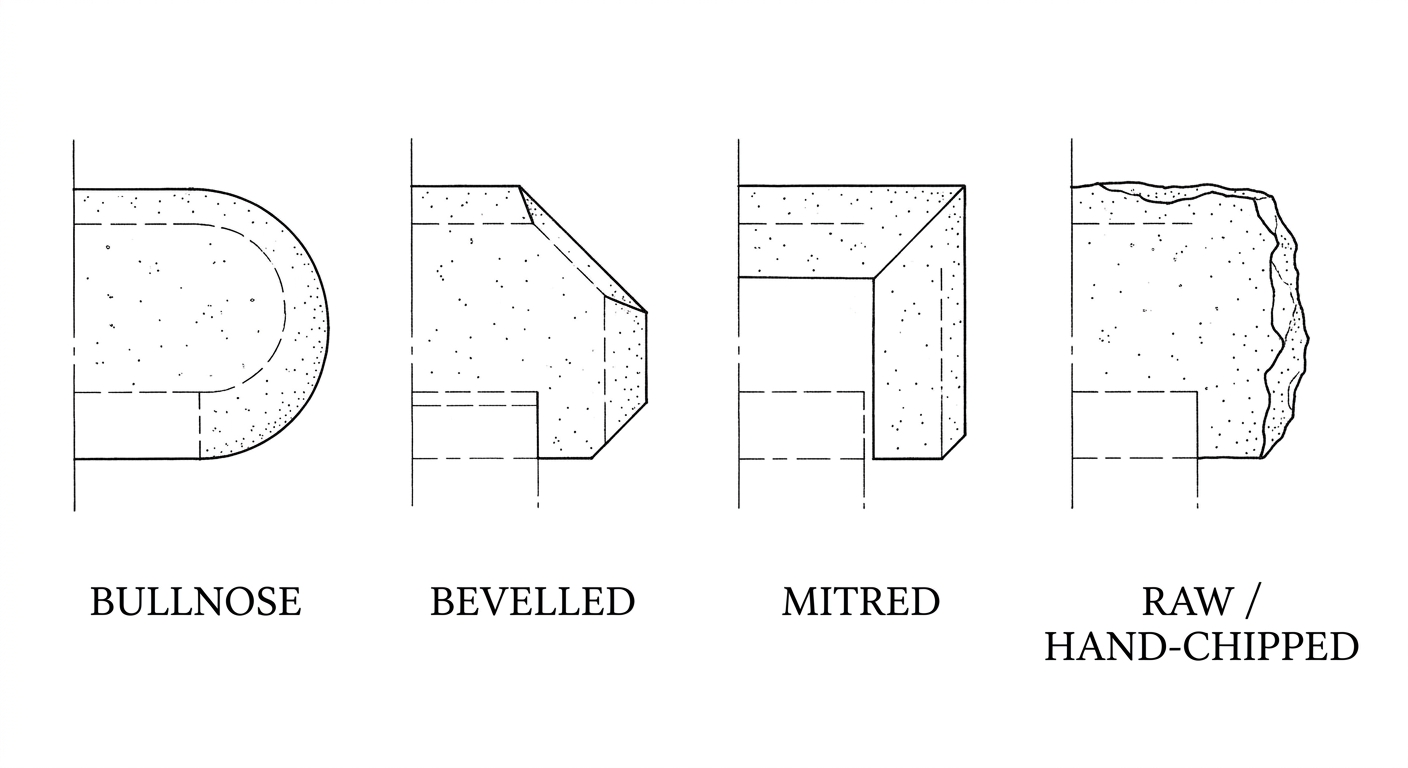
Here is where they are commonly used:
- Bullnose: Fully rounded. Softens vanities, tabletops, stair treads
- Bevelled: Slanted angle. Clean for kitchen counters or mantels
- Mitred: Sharp, seamless join. Favoured for contemporary islands or chunky slabs
- Raw/Hand-Chipped: Uneven edge. Ideal for rustic sinks, hearths, or country settings
Stone in Unexpected Places
Stone can go well beyond kitchen counters and bathroom basins.
- Fireplace surrounds: From sleek marble to rough limestone. Make it the focal point
- Door frames and windowsills: Add substance and rhythm to traditional architecture
- Shelving and niches: Use leftover stone pieces for recessed display or ledges
- Stair treads or risers: Durable and striking when mixed with timber
Mixing Stone: It Is Not Only Allowed, It Is Encouraged
Blending different stones adds richness. Just be sure to:
- Keep undertones cohesive (cool vs warm)
- Use one dominant stone, others as accents
- Vary finish for contrast (e.g. honed worktop, tumbled splashback)
Try:
- Honed Carrara countertops with tumbled limestone flooring
- Travertine shower walls with a terrazzo floor
- Blue stone hearth with a marble surround
Practical Questions Worth Asking
Can I Use Stone with Underfloor Heating?
Yes. Most natural stones, especially marble and limestone, conduct heat well. Just confirm the thickness and installation method.
Is It Safe for Families and Pets?
Go for honed, brushed or tumbled finishes. Avoid polished if slippery surfaces are a concern. Seal porous stones and expect some ageing.
What About Weight and Installation?
Stone is heavy. Upstairs bathrooms may need structural reinforcement. Large slabs may require craning or special access. Always check before ordering.
Can I Source Slabs Directly?
Yes. You can buy from:
- Salvage yards: Great for hearths, reclaimed sinks, marble remnants. Consider cutability and patina.
- Factories or quarries: Often better value, especially in Italy, Portugal, Belgium. You will need a fabricator.
- Tile specialists/showrooms: Offer advice, samples, edge finish options and delivery.
- Kitchen showrooms: Some will only sell the stone if supplying the full kitchen. Worth asking up front.
Grout and Sealant Colours
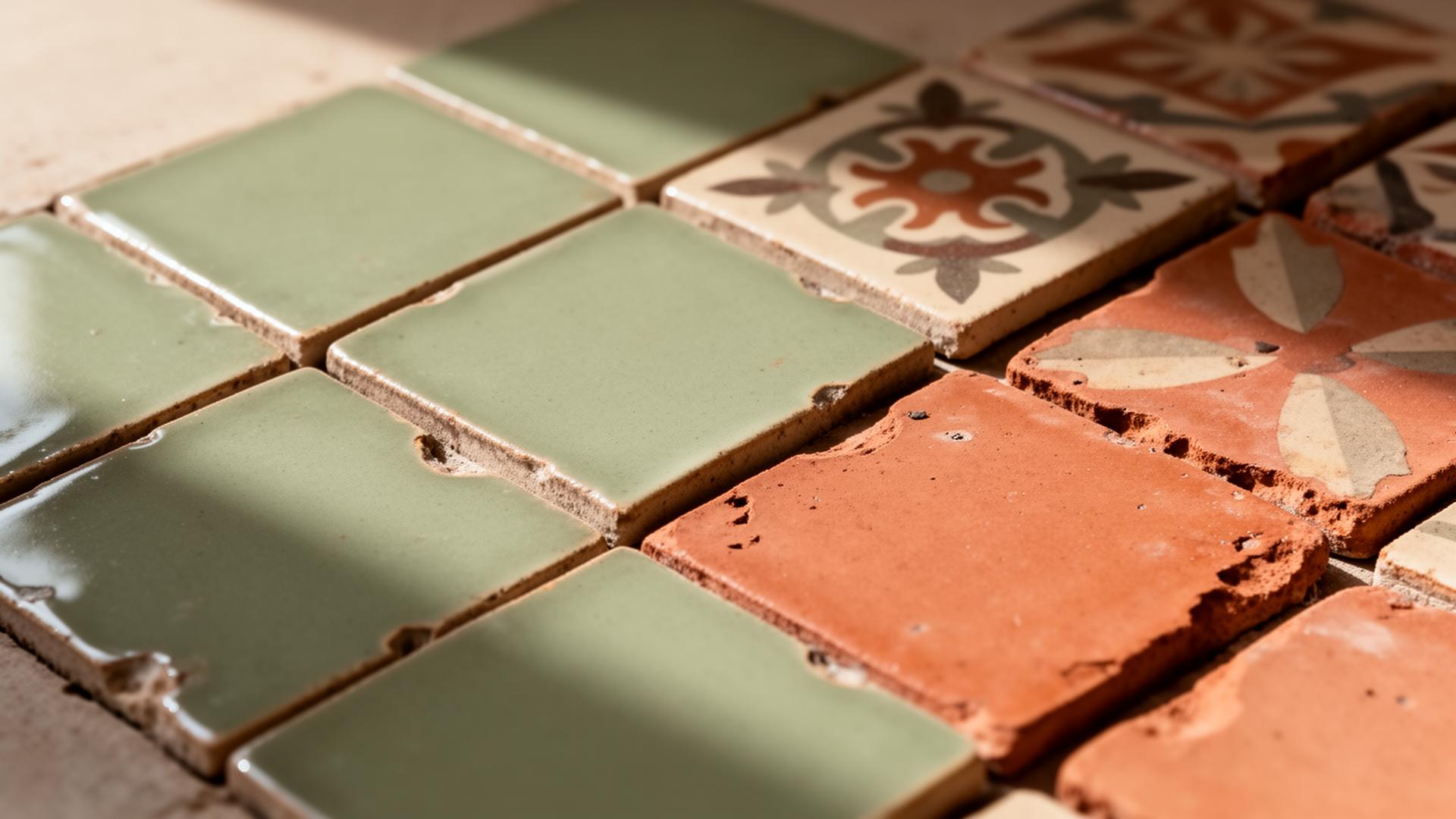
Grout can make or break a stone installation. A contrasting grout will emphasise tile edges and pattern, while a tonal match will soften the overall look. The same goes for sealant: clear for subtlety, or tinted to match the stone.
Selecting the Right Slab
When choosing slabs for visible use (like a kitchen island or wall cladding), inspect:
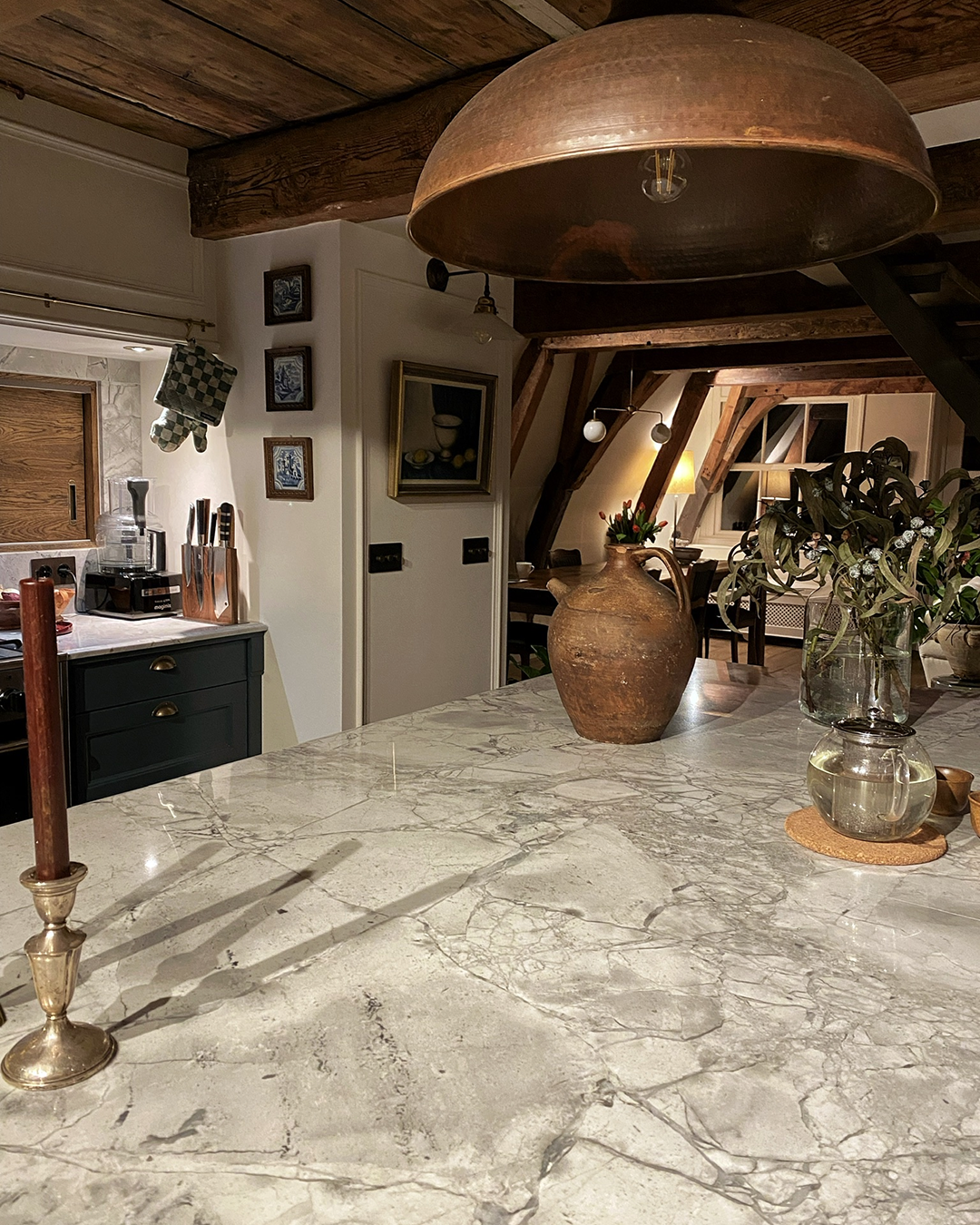
- Veining: Natural stone is unpredictable. Do you want dramatic movement or soft variation?
- Colour batch: Marble can vary wildly. Check the full slab or lot.
- Matching: For large runs (e.g. countertops, splashbacks), ask if bookmatching is possible.
- Surface finish: Some slabs can be altered post-purchase, but not always. Confirm first.
Caring for Stone: The Basics
- Seal regularly (especially marble, limestone, travertine)
- Avoid acids: Vinegar, lemon and wine will etch marble and similar stones
- Use coasters and wipe spills quickly to prevent water marks and cup rings
- Clean with pH-neutral products. Never bleach
- Use trivets and mats for hot pans or bathroom toiletries
- Accept wear gracefully: Patina adds character, not flaws
Most Popular and Timeless Stones
If you are looking for tried-and-tested options:
- Carrara Marble: Soft grey veining, classic Italian elegance
- Calacatta Oro: Warmer tones, dramatic veining, luxurious feel
- White Fantasy Quartzite: Durable alternative to marble, ethereal looks
- Belgian Blue Stone: Deep, tonal, versatile indoor-outdoor use
- Crema Marfil Limestone: Soft beige with fine veins, subtle and warm
- Rosa Portugués Marble: Blush-toned, elegant with grey veining
Where to Source
A good stone supplier will let you visit the yard, see full slabs, and discuss finishes before committing. It is worth making the trip rather than choosing from a website alone.
- Mandarin Stone: Excellent range of natural stone, porcelain, and decorative tile. Showrooms across the UK with knowledgeable staff
- Lapicida: Specialists in rare and unusual natural stone. Worth visiting for statement pieces and unique slabs
- Fired Earth: A reliable all-rounder for tiles, stone, and bathroom fittings. Good for seeing materials in styled room settings
- Capietra: Particularly strong on limestone and travertine. Helpful for sourcing floor-grade stone at reasonable prices
For reclaimed stone (hearths, steps, window ledges), salvage yards remain the best option. Patience and a tape measure are your greatest tools.
Choosing stone is about more than aesthetics. It is about understanding how a material will age, how it responds to daily life, and whether it suits the architecture and rhythm of a home. From finishes to fabricators, edge profiles to patina, each decision shapes the result.
When chosen well, stone becomes part of a home's story: worn, loved, and still standing decades from now.