For thirteen years, I worked as a fashion buyer across the British and Dutch high street. From value retailers to mid-high brands, I built collections for a living. When I tell people this, they often assume interiors was a dramatic career change. It was not. It was a natural continuation of everything I had already been doing, just in a different medium.
I did not drift into this work. After more than a decade in buying, I chose to leave. I renovated a home of my own, a 1618 canal house in Amsterdam, and that experience confirmed what I had suspected for a long time: the skills I had spent years refining were not just transferable. They were exactly what this industry needs more of.
The Buyer's Eye
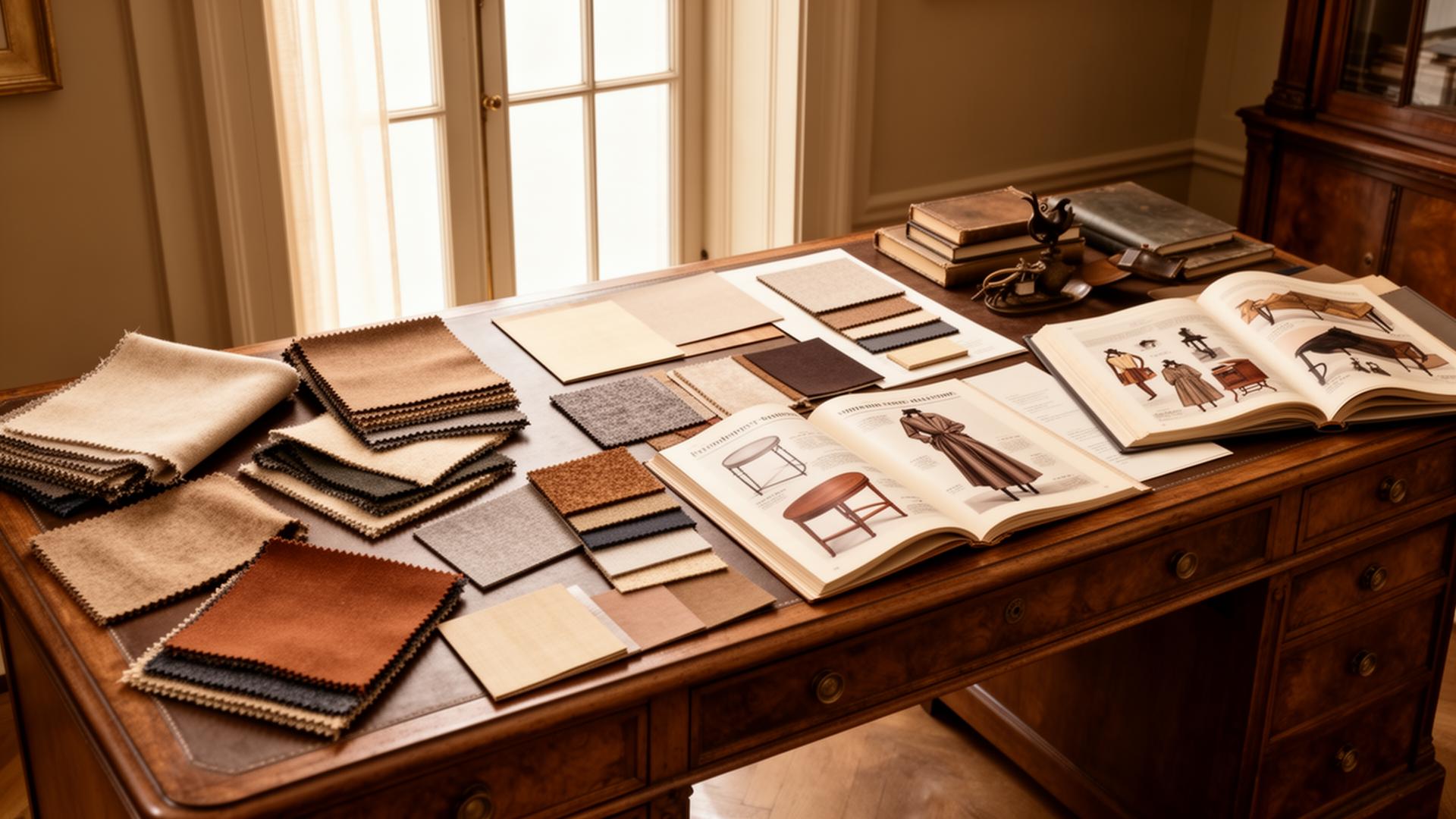
A buyer does not simply choose products. A buyer is responsible for the full lifecycle of a product, from the initial vision and sketch through to its landing in store or on a website. You work across departments. You learn to read quality at speed, to assess a fabric by touch, to spot the difference between something that will hold up and something that will not. You train your eye across thousands of options and learn to edit ruthlessly, because a range plan has finite space and every piece must earn its place.
That instinct does not disappear when you change industries. When I walk into an antiques fair or visit a supplier's studio, I am doing exactly what I did on buying trips: scanning, assessing, filtering. The product has changed. The process has not.
Collection Thinking
One of the things I find myself explaining to clients most often is the idea of building a collection. In fashion, a collection tells a story. It has a colour palette, a mood, a balance of statement pieces and quieter ones that hold the range together. Not everything can be the hero. If every piece shouts, nothing lands.
Interiors work in exactly the same way. A room needs anchor pieces and supporting elements. It needs a thread that ties it together, whether that is a material, a tone, or a sense of era. When I source for a project, I am not looking for individual objects in isolation. I am building a collection that belongs together, where each piece makes the others stronger.
Working Under Pressure
Buying is one of the most high-pressure roles in retail. You are making significant commercial decisions under tight deadlines, presenting ranges to senior leadership, and standing behind your choices when the numbers are scrutinised. Sign-off meetings, range reviews, post-season analysis: the buyer is accountable for every decision, and the consequences are measurable.
That pressure teaches you to be decisive, to trust your judgement, and to communicate your reasoning clearly. These are not soft skills. They are the difference between a project that stalls and one that moves forward with confidence. When I recommend a piece or propose a direction, it comes from the same discipline: I have done the work, I have weighed the options, and I am prepared to stand behind the call.
Budget as a Discipline
Every buyer manages an open-to-buy budget. You learn to allocate spend across categories, to protect investment where it matters, and to be resourceful where it does not. Overspend in one area and something else suffers. It is a constant exercise in prioritisation, and it becomes instinctive.
I bring the same financial discipline to every project. A renovation or sourcing brief always has a budget, and I treat it with the same respect I would a commercial range plan. I know where to invest for impact, where to source smartly, and how to deliver a result that feels considered without being wasteful. This is not about cutting corners. It is about knowing where every pound and euro is working hardest.
Fair Prices and Things Built to Last
A buyer spends years learning what a fair price looks like. You understand the cost of raw materials, the labour involved, the margin at each stage. You know when something is overpriced for what it is, and you know when a higher price is justified by genuine quality and craftsmanship. That knowledge protects the client.
It also means I care deeply about longevity. In fashion, the best-performing products were always the ones that lasted: the coat that held its shape after three seasons, the boot that got better with age. The same applies to interiors. I would always rather source a piece that will look better in ten years than one that looks perfect today and falls apart tomorrow. A fair price for something built to last is never a compromise. It is the smartest investment you can make.
Beyond the Brand Name
One of the most valuable lessons from fashion buying is that the name on the label does not always tell you what you need to know. I have walked the same factories that produced garments for both value retailers and high-end designer houses. The machinery was the same. The fabrics were often the same. The difference, sometimes, was little more than a label and a markup.
That is not to say established brands do not matter. A brand that has been around for decades has earned that longevity for a reason: consistency, quality, reputation. People will always see value in that, and rightly so. But I encourage clients not to get hung up on names alone. What matters more is whether you genuinely respond to the design, whether the construction is sound, and whether the piece will serve you well. Sometimes the best find is from a small, relatively unknown maker. Sometimes it is from a heritage brand. The point is to look past the logo and assess what is actually in front of you.
Critical Path Management
What most people do not realise about buying is that it is, at its core, a logistics role. You manage a critical path that spans months: from concept through development, sampling, production, quality control, shipping, and delivery. You work across time zones and supply chains. You learn to anticipate problems before they arrive and to manage complexity without letting the details slip.
This is the skill that translates most directly to renovation and sourcing work. When I am coordinating a project that involves pieces from three countries, custom lead times, and a client who needs to move in by a certain date, I am running a critical path. It is second nature.
Practical, Not Precious
A buyer is trained to think about whether something is fit for purpose. In fashion, that means wash tests, wear trials, fabric performance, and garment construction. You do not just ask whether something looks right. You ask whether it will work in real life, day after day.
I carry that same lens into interiors. A beautiful surface that marks at first contact is not a good recommendation. A chair that looks striking but is not comfortable to sit in has failed its brief. I think about how a home is actually lived in, not just how it photographs. Practicality is not the enemy of style. It is what makes good design last.
Working with the Trades
Buying teaches you to work across disciplines. You sit between design, merchandising, logistics, production, and retail, acting as the person who brings all those moving parts together. You learn to communicate clearly with people who have very different priorities and to keep a project on track when competing demands pull in different directions.
That translates directly to working with the trades. On any renovation or sourcing project, I am coordinating with joiners, electricians, painters, upholsterers, and installers. I understand their processes, respect their timelines, and know how to brief clearly so the end result matches the vision. A buyer is, above all, a project manager, and managing the trades well is what separates a smooth project from a stressful one.
The Myth of Superficiality
There is a persistent assumption that fashion is superficial, that it is all about trends and aesthetics. Anyone who has worked in buying knows this could not be further from the truth. Buying is analytical, commercial, and deeply strategic. You negotiate prices, manage margins, assess fabric performance, oversee fit sessions, and make decisions that carry significant financial weight. You have to understand your customer intimately, because the collection must be built to reflect how they live, what they need, and what they will reach for again and again.
The same rigour applies to sourcing a home. I am not decorating. I am making considered, strategic decisions about where to invest, what will endure, and how each element serves the person who lives there. The customer is always number one. That has never changed.
Permission to Mix High and Low
One of the great freedoms of a buying background is understanding that price does not always correlate with quality, and that mixing price points is not a compromise. In fashion, you might range a beautifully cut coat alongside a simple knit at a fraction of the cost. The skill is in knowing which pieces to invest in and where to be resourceful.
I apply the same principle to interiors. A vintage market find can sit comfortably alongside a bespoke commission. A reclaimed door handle can elevate a room just as much as an investment light fitting. It is about knowing what deserves the spend and what does not, and having the confidence to make that call.
Supplier Instinct
Years of working with factories, mills, and suppliers taught me how to read a trade: who takes pride in their craft, who cuts corners, and who will deliver what they promise. Those relationships, and the instinct that comes from building them, are directly transferable.
When I source for clients now, I draw on a network of makers, studios, and dealers that I have vetted with the same scrutiny I would apply to any production partner. I know what good craftsmanship looks like because I have spent over a decade assessing it, and I know what a fair price looks like because I have spent just as long negotiating them.
Why It Matters
Most interior professionals come from a design or architecture background. They think in aesthetics first. A buyer thinks in customer, budget, timeline, and quality first, with aesthetics as a given. That is a fundamentally different starting point, and it changes everything about how a project is run.
I have also been the client. I have made these decisions with my own money, in my own home, during a renovation that tested every skill I had. I know what it feels like to commit to a significant purchase and wonder if it is the right call. I know the anxiety of a delayed delivery and the relief of a piece that lands exactly as promised. That experience is not something you can learn from a textbook.
Buying taught me to look beyond the surface: to ask how something is made, where it comes from, and whether it is worth the price. That is not a fashion skill. It is a sourcing skill. And it is the foundation of everything I do at Epoch.
If you are looking for someone who will treat your home with the same rigour, care, and commercial common sense that I brought to thirteen years of buying, I would love to hear from you.