I have never been a hoarder of things. I am naturally selective, highly organised, and genuinely uncomfortable with clutter. For someone who spends their days sourcing furniture, fabrics, and objects for other people's homes, my own space has always been relatively spare. Not minimal in the designed, curated-emptiness sense, but edited. Considered. Every piece earns its place.
It either has to have a use, or it has to bring me genuine pleasure. If it does neither, it does not stay.
What I Mean by Investment Pieces
I am cautious with this phrase because it gets misused. An investment piece is not necessarily expensive. It is something made with enough care and quality that it will last, improve with age, and never feel disposable.
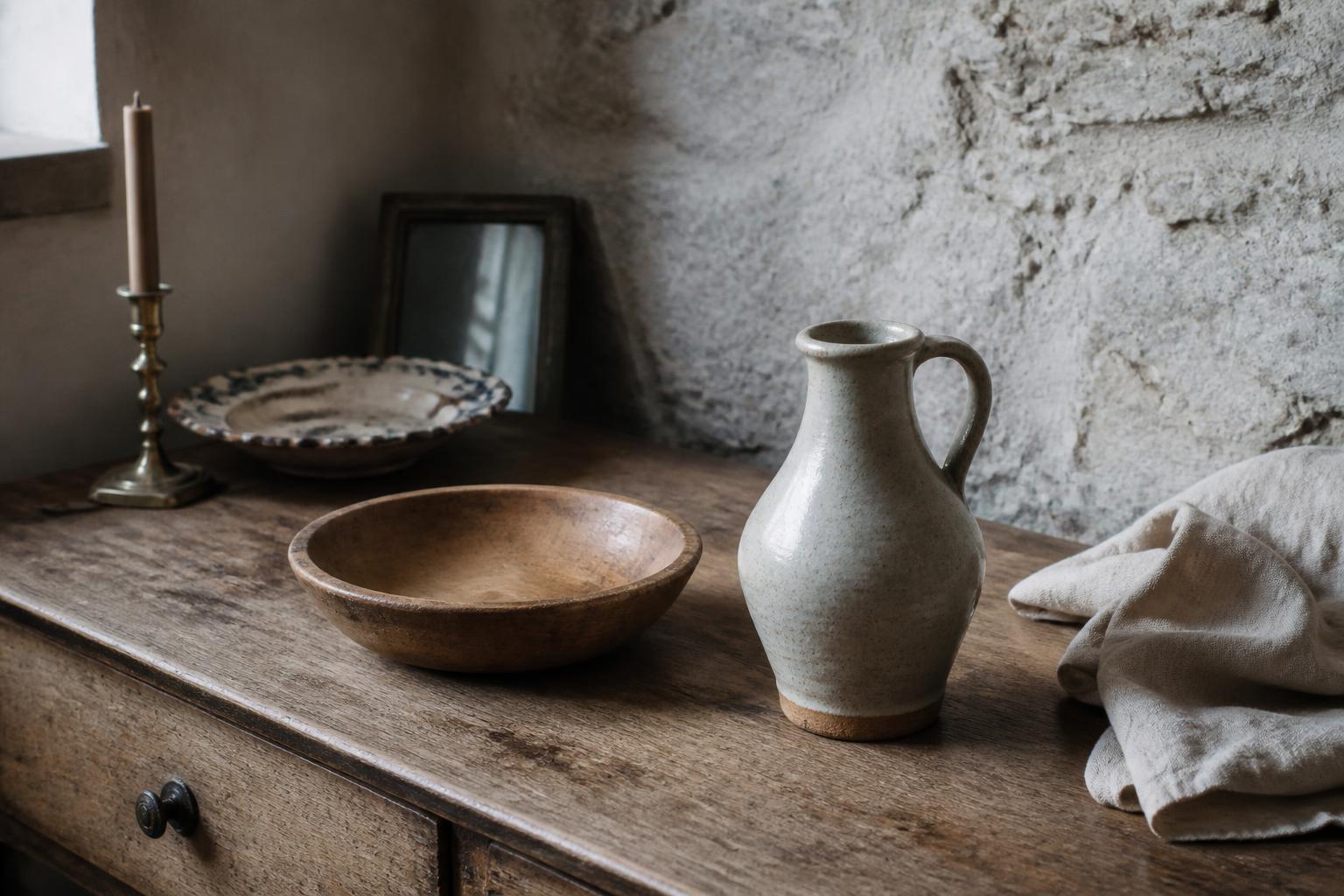
A hand-thrown ceramic bowl from a studio potter. A solid oak dining table. A vintage brass desk lamp. Linen bedding that softens with every wash. These things cost more than their mass-produced equivalents, but they repay that cost in years of daily use and genuine pleasure.
Some of my favourite makers and sources for pieces that earn their place:
- Astier de Villatte for ceramics that are used daily, not displayed behind glass
- Cutipol for flatware that makes every meal feel slightly more intentional
- Feldspar for fine bone china that is both delicate and robust enough for everyday
- Toast for the kind of homewares, linen, wood, simple glass, that improve with use
- Sharland England for beautifully crafted objects with a sense of story
For furniture, I often look to vintage rather than new. A well-made mid-century piece from Vinterior or a French farmhouse table found on Catawiki will have more character and longevity than most things available in a showroom today.
The Art of Editing
Living with less requires editing, and editing is a skill. Here is how I approach it:
The 'do I reach for it?' test. If I have not used, worn, or looked at something with pleasure in six months, it goes. Not into a cupboard, out of the house entirely.
One in, one out. Before buying anything new, I ask what it replaces. If the answer is nothing, if it is simply adding to what is already there, I wait.
Quality over quantity, always. Three good knives instead of a full block. Two excellent saucepans instead of a matched set of eight. One beautiful vase instead of a shelf of adequate ones.
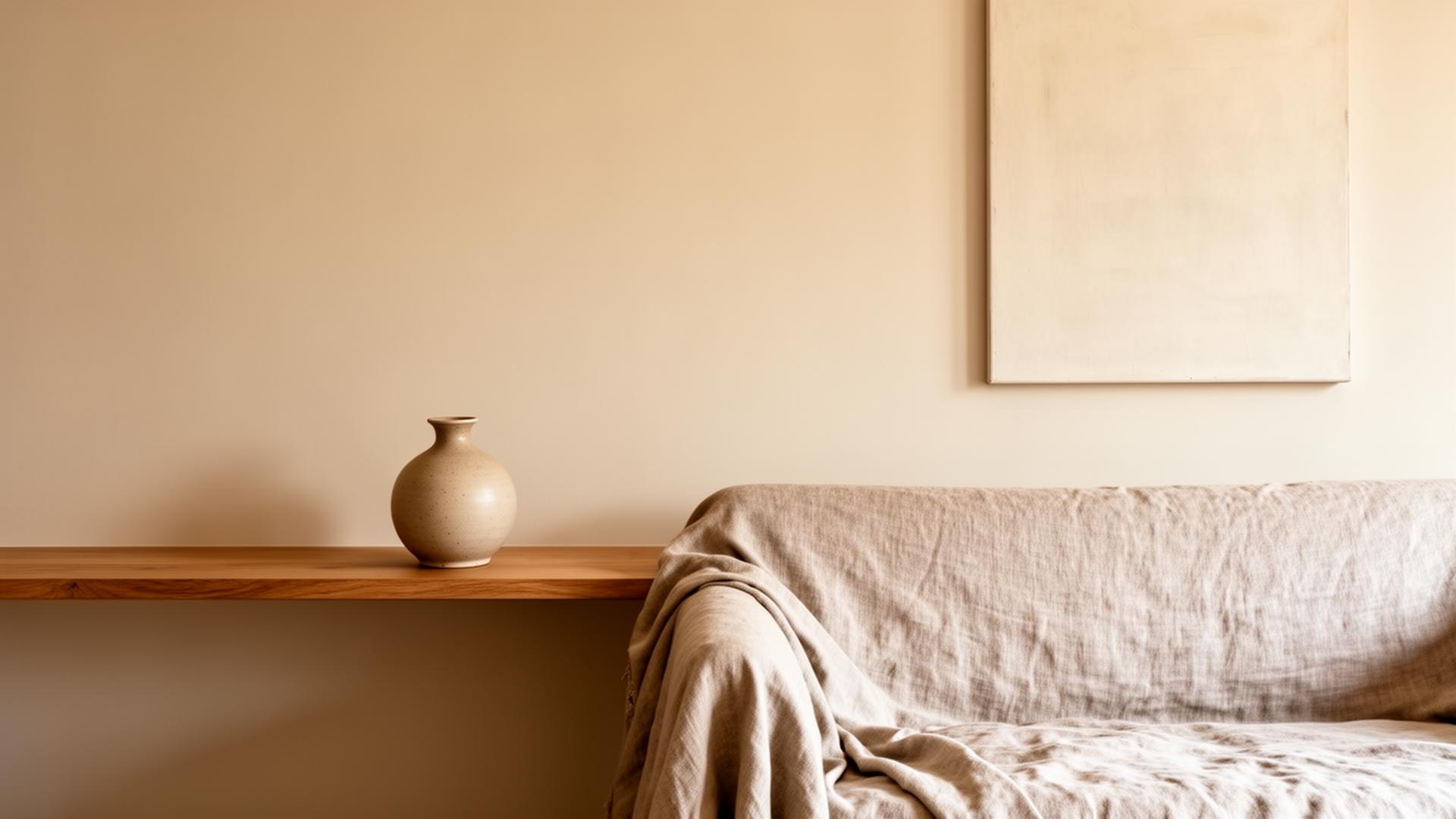
Leave space. A room does not need to be full to feel complete. Negative space, an empty shelf, a clear surface, a wall without art, gives the eye somewhere to rest. It also gives you room to evolve.
What This Looks Like in Practice
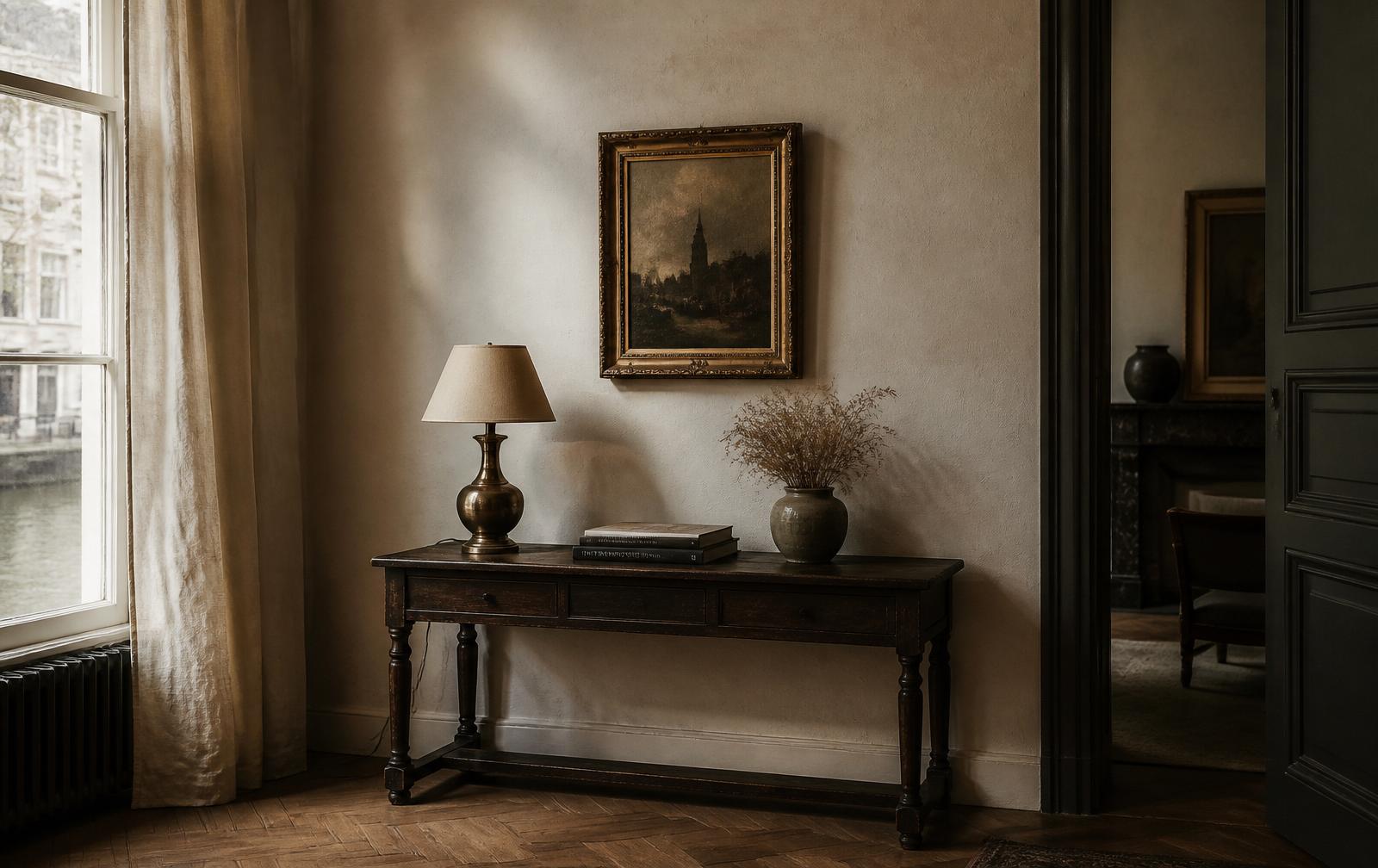
My living room has a sofa, an antique chair from Belgium, and a Persian antique rug. The walls have a mixture of oil paintings and prints, all chosen very selectively. I am particular about art.
The kitchen has open shelving with a small collection of ceramics I use every day. Nothing 'for best.' Though I should add, Spencer is a keen chef, so we have every kitchen gadget and piece of cookware imaginable. The 'less is more' philosophy has its limits when someone in the house takes cooking seriously.
It is not about achieving a particular aesthetic. It is about the feeling. When the things you do choose are things you genuinely love, the space itself feels different. Calmer. More personal. More yours.
A Note on Sustainability
I spent thirteen years as a high street fashion buyer. I understand fast consumption from the inside, the relentless cycle of new product, the pressure to fill every shelf, the sheer volume of things produced to be discarded within a season. I was good at my job, but it gave me a very clear view of how much waste that model generates.
That experience shaped how I live now. Buying less, buying better, buying vintage, these choices reduce waste and consumption. But I did not arrive at this way of living purely through environmental conviction. I arrived at it because I had seen the alternative up close, and I knew I wanted something different for my own home and my own life.
If sustainability motivates you, that is wonderful. If it does not, the quality-of-life argument is enough on its own. But having spent years on the other side of the equation, I can tell you, fewer and better wins every time.
I sometimes think the most radical thing you can do in a world of endless choice is to choose less. Not as a performance of restraint, but as an act of self-knowledge. Knowing what you actually need, what genuinely brings you pleasure, and having the discipline to let the rest go.
Your home does not need more things. It needs the right things.