Lighting is the most undervalued layer in most rooms I am called into. People will spend serious money on a sofa and then light it with whatever pendant came with the flat. Switch the pendant for an antique opaline, add a pair of bouillotte lamps on the console and a picture light over the painting opposite, and the room becomes a different room. Nothing else has changed.
This is the guide I give clients who are starting to buy lighting properly for the first time.
Why Antique Lighting
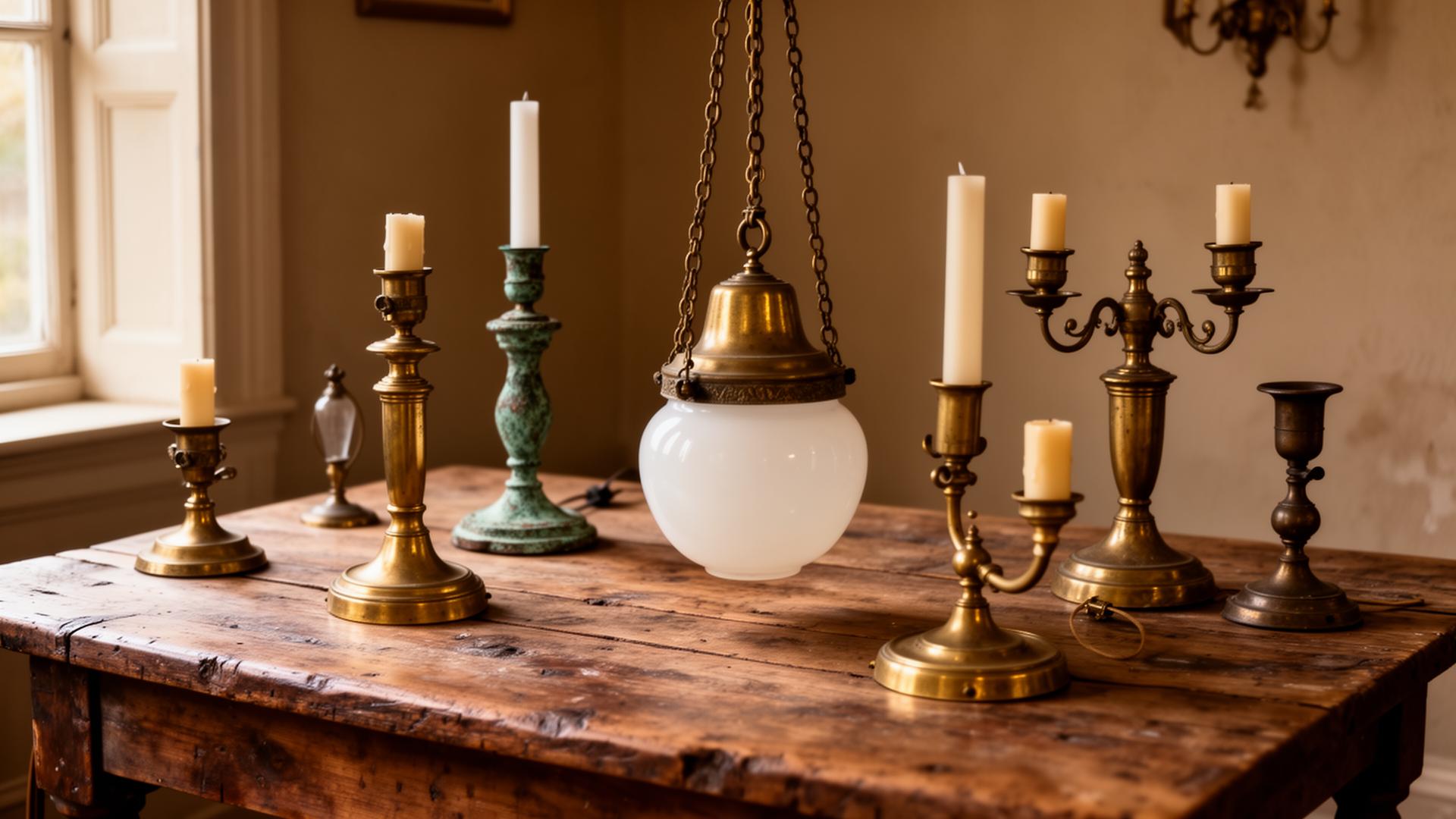
There are practical reasons. Antique fixtures are often built from solid brass, hand-spun glass and turned timber, in proportions you simply cannot find at the standard heights and diameters of modern reproduction. The brass has aged into a colour that no factory finish replicates. The glass has a slight irregularity that catches light in a way machine-blown glass does not.
There are aesthetic reasons too. A room composed entirely of new lighting reads as a showroom. A single antique fixture in a room of new pieces does the opposite: it gives the room a sense of having been gathered over time, even when most of it was bought last month.
Pieces Worth Seeking Out
I have a short list of antique lighting types that earn their keep across almost any project.
Bouillotte Lamps
The classic French table lamp: a brass or bronze base with two or three candle arms, a tole shade in a deep colour, often green, red or black. Originally designed for the bouillotte card table, hence the adjustable shade height. They sit beautifully on console tables, side tables and as a pair on a long sideboard. Good period examples date from the late nineteenth century and can be found at French flea markets and at British dealers specialising in country house pieces. Expect to pay between three hundred and twelve hundred euros for a good single, more for a fine pair.
Opaline and Milk Glass Pendants
A simple opaline glass globe on a brass chain is one of the most flattering pendant lights ever made. The glass diffuses warm bulbs into a soft glow, the brass grounds the fixture, and the shape works in almost any room. Look for hand-blown glass with slight irregularities and original brass hardware. Reproductions are everywhere and they look it.
Brass Picture Lights
A small brass picture light is the easiest way to give a single artwork the gravity it deserves. Antique versions, often from English dealers, have a depth of patina and a quality of casting that the modern equivalents lack. They can be hardwired or, increasingly, sold as battery-powered conversions, which avoids the need to chase a wall. A simple brass picture light over a painting in a drenched room is one of the great quiet pleasures of interior design.
Wall Sconces
Pairs of sconces flanking a mirror, a doorway or a fireplace bring a room to life in a way that downlighters never will. Look for pairs in matching patina, originally hardwired and convertible to standard fittings. Brass, bronze and toleware sconces from the nineteenth century are widely available and surprisingly affordable, particularly outside the main markets.
Floor Lamps
Antique floor lamps are harder to find in good condition because the shades and bases get separated over the decades. A correctly proportioned standard lamp, particularly the swing-arm reading lamps from the early twentieth century, is worth holding out for. They light a corner with a quality that no overhead fixture can match.
Chandeliers
A genuine antique chandelier is a serious purchase and a serious commitment. Allow for the cost of professional rewiring, the cost of a structural ceiling rose and the cost of a competent installer. For most rooms, I would rather see a beautiful single pendant than a compromised chandelier. Save the chandelier for the room that genuinely warrants it.
What to Check Before Buying
A few things I look at every time, before any money changes hands.
The Wiring
Almost every antique fixture you buy in Europe will need rewiring, particularly if it is going to a country with different voltage or earthing standards. Old cloth-covered wiring is charming but it is also a fire risk. Assume the cost of rewiring as part of the purchase price, and ask the dealer whether the fixture has already been rewired by a qualified electrician.
The Patina
Patina is the single most important quality of an antique fixture and the most easily destroyed. Look for an even, dark, slightly warm tone on brass, with the high points slightly brighter from natural wear. Avoid anything that has been polished to a mirror finish, because the patina cannot be put back. A small amount of green oxidation on bronze is normal and often desirable. Heavy verdigris in damp areas suggests the fixture has been stored badly.
The Glass
Hand-blown glass shades have small bubbles, faint waves in the surface and a slight irregularity in the rim. Machine-blown glass is uniform. If a dealer is selling an antique fixture with replacement modern shades, the price should reflect that. Original shades are part of the value.
The Hardware
Original screws, original chain links, original ceiling roses. These small things matter. Replacement chain in modern brass is immediately visible against original aged brass, and replacing it later is a fiddle.
The Fitting
Most antique lighting in Europe was made for screw-in bulbs or candle bulbs, and most fittings are E14 or E27. American buyers sometimes need to convert sockets to medium or candelabra base. Check before you buy, particularly for chandeliers with multiple sockets.
Bulb Choice, Which Matters More Than You Think
The wrong bulb ruins a beautiful fixture. A short set of rules.
- Warm temperature: 2400 to 2700 Kelvin. Anything cooler reads as office lighting in a domestic context.
- Dimmable: always, where the wiring allows.
- Filament-style LED bulbs: now genuinely good, and they avoid the heat and short life of incandescent. Look for high CRI ratings, ideally 90 plus, so colours read truly.
- Avoid frosted bulbs in clear glass shades. The visible filament is part of the design.
Where to Buy
A few sources I return to.
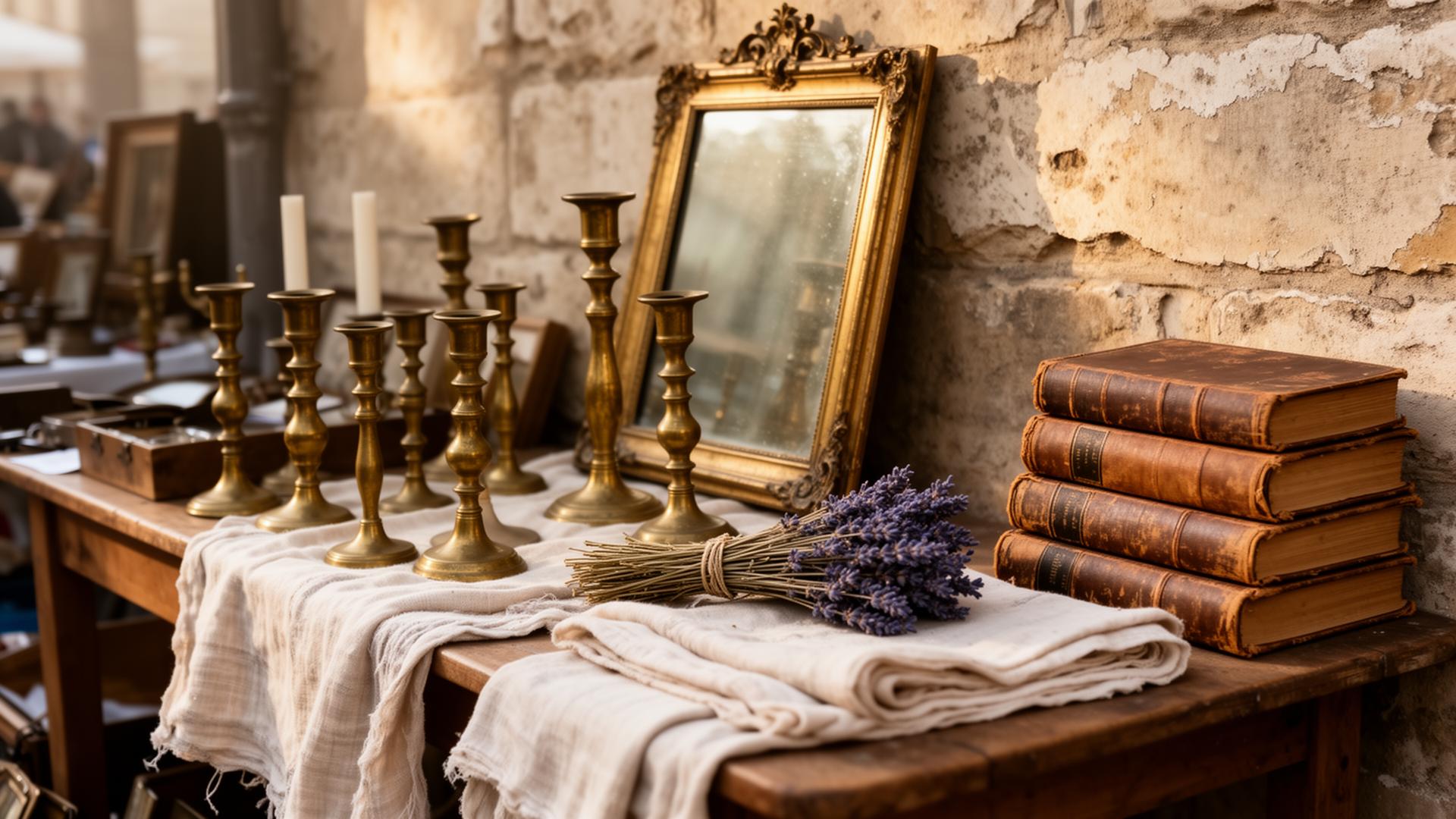
- French flea markets, particularly Marché Vernaison at Saint-Ouen, for sconces, opalines and toleware.
- British country house dealers for bouillotte lamps and brass picture lights.
- Belgian and Dutch dealers for nineteenth century pendant lights and converted oil lamps.
- 1stDibs and Selency for searchable inventory when you need a specific piece.
- Local auction houses, where lighting often goes under-appreciated and prices remain reasonable.
For clients, I build a project-specific lighting list and source against it over weeks rather than days. Lighting rewards patience. The right pendant for a particular room is worth waiting two months for.
A Final Note on Installation
Even the most beautiful antique fixture will look wrong if it is installed at the wrong height. A pendant over a dining table should hang so the bottom of the shade sits roughly seventy to seventy-five centimetres above the table surface. Wall sconces flanking a mirror should be centred at eye level when standing. Picture lights should be mounted so the bulb sits just above the top edge of the frame. These small dimensions are the difference between a fixture that works and a fixture that announces itself.
Lighting is the layer that most rewards care, and antique lighting is the easiest way to give a room a sense of considered age. It is worth taking seriously.