Ask most people when the flea market season is and they will say spring, because spring is when the idea of a Sunday morning at a market sounds appealing. Ask a dealer and you will get a different answer. The serious buying months are September through November, when the summer's house clearances have been sorted, the dealers have restocked, and the fairs that matter put their best stock out for the autumn season.
I have written before about the French flea markets specifically, and that guide stands on its own. This one is about the calendar itself: how the autumn season is structured across the Netherlands, Belgium and northern France, and how to plan around it rather than stumble into it.
Why Autumn, Specifically
The rhythm is practical. Families clear houses in the summer, when the days are long and the attics are bearable. Dealers buy through August and restore through early September. By the middle of September, that stock is on tables. Add the estate sales that follow summer, the dealers returning from their own buying trips, and the simple fact that sellers are more willing to negotiate as the outdoor season shortens, and you have the best ratio of quality to competition in the year.
Spring markets are prettier. Autumn markets are better. If you only plan one serious sourcing trip in a year, plan it now.
Reading the Calendar
The autumn calendar works in three layers, and it helps to know which layer you are shopping.
The weekly markets are the backbone. Tongeren, just over the Belgian border, runs every Sunday morning from seven until one and is the largest antiques market in the Benelux: several hundred stallholders around the old town, plus the permanent antique shops that open for it. It is trade-heavy early and browser-heavy by eleven, which tells you everything about when to arrive.
The monthly markets are the middle layer. The IJ-hallen in Amsterdam, the biggest flea market in Europe, runs one weekend a month on the NDSM wharf and moves indoors as the season turns. It is less curated than Tongeren and better for it: more household stock, more surprises, lower prices, and a great deal of patience required.
The annual and seasonal fairs are the top layer, running from late September onwards. These are where the better dealers show, prices are firmer, and the stock has been vetted to some degree. Worth attending even if you buy nothing, because they calibrate your eye and your sense of what things should cost.
What Surfaces in Autumn
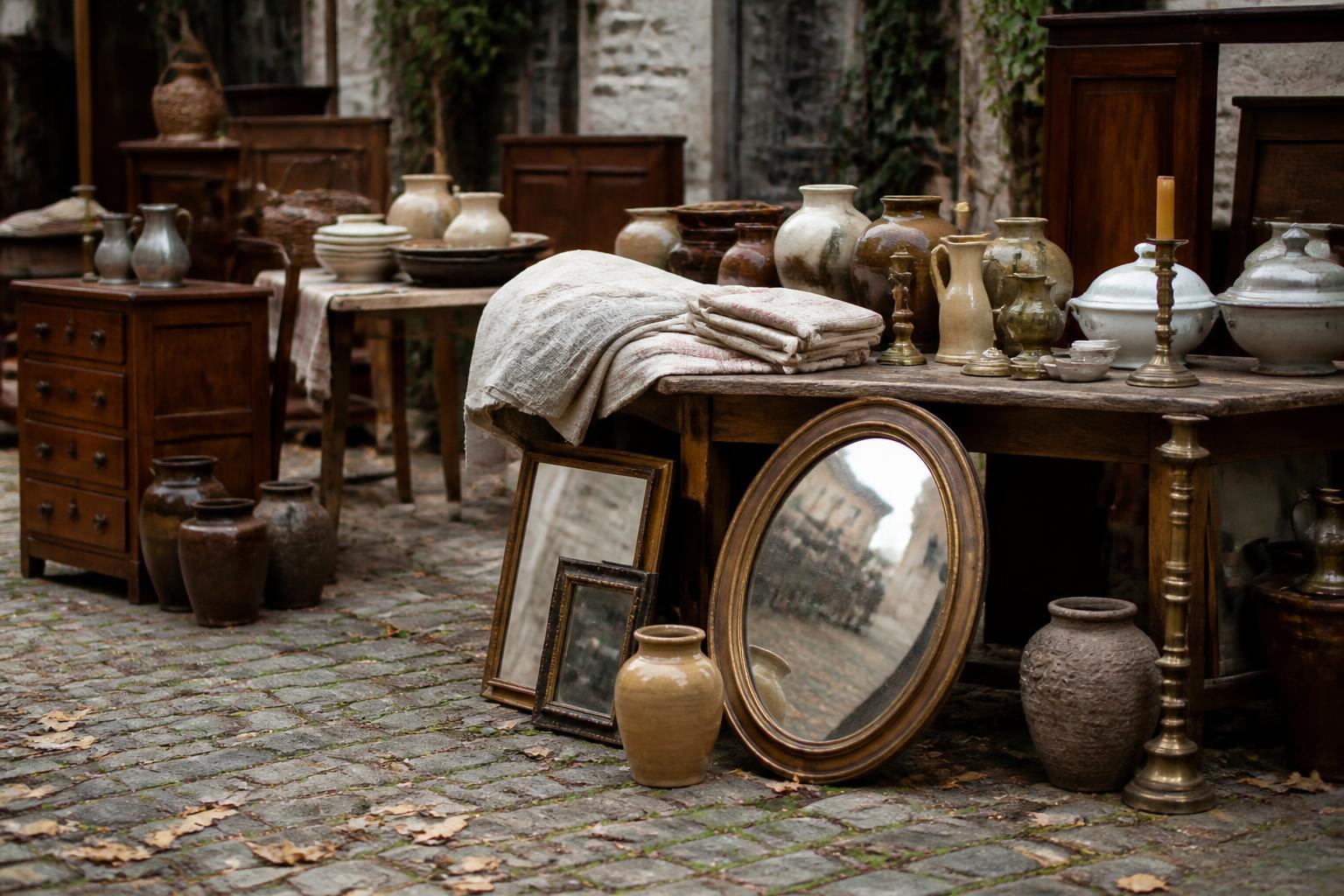
Stock is seasonal in a way most buyers never notice. Spring markets are full of garden pieces, ironwork, lighter furniture and the contents of spring cleaning. Autumn is when the house contents arrive: dining tables, armoires, sideboards, library bookcases, the heavier furniture that comes out of cleared houses. Darker woods, farmhouse pieces, good honest oak and walnut.
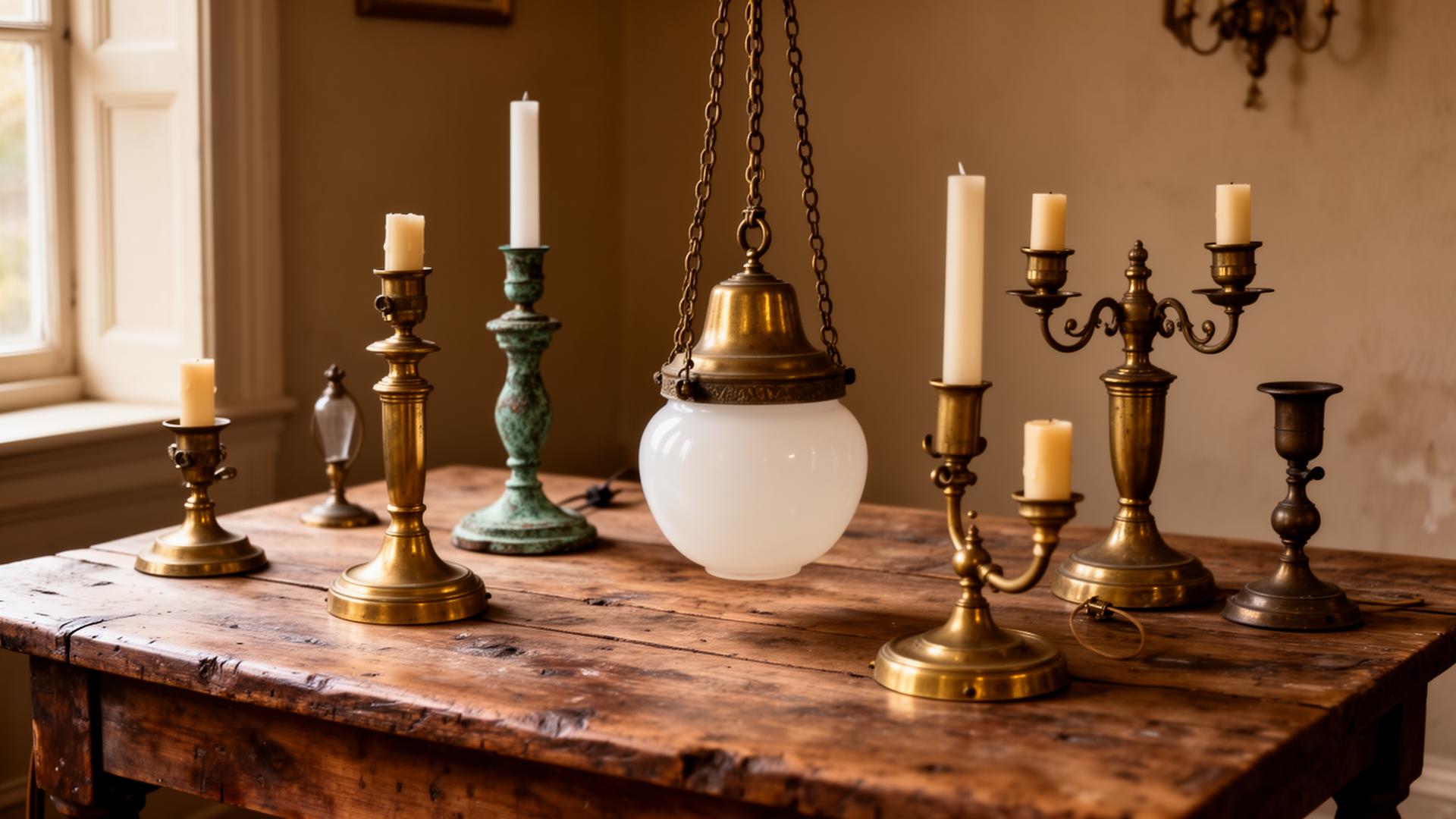
It is also the season for textiles and lighting. Wool blankets, heavy linen, and every kind of lamp appear as dealers buy for the darker months. If your list includes a dining table, a linen press or a pair of lamps, autumn is when the choice is widest. If it includes garden benches and shutters, wait for April and enjoy the irony.
Planning the Trip
A good sourcing trip is planned backwards from the transport. Decide first how anything you buy is getting home, because that decision shapes everything else. If you are driving, know your load space to the centimetre. If you are using a courier, have one lined up before you leave; the shipping piece in this series covers the logistics in detail.
Then cluster the markets. Tongeren on a Sunday morning pairs naturally with the Belgian brocantes around it. A Dutch weekend can take in the IJ-hallen and two or three permanent antique centres within an hour's drive. Two markets done well beat five done breathlessly, and you will buy better at the second market of a day than the first, once your eye is in.
Bring measurements of the spaces you are buying for, photographs of the rooms, a tape measure, a torch for looking inside carcasses and under veneers, and more cash than you expect to need. Cards are increasingly accepted, but cash still talks, especially late in the day.
How to Buy When You Are There
The old rule holds: arrive early for the best piece, arrive late for the best price. Dealers will not negotiate meaningfully at eight in the morning when the day is full of promise. At half past twelve, with a heavy oak table still to reload into the van, the conversation changes. Neither approach is wrong. Choose based on whether you are hunting something specific or browsing for opportunity.
Check condition before you fall in love. Drawers that run true, carcasses that do not rock, veneers that are lifting at the edges, woodworm holes that may or may not be historic. None of these need to be deal-breakers, but all of them are price conversations. And when something is wrong for you, walk away without apology. The calendar is long. There is always another market, and usually another table.
A Note on Patience
The final thing the autumn calendar teaches is restraint. There is more good stock available between September and November than any home can absorb, and the temptation is to buy the season rather than the piece. Resist it. A house furnished in a single season always shows it. Buy the things that are right, let the rest go to other people's houses, and trust that the markets will be there next month. They have been there, in one form or another, for a very long time.