There is a particular kind of unsettledness that comes with living abroad. Not unhappiness exactly, more a sense of hovering. Your furniture is someone else's. Your kitchen drawers are in the wrong order. The light falls differently. The sounds at night are unfamiliar.
You can be thrilled about your new life and still feel untethered in your own home.
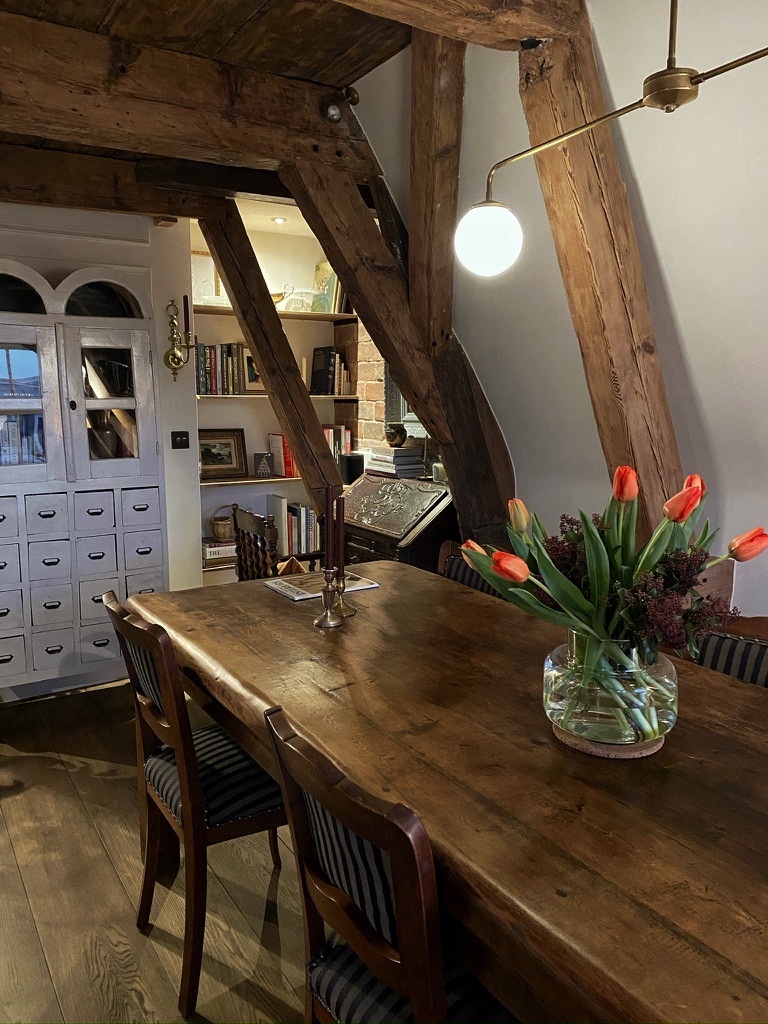
Spencer and I met in Amsterdam. We were renting separately, and when I moved in with him a year later, we had the opportunity to buy our apartment. It was beautiful - beams, wonky floors, the Westertoren visible through the window. But for the first few months, it did not feel like mine. It felt like staying in someone else's life.
What changed that feeling was not a renovation. It was a series of small, deliberate choices that made the space respond to us rather than the other way around.
Why Home Matters More When You Are Abroad
When you relocate, you lose most of your anchoring rituals. The coffee shop you walked to every morning. The corner of the sofa where you read. The way light moved through a room you knew by heart.
These seem small, but they are the texture of belonging. When they disappear, home becomes the last place where you can rebuild that feeling.
This is why expat homes matter so much, and why getting them right is not superficial. It is deeply practical. A home that feels like yours gives you a base from which everything else (work, friendships, exploration) becomes easier.
Start With What You Brought
Most expats arrive with very little. A few suitcases, perhaps some shipped boxes. And there is a temptation to furnish quickly, to fill the emptiness as fast as possible.
Resist that impulse if you can. Panic-buying leads to a home full of things that are fine but not right. Instead, start with what you brought, even if it is just a few books, a favourite mug, a photograph, a throw.
These objects carry memory. Place them where you will see them daily. They are not decoration. They are anchors.
Create Rituals Before You Create Rooms
Before thinking about furniture or paint colours, think about routines. Where will you have your morning coffee? Where will you read? Where will you sit when you need quiet?
These rituals create the emotional architecture of a home. Once you know where they happen, you can design around them. A comfortable chair by a window, a lamp that creates the right light for evening reading, a surface for your morning ritual.
The rituals come first. The objects follow.
Layer Slowly
One of the most common mistakes in a new country is trying to create a finished home immediately. But the best homes, the ones that feel genuinely personal, are built over months, sometimes years.
Buy slowly. Visit local markets, antique shops, and second-hand stores. In Amsterdam, the kringloopwinkels are full of beautiful things at fair prices. The Noordermarkt on Mondays, the shops along Spiegelstraat, the IJ-Hallen flea market: these are places where you find pieces with a story, not just a price tag.
Each piece you bring home becomes part of your narrative in this new place. That is infinitely more meaningful than a coordinated set from a single store.
The Things That Make a Room Yours
There is a category of objects that sits between decoration and necessity. Soft furnishings, textiles, books, ceramics. These are the things that turn a space from somewhere you sleep into somewhere you live.
Bedding is one of the most overlooked tools for making a home feel settled. Good linen, layered textures, a throw at the end of the bed. When your bedroom feels considered, the whole house shifts. Bring your favourite pillowcases if you can. Invest in quality sheets when you arrive. It is the room you start and end each day in, and it deserves attention.
Rugs transform a room faster than almost anything else. They soften hard floors, absorb sound, and define zones in open-plan spaces. A vintage kilim picked up at a market, a simple wool rug layered over existing carpet, even a runner in a hallway: these small additions change how a room feels underfoot and how it sounds when you walk through it.
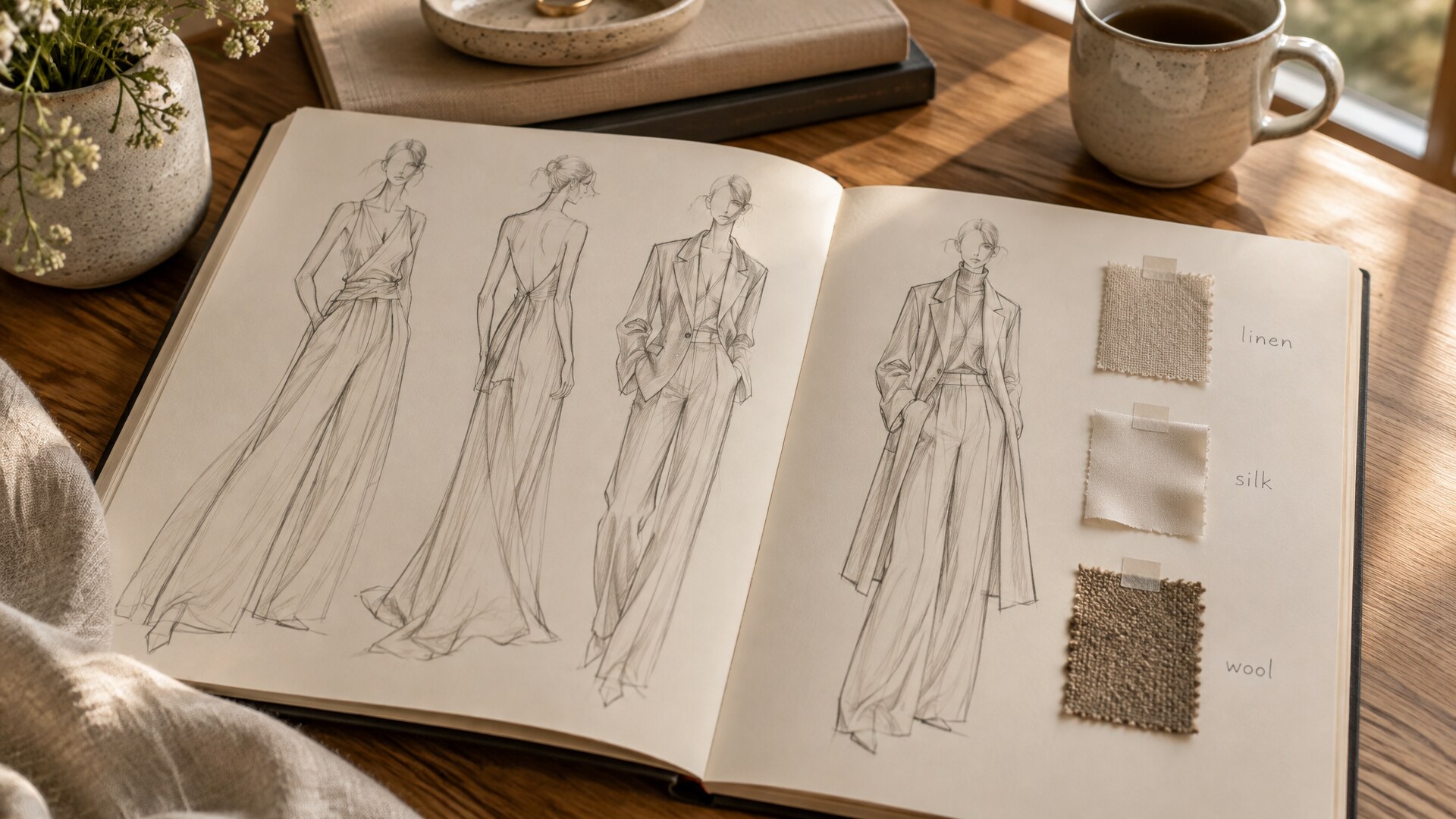
Cushions and throws allow you to introduce colour, pattern, and warmth without permanence. A linen cushion in a colour that makes you happy. A wool throw over the back of a sofa. These are easy to carry from home to home and they quietly announce that someone lives here with intention.
Books are weight, which makes them impractical for frequent moves, but even a small collection matters. Stack them on a coffee table, line them along a shelf, place one open on a bedside table. Books make a room feel inhabited in a way that very little else can.
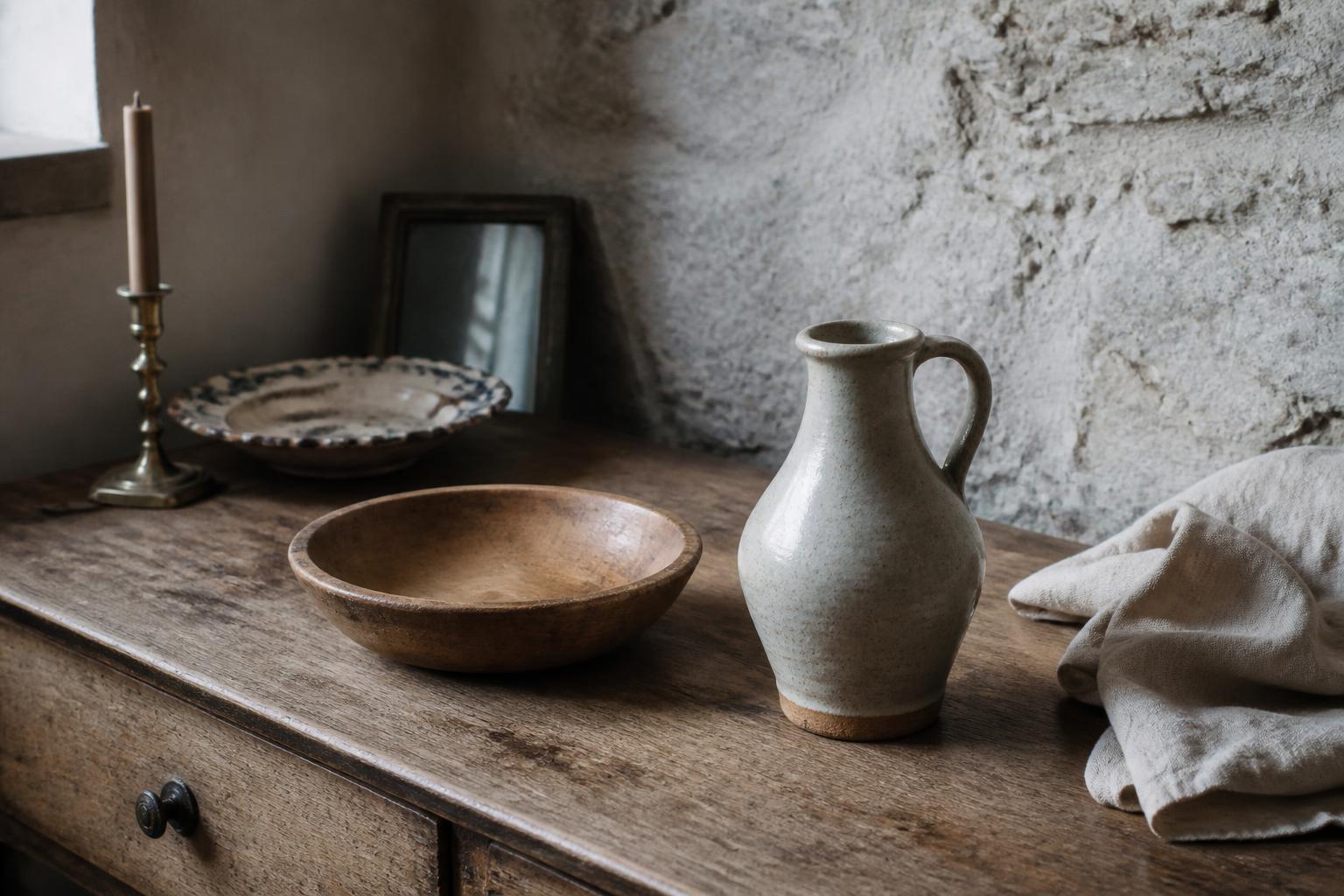
Ceramics and objects collected on your travels or from local markets give a home its specific character. A bowl picked up in Portugal, a vase found at a flea market in your new city, a wooden object from a trip. These things do not need to match. In fact, they work best when they do not because the collection tells the story of where you have been and where you are now.
Light as Atmosphere
The quickest way to make any space feel warm and personal is to change the light. Overhead lighting, especially in rentals, tends to be harsh and unforgiving. You do not need to rewire anything.
Candlelight does more for a room than most people give it credit for. A few candles on a dining table, a single pillar candle on a mantelpiece, tea lights along a windowsill on a dark evening. The flicker softens everything and creates a sense of occasion, even on an ordinary Tuesday.
Beyond candles, consider table lamps, floor lamps, and clip-on reading lights. Multiple light sources at different heights create depth and warmth. One well-placed lamp in a dark corner can change the entire character of a room.
Art on the Walls
Nothing makes a space feel more personally inhabited than art. It does not need to be expensive or grand. A framed photograph from a trip. A print from a local gallery. A sketch picked up at a market. A poster from an exhibition you loved. What matters is that it means something to you.
Group smaller pieces together rather than spacing single frames across empty walls. A cluster of five or six prints, photographs, and postcards creates a gallery wall that tells a story. Mix mediums and frame styles for something that feels collected rather than curated.
If you rent and cannot drill, adhesive picture-hanging strips are remarkably effective. They hold more weight than you would expect and leave no marks when removed. This means you can hang art freely, move things around, and take it all with you when you leave.
Art is also something you can collect as you go. A piece from each city you live in, each trip you take. Over time, your walls become a kind of visual diary of your life abroad.
If You Rent, Make It Yours Anyway
Renting adds a layer of constraint, but it does not have to mean living with someone else's taste entirely.
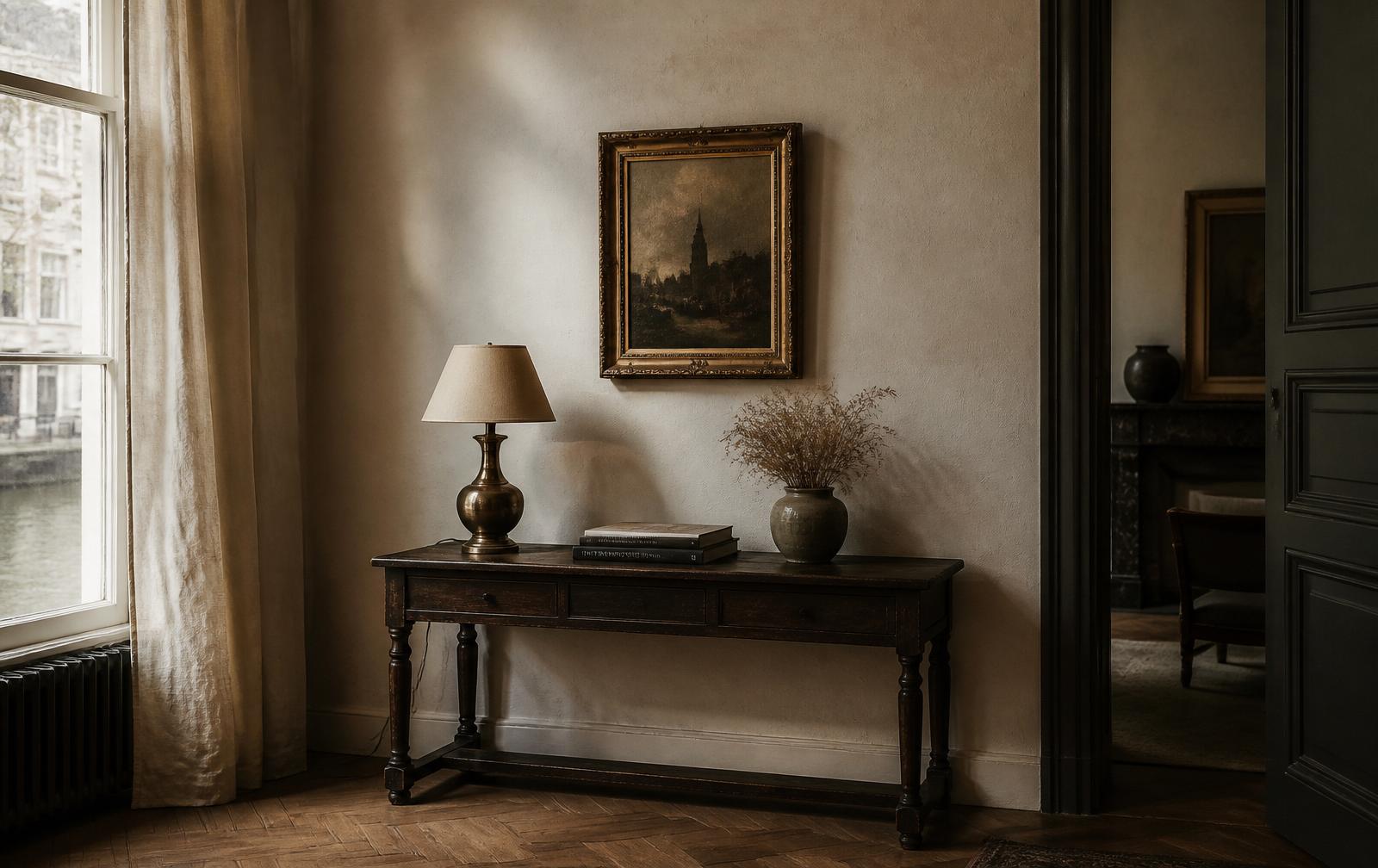
Small, portable furniture can make a significant difference without requiring permission or leaving damage. A side table next to a sofa. A small bookshelf. A stool that works as a plant stand or a bedside table. A narrow console in a hallway. A bench at the end of a bed. These pieces are easy to move, easy to take with you, and they introduce your own sense of proportion and style into a space that is not technically yours.
Vintage pieces work particularly well here because they tend to be well made, reasonably priced, and they bring character that flat-pack furniture cannot. A single beautiful chair in a rented apartment does more for your sense of home than an entire room of adequate furniture.
Ask your landlord. Many tenants assume they cannot change anything, but it is always worth asking. Could you repaint a room and return it to the original colour when you leave? Could you swap out dated cabinet handles or door knobs for something you prefer? These are small investments, often under a hundred euros, that can transform how a kitchen or bathroom feels. Most landlords are surprisingly open to improvements, especially if you offer to restore things at the end of your tenancy.
Hardware changes in particular are worth considering. Replacing cheap brass handles with brushed nickel, or plastic knobs with ceramic ones, takes an afternoon and costs very little. Keep the originals in a box and swap them back when you move. The difference in how a kitchen feels after this kind of small change is disproportionate to the effort.
The key is choosing pieces and changes that you genuinely love and will carry forward, not compromises you tolerate until you own somewhere.
If You Buy, Live With It First
When you own a property, there is an understandable urge to change everything immediately. New paint, new kitchen, walls moved. But one of the most valuable things you can do is wait.
Live with the space for a few months before making significant decisions. Watch how light moves through each room at different times of day. Notice where you naturally gravitate, where you eat, where you read, which doors you leave open. Pay attention to what frustrates you and what quietly works.
Flow reveals itself over time. You might discover that the kitchen layout you planned to gut actually functions well once you have cooked in it for a season, or that the room you assumed would be a study is where you always end up having coffee in the morning light.
The changes you make after living in a space are almost always better than the ones you would have made on day one. They are informed by how you actually live rather than how you imagined you would.
Blend Where You Are With Where You Have Been
The most interesting expat homes hold both identities. They do not try to recreate a British sitting room in a Dutch canal house, or transplant an American kitchen into a European apartment. They acknowledge the architecture and setting while weaving in references to home.
This might look like:
- English toggle light switches in an Amsterdam apartment
- A French market find on a Scandinavian sideboard
- Vintage prints from your home country alongside local ceramics
- Recipes from home cooked in a kitchen designed for Dutch proportions
The blend is what makes it yours. Not one thing or the other, but the particular combination that only you would create.
Make Peace With Impermanence
Many expats hold back from investing in their homes because the move might be temporary. "We might only be here three years" becomes a reason to live with furniture that does not quite work and walls that do not quite feel right.
But three years is a long time to feel unsettled. And the investment does not have to be enormous. A few considered pieces, some thoughtful lighting, a coat of paint in a colour that makes you happy: these cost relatively little and change how you feel every single day.
If you do move on, the pieces travel with you. The paint can be painted over. But the years of feeling at home cannot be recovered.
The Scent of Home
This is rarely discussed in design, but scent is one of the most powerful ways to create a sense of belonging. A candle that reminds you of a particular place. Fresh flowers from the market. The smell of something baking.
In Amsterdam, my weekly rituals became the flower markets, burning a favourite candle each evening, and cooking something familiar on a Sunday. These were not imported memories. They were new ones, specific to this life.
Find your own version: a particular room spray, a coffee you only drink here, flowers from the local market. Allow your home to develop its own scent language. It will become part of what makes it yours.
What This Really Comes Down To
Making a house feel like home abroad is not about interior design in the traditional sense. It is about attention. Paying attention to what makes you feel grounded. Paying attention to the small things that create comfort. Paying attention to the gap between where you are and where you feel you belong, and gently closing it.
You do not need a renovation. You do not need a large budget. You need intention, patience, and the willingness to let a new place become part of your story.