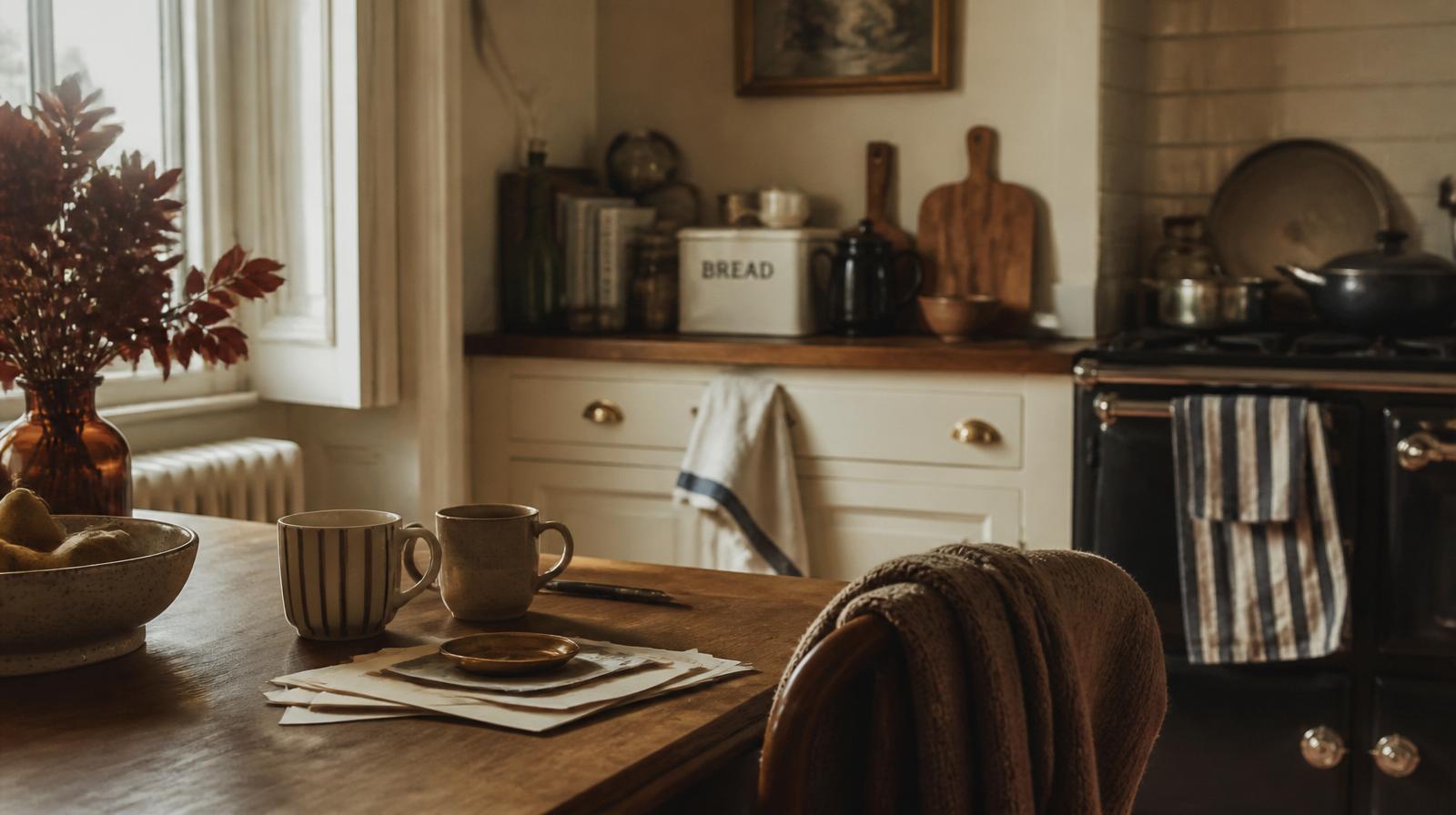
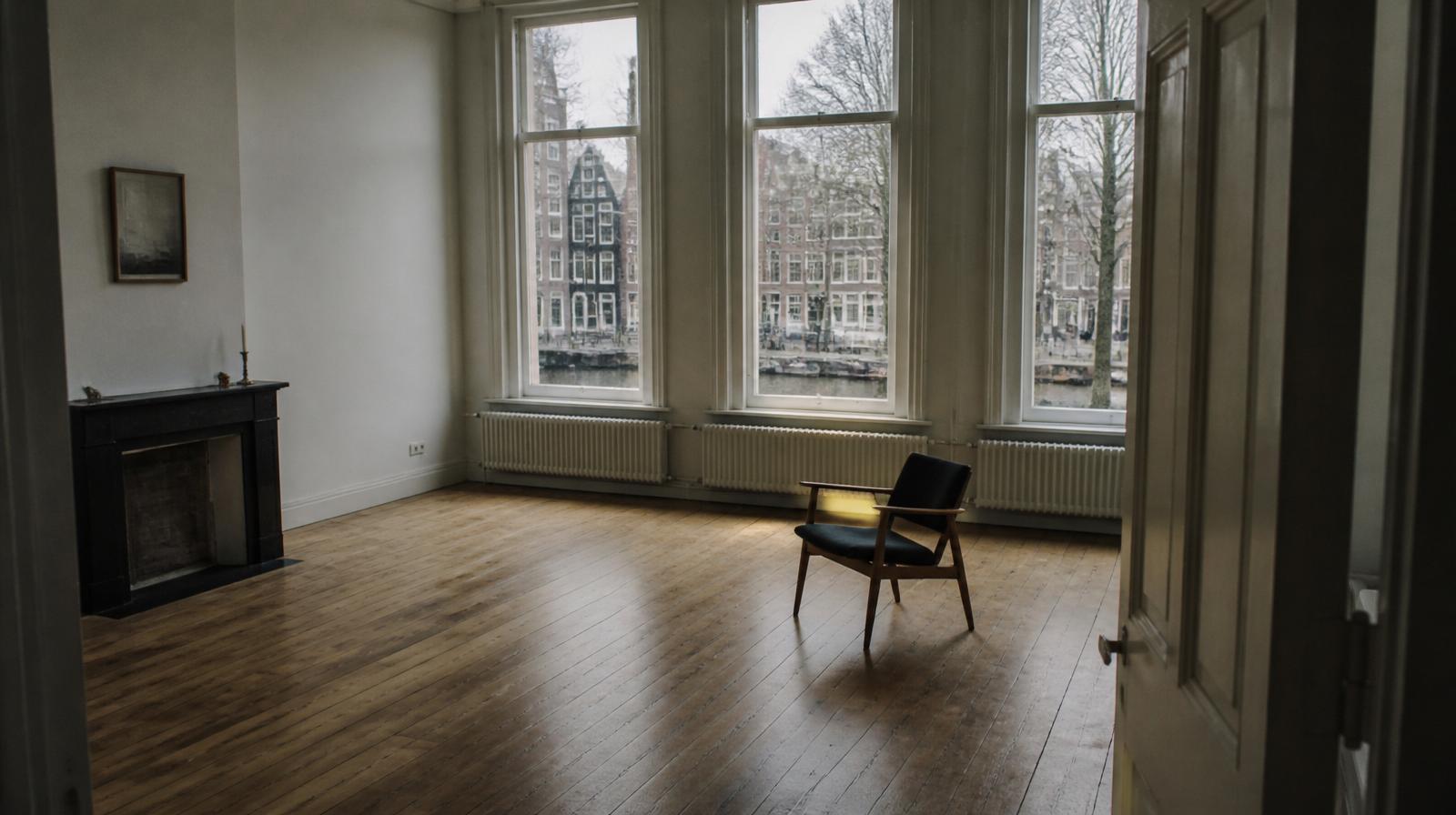
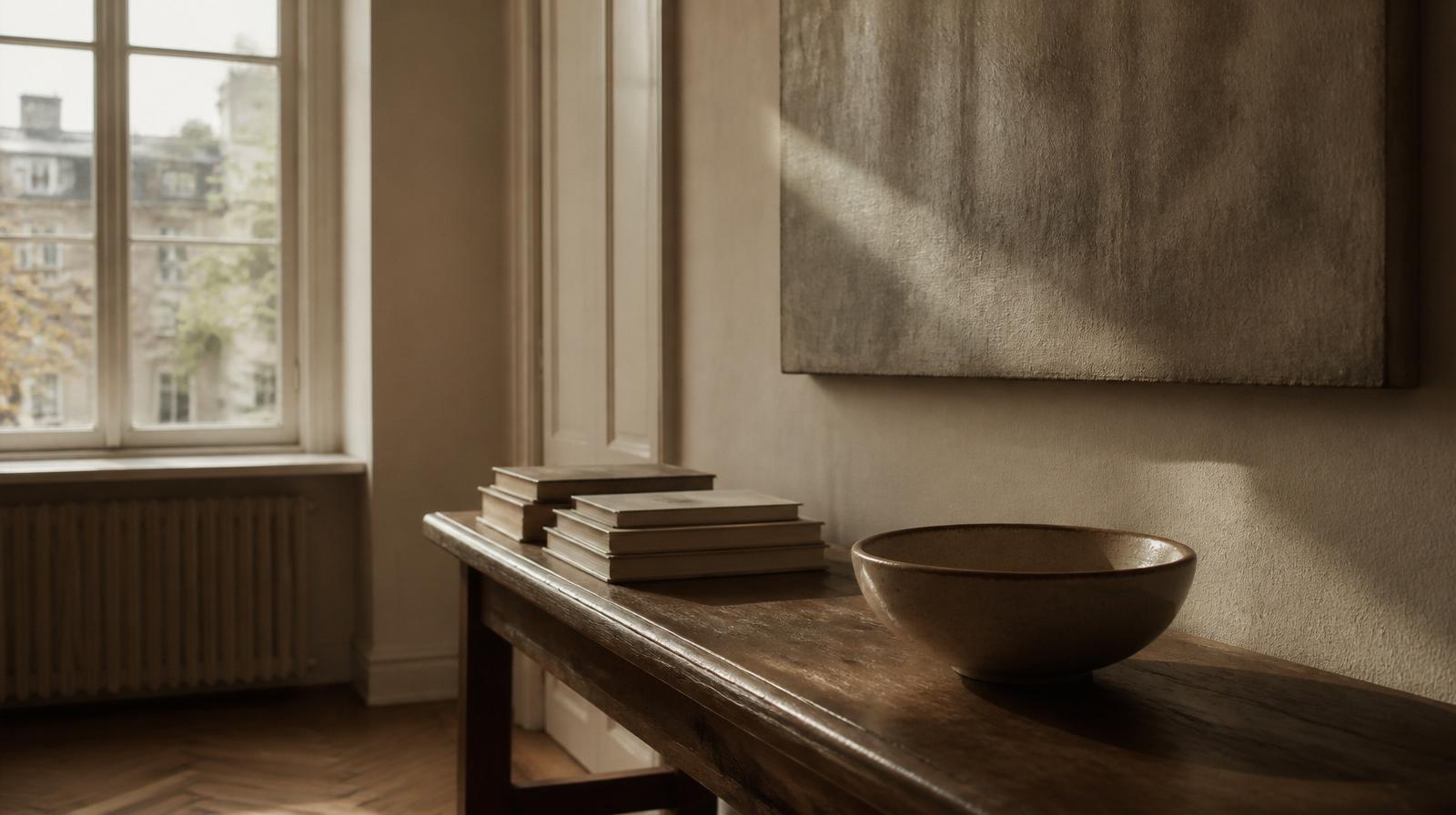
Virginia Woolf's famous prescription of a room of one's own is, for most of us living in real houses with real families, an unaffordable dream. Amsterdam apartments are narrow. London bedrooms are shared with a partner and, often, a wardrobe that arrived before you did. Children fill every corner they are permitted to fill, and often several they are not. Yet the psychological need Woolf described has not diminished. If anything, in a world of open-plan living and constant proximity, it has grown.
The answer, in most homes I visit, is not a whole room. It is a considered corner, a defended ritual, and a small refusal to let the household consume every square metre.
Claim a corner, not a room
Walk through your home and find the quietest metre. It might be the landing at the top of the stairs, the deep bay of a bedroom window, or the awkward triangle at the end of a corridor that no one has known what to do with. This is your corner. Furnish it with one good chair, one small table, one lamp with a warm bulb, and something to look at that is not a screen. A shelf of books. A framed drawing. A window with a tree.
The furniture matters less than the completeness of it. A chair by itself in a corner reads as leftover. A chair with a lamp and a table reads as an invitation. Family members, in my experience, respect a corner that has been properly composed. They wander into an unfinished one without thinking.
The furniture that makes a corner actually work
The composition is small enough that each piece has to earn its place. A short specification, from years of arranging these:
- The chair. A seat depth of around fifty-five centimetres, an arm you can rest a book on, and upholstery you are happy to sit in for an hour. A dining chair does not work. A deep club chair rarely does either, because it makes reading posture difficult.
- The table. Waist-high when you are seated, roughly forty-five to fifty-five centimetres wide, and large enough for a cup, a book and a small lamp. A bistro table, a small pedestal, or a low chest of drawers all work.
- The lamp. Bulb positioned just above the shoulder of a seated reader, warm colour temperature around 2700 Kelvin, and on a dimmer if possible. Overhead light is almost always wrong for a reading corner.
- The floor. Even a small rug, a metre square, does more than people expect. It marks the corner as its own room within the room.
- The wall. One object at eye level when seated. A picture, a mirror, a small shelf. Not a gallery wall. One thing to rest the eye on.
These proportions are the difference between a corner that people actually sit in and one that becomes a coat drop within a fortnight.
Defend a time as well as a place
A physical corner is only half the work. The other half is a ritual that reliably occupies it. Coffee at half past six before anyone else is awake. Twenty minutes with a book after supper is cleared. A Sunday morning hour that is understood, by everyone in the house, to belong to you.
The language matters here. Not I might read for a bit. Rather, this is my hour. Said kindly, said early, and said often enough that it becomes as ordinary as a school run. Children in particular need the boundary spoken aloud. They are excellent at respecting rules they have been told about, and hopeless at guessing at ones they have not.
Signal that you are unavailable
Rituals hold better when the household has a visible cue rather than a verbal one. A closed door. A lit candle on the corner table. A specific mug used only in that hour. Small signals like these do more than repeated reminders, because they make the boundary the room's rather than yours to defend. A partner who would talk over a request will often walk past a lit candle without comment. This is not manipulation. It is design doing the work of negotiation.
The bathroom as sanctuary
In a full house, the bathroom is often the only door with a lock. Treat it accordingly. A stool for a book. A single beautiful candle rather than three ordinary ones. A towel that is only yours. A bath salt that no one else is permitted to use. These small acts of ownership convert a functional room into a genuinely restorative one, without any renovation at all.
If the bathroom is the only quiet room in the house, resist the urge to fill it with laundry drying racks and toothbrush pots. Store what you can behind a cupboard door. A bathroom that reads as functional storage cannot double as sanctuary, however good the tub.
A shelf that is only yours
If even a corner is impossible, claim a shelf. One horizontal surface, at eye level, that is yours to compose. Books you are reading. An object from a trip. A postcard. A small vessel with a single stem. It is a domestic altar of sorts, and it does more psychological work than its square footage would suggest.
And for the others in the house
The most functional version of this idea is not one defended corner but several. A reading nook for the partner who reads. A small desk in the bedroom for the child who draws. A window seat with a cushion for the teenager who needs somewhere that is not the sofa. A house in which each occupant has one considered square metre of their own tends to be a house with less friction in the shared rooms, because no one is quite so hungry for the sofa or the kitchen table as their only refuge.
The point of any of this is not to withdraw from the household. It is to return to it as yourself, rather than as a diminished version who has spent the whole day being available. A house that makes room for the individuals inside it is a happier house. The maths of shared living rewards the small, defended solitudes.