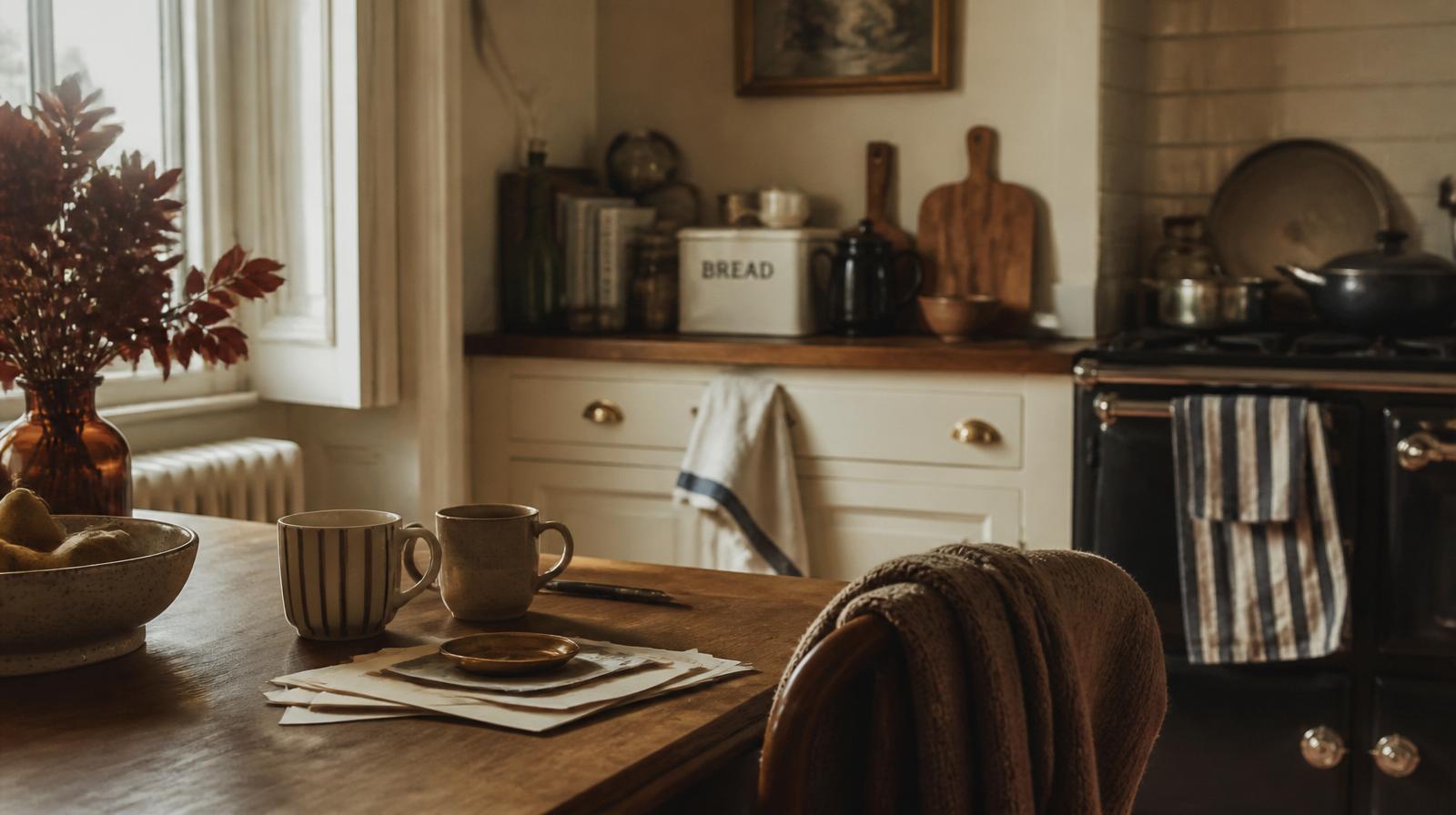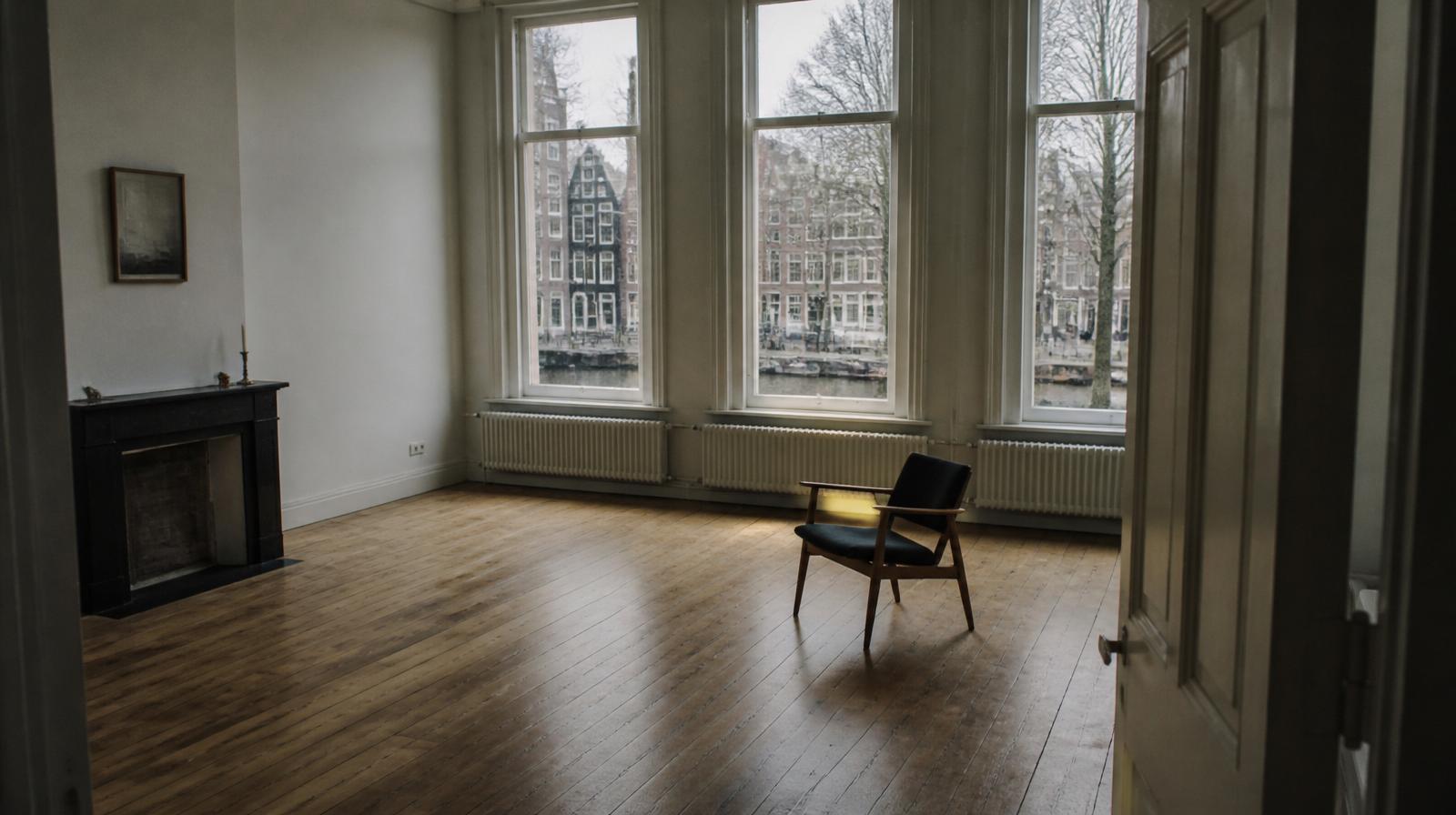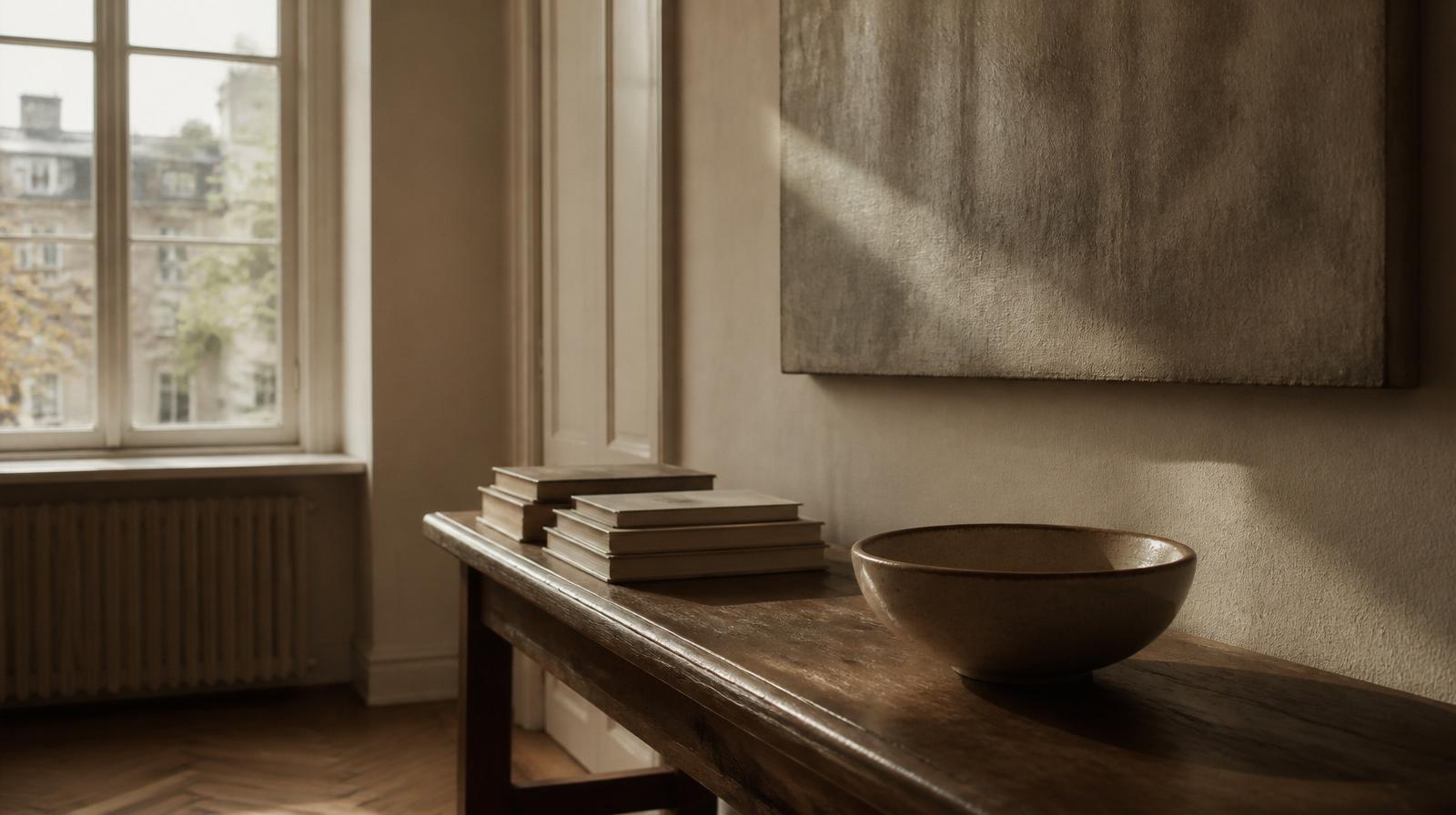
There is a particular kind of tiredness that settles in a home where too many things are asking for attention at once. A pile of post on the console table. Fifty-seven browser tabs. A wardrobe so full that nothing quite closes. A phone that buzzes every ninety seconds. We tend to treat physical clutter and digital clutter as separate problems, but they are the same nervous system responding to the same overload. When I begin work with a new client, we almost always start here, before a single cushion is chosen.
Decluttering has been reduced, in recent years, to a rather punishing exercise in binary thinking. Keep or discard. Spark joy or do not. I find this framework unhelpful in an actual home, where objects carry memory, function and occasional guilt in uneven proportions. A more useful question is simply: does this earn its place. Not does it delight me. Does it earn the small tax it charges on my attention every time I walk past it.
Start with the surfaces you see first
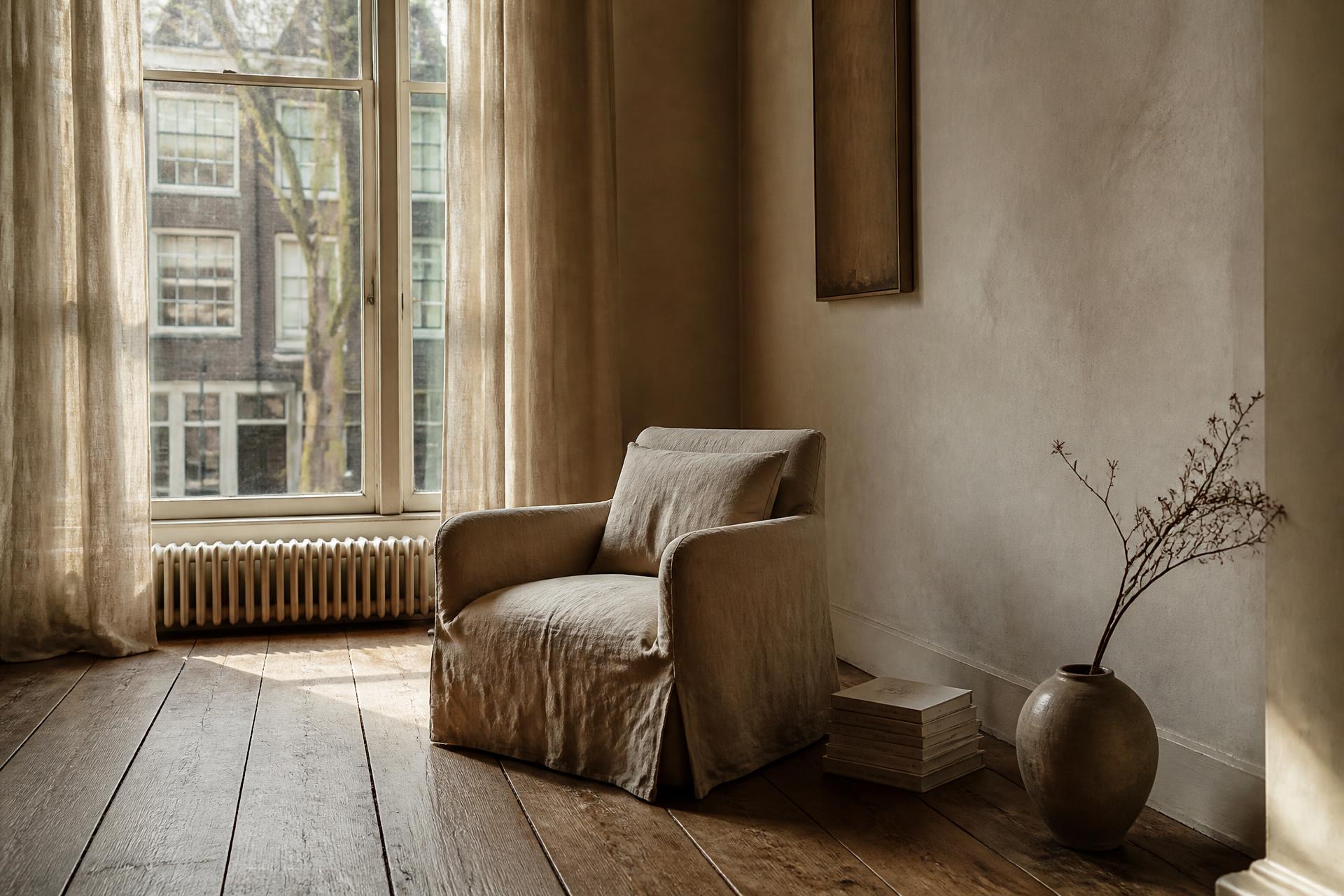
Begin with the three horizontal planes your eye lands on within seconds of entering a room: the hallway console, the kitchen counter nearest the door, and the coffee table. These surfaces set the emotional tone of the entire ground floor. Clear them completely. Wipe them down. Then put back only what genuinely belongs there, and nothing else. A bowl for keys. A single stack of books. One object with weight or beauty. That is often enough.
Do not attempt the whole house in a weekend. It is the fastest route to giving up. One drawer, one shelf, one surface at a time, with an honest hour rather than a resentful afternoon.
The order in which to declutter a house
The sequence matters as much as the effort. I almost always recommend the same order, because it front-loads the visual relief that keeps people going.
- The entrance. Console, coat hooks, shoe storage. This is the room you and every visitor read first.
- The kitchen counters. Not the cupboards yet. Only the counters, and only the small appliances that live on them.
- The bathroom. Under the sink and inside the cabinet. Old skincare, empty bottles, medication that expired two summers ago.
- The bedroom. The chair that has become a wardrobe. The bedside table. The floor beside the bed.
- The wardrobe itself, which is a separate day's work, and worth its own hour.
- Cupboards, drawers and the loft. The invisible layers, saved for last.
Working in this order means that within a week the parts of the house you actually see are quieter, which builds the appetite for the deeper edit rather than exhausting it.
The digital equivalent
The same principle applies to the machines in your pocket. Notifications are the digital equivalent of a doorbell that will not stop ringing. Turn off everything that is not a person you love or a calendar reminder you have chosen. Your bank does not need to interrupt your dinner. Neither does a marketplace app.
A useful weekend exercise: move every application off your phone's home screen except the four or five you genuinely use with intention. Everything else lives one swipe away, in the search bar, or in a folder. The visual quiet this produces is startling. It is the same relief as a cleared kitchen counter, in miniature, in your hand.
Email deserves the same honesty. Unsubscribe rather than delete. If a sender has interrupted you three times this month and you have not once been glad, they are not a newsletter, they are a habit.
The other three digital surfaces worth editing are the browser, the desktop, and the photo library. Close every tab that is not a task you will complete today. Empty the desktop entirely, so that when the machine wakes it opens onto quiet rather than a bulletin board. And spend twenty minutes with the last month of photographs, deleting the duplicates, the screenshots of receipts you no longer need, and the seventeen near-identical shots of the same evening light. A phone with two thousand fewer images in it feels noticeably lighter to hold.
What to do with what you remove
The part of decluttering that stalls people is not the deciding. It is the leaving. Bags by the door for six weeks, waiting for a trip to the charity shop that never happens. Do the removal in the same session as the sorting. Book a collection. Drive the bags to the vintage dealer. Photograph what you are selling before you lose momentum. Digital equivalent: empty the trash, do not merely move things into it.
A short honesty about categories helps. Charity, sale, repair, or waste. Anything that goes into the fifth invisible category — "I will deal with this later" — will still be in the hall in six weeks. If it is worth selling, list it that evening. If it is worth donating, take it the next morning. If it is broken and you have not repaired it in a year, it is not going to be repaired.
A one-week plan
For anyone who wants a place to start, a modest week that changes a house without wrecking a weekend.
- Monday evening: the hallway console and the coat hooks. Forty-five minutes.
- Tuesday evening: the kitchen counter nearest the door, and the small appliances on it.
- Wednesday evening: the phone. Home screen, notifications, the two most interrupting apps deleted.
- Thursday evening: the bathroom cabinet. One bin bag out by morning.
- Friday evening: the bedside table and the chair beside the bed.
- Saturday morning: the coffee table and the shelves around it, then a drive to the charity shop with everything from the week.
- Sunday: nothing. The house rests. So do you.
A home that has been genuinely edited feels different in a way that is difficult to describe until you have lived in one. The light seems better. Sound travels more kindly. You sleep, quite noticeably, more deeply. This is not a mystical claim. It is what happens when a room stops making a hundred small requests of you every time you enter it.