People who hear about the sourcing side of my work usually ask the same question: how do you find the good pieces? It is a reasonable question, but it is the less important half of the job. Finding is easy. Markets, dealers, auctions and fairs are full of good pieces, more than any house could hold. The skill that actually shapes a home is the other one: deciding, quickly and calmly, what not to buy.
I have written about what I look for when I walk into a room. This is the companion piece, about what makes me walk past a table. The pass is less glamorous than the pick, but it is where the money is saved, the mistakes are avoided, and the houses that feel collected rather than crowded are made.
The Novelty Trap
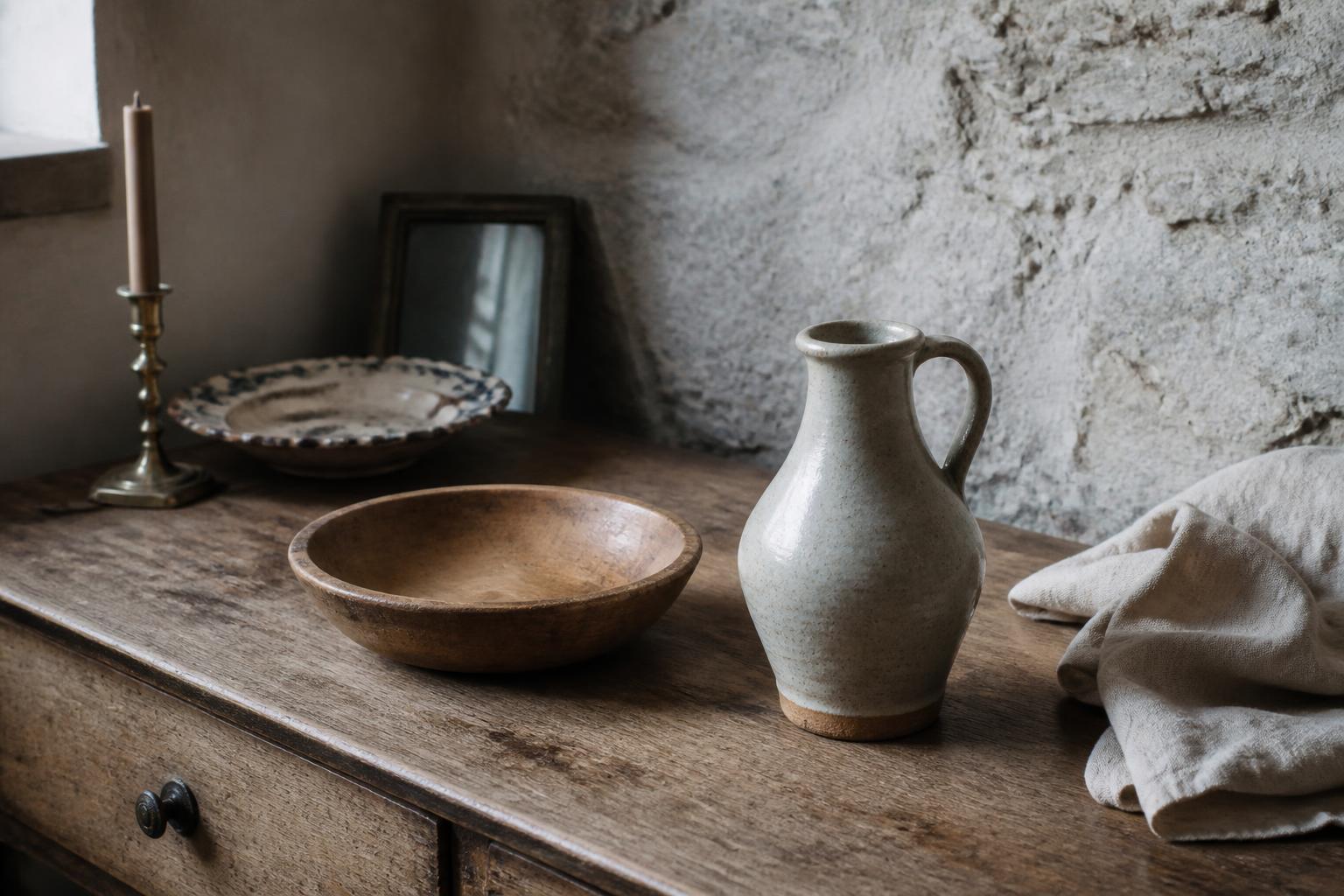
The most dangerous moment in sourcing is the first time you see a type of thing. The first dough bowl, the first zellige tile, the first Swedish grandfather clock feels like a discovery, and the instinct is to buy it before someone else discovers it too. But novelty is not quality. It is just unfamiliarity, yours, and it wears off roughly three purchases after you have learned the category.
The discipline is to let the first one go. See it, handle it, note the price, and walk away. By the fifth example you will know what a good one looks like, what it should cost, and whether you actually love the thing or just loved the feeling of finding it. Most of what I passed on early turned out to be the former.
Condition Honesty
Every dealer's favourite phrase is easily fixed. A wobbling leg, a lifting veneer, a drawer that sticks: all easily fixed, and somehow never fixed by the person selling it. The truth is that restoration is always slower and more expensive than it looks at the market, and a piece that needs work is a piece whose real price is the asking price plus the repair, plus the months it spends in the hallway waiting.
I am not against restoration; some of the best pieces earn it. The honesty is in the arithmetic. Before I buy anything damaged, I name the actual repair, the actual cost, and the actual person who will do it. If I cannot name all three on the spot, the piece stays where it is.
The Where-Does-It-Live Test
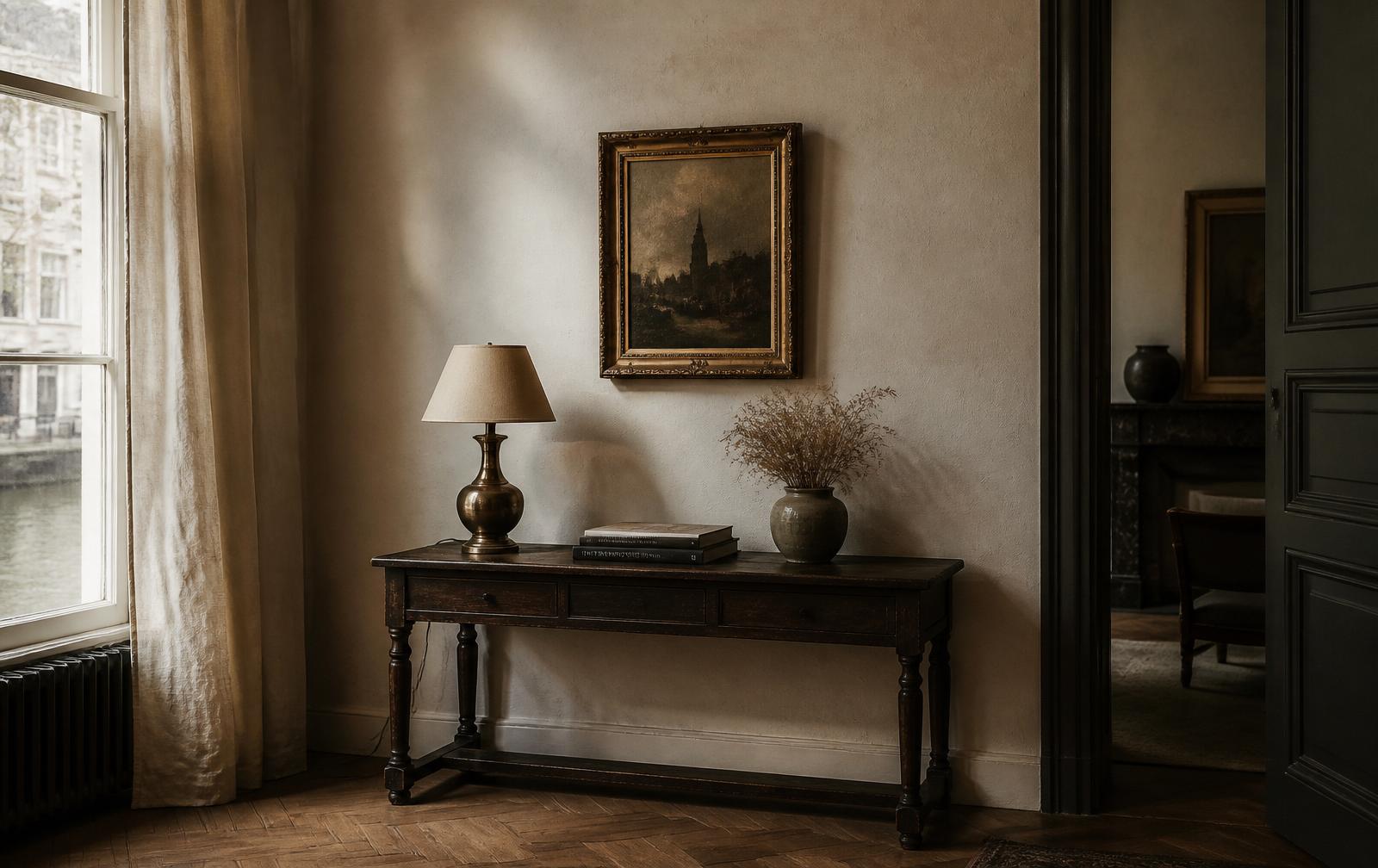
The single most useful question in sourcing is also the simplest: where does it live? Not which room, which exact spot. Which wall, against what, beside what, at what measurement. A beautiful object with no answer to that question is not a purchase; it is storage with good intentions.
This is why I carry room measurements and photographs, and why the answer needs to come quickly. If I find myself inventing a place for something, rearranging an imaginary room to justify it, that is the tell. The right pieces answer the question before you have finished asking it.
Price Discipline
Knowing the market price of things is unglamorous work: auction results, dealer stock, the slow accumulation of what a good example of something actually costs. It is also the only protection against the two ways of overpaying. The first is paying too much for the right thing, which stings and passes. The second is paying a fair price for the wrong thing, which is worse, because no bargain survives being wrong.
A cheap price on a piece that fails the other tests is not a reason to buy. It is the reason the piece is still on the table.
The Duplicate Problem
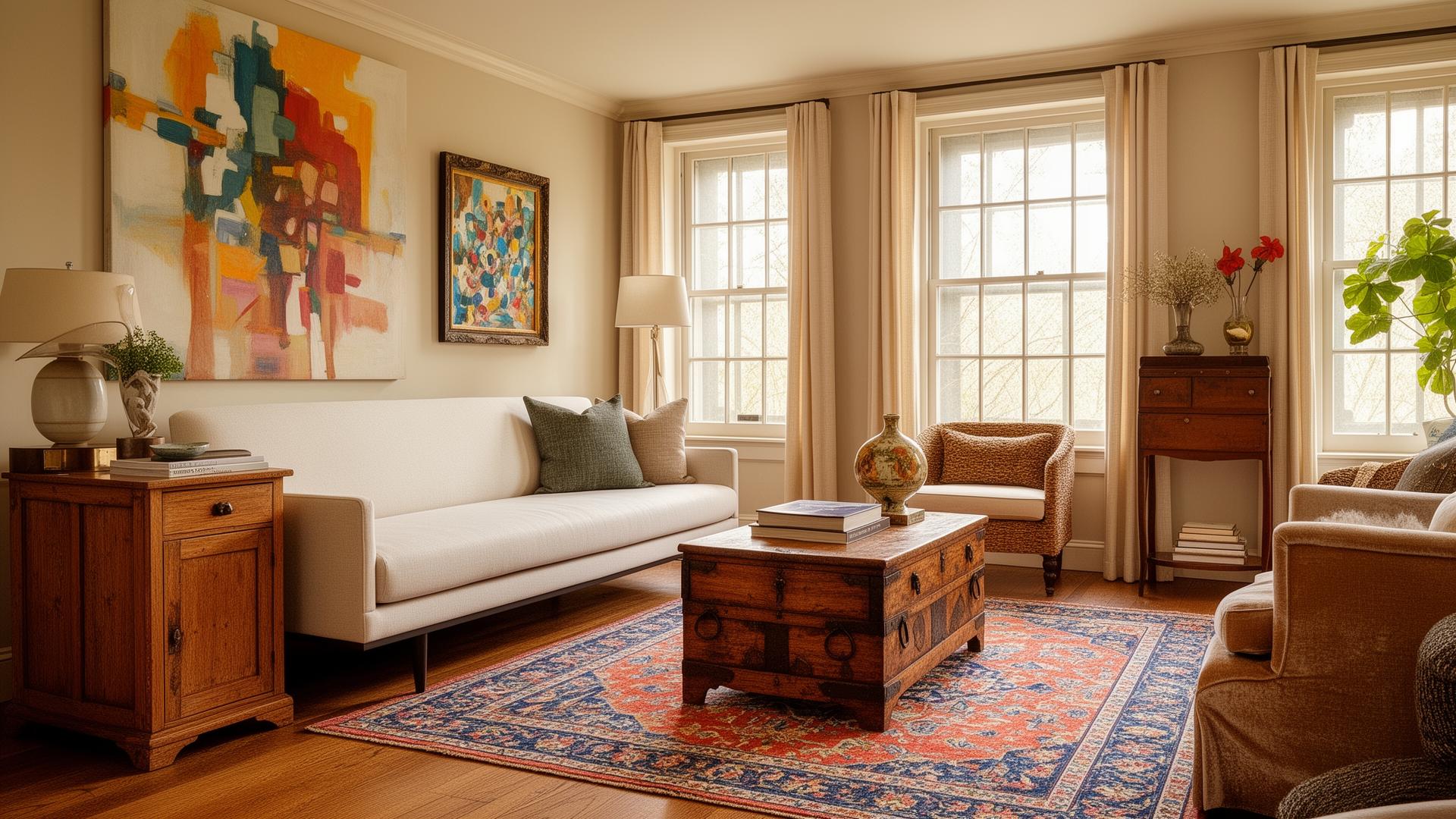
The hardest passes are the good ones: a piece that is genuinely lovely, fairly priced, and a better version of something you already own. Better is the trap. A marginally better chair than your chair means two chairs, one of which must now go somewhere, and the small daily friction of having upgraded sideways.
The rule I keep is that a replacement has to be decisively better, not incrementally better, and the old piece has to have a destination before the new one has a home. Incremental upgrades are how houses fill with almost-identical versions of things, each one slightly resented.
Walking Away as a Skill
Underneath all of this is a simpler thing: the ability to walk away from an object you are emotionally mid-purchase with. The test I use is regret versus relief. If I imagine leaving it and feel a clean, specific regret, it might be the one. If what I feel is mostly relief at having resisted, or a vague fear that I am supposed to want it, the answer is no.
The pieces that got away have a way of being fine. The memory fades in a fortnight. The wrong purchase, by contrast, stands in the room for years, being politely lived with. Every home I have helped edit has a few of them, and every owner knew exactly which ones they were.
The pass is what gives the pick its meaning. A house built from everything you loved is a warehouse. A house built from the few things that survived every test is something else entirely: yours, and no one else's. If you would like help learning which is which in your own rooms, a consultation is a good place to start.