There is a particular week in September, usually the second one, when the light changes. The evenings arrive earlier, the mornings carry a dampness that was not there in August, and the house, which has been open and easy all summer, begins to close itself. Most people notice this and do nothing about it until the first genuinely cold evening in October, at which point every hardware shop and homeware store is stripped of exactly the things they need.
This is the case for the September reset. Not a renovation, not a deep clean, but a short, deliberate round of small purchases and small jobs that make an older home noticeably more comfortable between now and March. Period houses, with their draughty sash windows, suspended timber floors and single brick walls, reward this preparation more than most.
Start With the Draughts
In an older house, the cold rarely comes through the walls first. It comes around the edges: under doors, through letterboxes, down chimneys, between the floorboards. Before you buy anything decorative, walk the house on a breezy day with the back of your hand held near door frames, window reveals and skirting. You will find the draughts quickly, and they are almost all cheap to fix.
A proper draught excluder for the sitting room door, a brush strip for the letterbox, a chimney balloon for the fireplace you do not use, and lined curtains for the coldest windows will do more for your comfort than any amount of turning up the thermostat. Heavy curtains in particular are worth buying well: a dense wool or velvet with an interlining does the work of a second glazing unit after dark.
Rugs, and What Lies Beneath Them
If your house has bare boards, September is when they start to feel cold rather than charming. A rug is the obvious answer, but the detail that matters is what goes underneath. A felt or natural-rubber underlay insulates, stops the rug travelling, and softens the sound of the room. It costs a fraction of the rug and roughly doubles its effect.
This is also the moment to check the rugs you already own. A rug that has spent summer in a bright room may have faded unevenly; rotating it now evens out the wear before winter. Small, unglamorous, and exactly the kind of thing that is easy in September and annoying in November.
The Textile Layer
Every comfortable winter house I know has the same architecture: a light summer layer that comes off, and a heavier winter layer that goes on. This is not about buying more. It is about buying once, properly, and rotating seasonally.
The pieces that earn their keep are a wool throw for every seat people actually sit in, a heavier duvet or a layered blanket-and-quilt combination for the beds, and cushion covers in wool or heavier linen to replace summer cotton. Buy natural fibres and buy them once. A good lambswool throw will outlast five acrylic ones and feel better every year you own it.
Heating, Quietly Serviced
The plumbing piece I wrote earlier in the series covers the bigger questions. September is for the ten-minute version: bleed every radiator, check that thermostatic valves move freely, and listen to the boiler on its first proper run of the season. A radiator that is cold at the top is full of air, and a house full of half-working radiators is a house paying for heat it never feels.
One purchase worth making here is a simple shelf above any radiator that sits under a window or a favourite chair. It deflects the rising warmth into the room rather than straight up the wall, and it gives you somewhere to put a cup of tea. The old houses knew this. Many still have the original shelves in place.
Light Before You Need It
By late October the light will be gone before the working day ends, and a house lit by a single ceiling pendant feels twice as bleak as it did in June. The fix is not more light but more sources: lamps at different heights, on side tables and shelves rather than the ceiling, fitted with warm bulbs around 2700 kelvin.
Buy the lamps now, while you are choosing rather than desperate. And buy candles. Not as decoration but as infrastructure: a lit candle in a draughty hallway is doing the same work as the rest of this list, which is making the house feel defended against the season rather than surprised by it.
The Hallway, Hardened
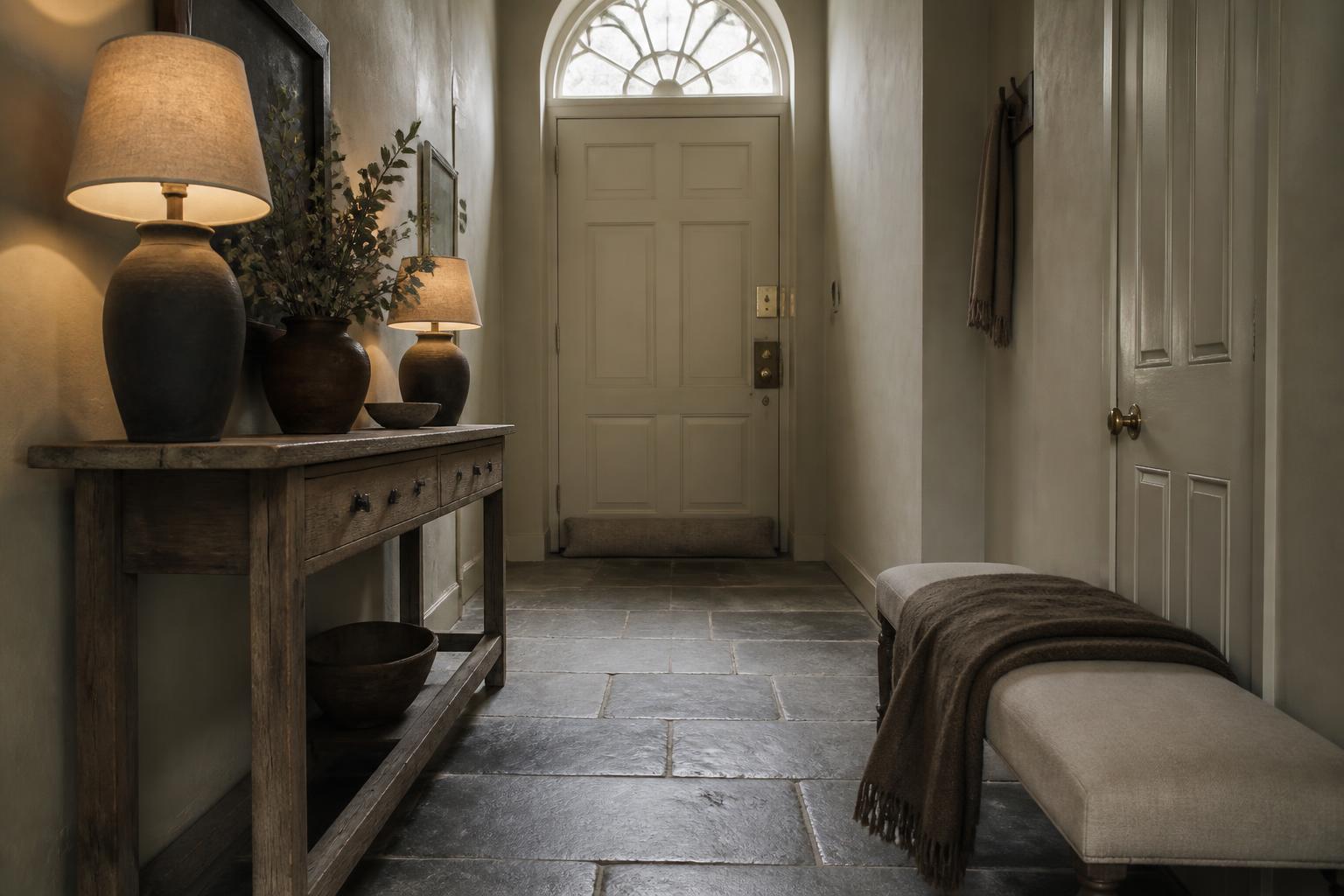
Winter enters the house through the front door, carried on boots and coats and umbrellas. A boot tray, a second doormat inside the door, and enough hooks at the right heights will protect everything behind the hallway. This is also where the old-world habit of airing the house matters most. A warm, shut-up house with wet coats in it is a damp house. Keep the windows opening, briefly and daily, even when it is cold. The habit works in January exactly as it does in April.
None of this is expensive, and none of it is complicated. It is simply earlier than most people act. If you would like a second pair of eyes on what your own house needs before winter, a consultation is a good place to start.